China lays plans to beef up stable development of capital market

In his first public appearance before media since taking his new post, Wu Qing, head of China's securities watchdog, outlined on Wednesday his plan to ensure the stable development of the capital market, the world's second largest, and vowed to beef up institutional buildup and to better ensure investor protection.

Chinese analysts noted that the institutional and holistic approach outlined by the head of China Securities Regulatory Commission (CSRC), who takes a harsh tone on illegal behavior while being considerate to small investors, is a pragmatic approach that suits the market reality, and is set to boost market confidence, stabilize expectations and shore up the overall investment value of China's capital market.

A number of delegates to the ongoing two sessions also contributed their thoughts on the topic, which is under the global media spotlight and has become a target for Western doomsayers in recent weeks.

Wu's appearance at the press conference, held during the ongoing two sessions, along with several other top government officials in charge of China's economic and trade affairs, is one of the highlights of the political event, as ensuring the stability of the capital market was mentioned in the Government Work Report for the first time following a period of turbulence in the Chinese A-share market ahead of China's Spring Festival holidays in February.

The Government Work Report, delivered by Chinese Premier Li Qiang on Tuesday at the opening meeting of the second session of the 14th National People's Congress, set a growth target of around 5 percent for the country's economy in 2024.

Notably, the report pointed out that "the underlying stability of the capital market should be enhanced."

Giving his insight on how to ensure the stable development of the capital market, Wu the CSRC chairman, who is one day short of completing his first month in the new post, said enhancing institutional buildup and attracting long-term investment into the market will be among the measures to be taken to accomplish the task outlined in the Government Work Report.

Acknowledging that market operation has its own rules and should not be interfered with under normal circumstances, Wu told the press conference that the regulator "won't hesitate to act to correct extreme situations when the market seriously deviates from its fundamentals, irrational and violent fluctuations occur, liquidity is exhausted, market panic occurs and serious draining of confidence appears."

The first-time ever mentioning of enhancing the underlying stability of the capital market sends a strong signal of China's commitment to building itself into a financial powerhouse and sets the tone for the future development in related fields, delegates to the two sessions said.

Outside of the two sessions venue, Chinese scholars also shared their views on what Wu had said at the press conference.

Dong Shaopeng, a senior research fellow at the Chongyang Institute for Financial Studies at Renmin University of China, told the Global Times on Wednesday that the announcement made by CSRC chairman Wu, with an emphasis on both strength and toughness, laid out a clear-cut vision on improving the construction of fundamental institutions and better regulating the capital market, and is a "pragmatic approach in line with reality."

"The dual emphasis by the CSRC on strengthening regulation and bolstering investor protection are set to improve the stability and quality of the Chinese capital market," Dong noted.

Dong said that the emphasis on protecting small and medium-sized investors addresses the root of the problem facing China's capital market, as their ranks formed the ultimate source of long-term funding for the Chinese A-share market.

The stock market has drawn much attention during this year's two sessions, with members, legislators, and officials putting forward practical and broad-perspective suggestions and motions on stabilizing the capital market, Xi Junyang, a professor at the Shanghai University of Finance and Economics, told the Global Times on Wednesday.

Wu's remarks at the press conference will be heard by both domestic and overseas investors, Xi Junyang noted. "And his remarks, including protecting investors' interests, lifting the quality of listed companies, and implementing a stricter delisting system, are conducive to boosting investor confidence and the overall investment value of China's capital market."

"We can expect proactive measures to be announced in these areas," Xi Junyang said.

The Government Work Report set priorities and the direction for this year's economic work, and also offers much-needed reassurance to the capital market, Yang Delong, chief economist at Shenzhen-based First Seafront Fund Management Co, told the Global Times on Wednesday.

"The stock market is a barometer of a country's economy," Yang said. "Stepped-up macro-policies and stable economic recovery will contribute to a rebound in the A-share market."

A note of reassurance

With the sound development of the capital market a matter of vital concern, delegates to the two sessions are also contributing their ideas, with some pointing out that the Government Work Report has brought "a certain sense of reassurance to the market."

"The Chinese equities market was on a turbulent ride at the beginning of 2024, so the statement in the Government Work Report gives investors a sense of encouragement as well as a certain sense of reassurance," Fang Jie, a member of the National Committee of the Chinese People's Political Consultative Conference (CPPCC) and president of Hubei University of Economics, told the Global Times on Wednesday.

There is a lot of work to be done to improve the underlying stability of the capital market and ensure its sound development, and first and foremost is to continue shoring up the macroeconomy, which provides a foundation for market performance, noted Fang, who has also served as the deputy secretary general of Wuhan government in Central China's Hubei Province and the director of the Wuhan Financial Work Bureau.

Chinese financial authorities also need to further carry out sweeping market reforms, such as creating more innovative capital market products to help release market vigor, and improve the systemic design of the capital market through measures such as increasing the transparency of listed companies' information disclosure and carrying out holistic supervision over the A-share market, Fang said.

Yang Chengzhang, a member of the National Committee of the CPPCC and chief economist with Shenwan Hongyuan Securities, told the Global Times on Wednesday that in order to ensure the stable development of the capital market, the government should also continuously put efforts and resources into stemming risks in the property sector, local debt and small and medium-sized financial institutions, as these three sectors are major sources of concern for capital market investors in 2023.

The Government Work Report's call to tackle risks in key areas and beef up security in key sectors will help ease excessive worries and curb the pessimistic outlook in the market, according to Yang Chengzhang.

In order to promote the sound development of the capital market and protect investors' rights and interests, the CSRC has held symposiums to solicit opinions and suggestions on improving the basic system of the capital market, strengthening the protection of the rule of law, and it has also paid visits to listed firms to help them address difficulties to achieve high-quality development.

Since Wu took office, the Chinese A-share market has recovered much of its losses from the recent cycle, finishing at 3,039.93 points at the Shanghai bourse and 9,395.65 points at the Shenzhen bourse on Wednesday.

Following robust travel and tourism activity during the eight-day Spring Festival holidays, the Chinese economy is off to a good start.

Preliminary economic indicators suggest that China is poised to achieve a good start in the first quarter, Zheng Shanjie, head of the National Development and Reform Commission, the country's top economic planner, said at the same press conference.

Zheng revealed that industrial power use grew at 9.7 percent in the January-February period, exports are likely to grow 10 percent year-on-year, indicating robustness in the economy.


Evidence of 5,000-year-old beer recipe found in China

Back in 2004, archaeologists excavated two pits in northern China that looked a lot like homebrewing operations. Constructed between 3400 and 2900 B.C. by the Yangshao culture, each pit contained the remnants of a stove and assorted funnels, pots and amphorae.

Now, Jiajing Wang of Stanford University and colleagues report that the pottery shards contain residue and other evidence of starches, chemicals and plant minerals from specific fermented grains. The ancient beer recipe included broomcorn millet, barley, Job’s tears and tubers — that probably gave the beer a sweet flavor, the team writes May 23 in the Proceedings of the National Academy of Sciences.

The findings predate the earliest evidence of barley in China by around 1,000 years. Beer may have been consumed at social gatherings, and brewing, not agriculture, spurred the introduction of barley to China, the researchers argue.

Readers share climate change concerns

Climate commotion
In “Changing Climate: 10 years after An Inconvenient Truth” (SN: 4/16/16, p. 22), Thomas Sumner reported on the progress scientists have made revising forecasts of the far-reaching effects of climate change — from extreme temperatures and sea level rise to severe drought and human conflict — in the decade since the Oscar-winning film’s release.

Reader response to the article was overwhelming, with hundreds of online comments. Some people enjoyed the in-depth look at climate change science, while others expressed skepticism about humans’ contribution to climate change and a general distrust of climate scientists.

“One of my goals for this article was to highlight that climate change research has itself changed over the last decade,” Sumner says. Scientists are still working to understand how the consequences of atmospheric warming will play out in the coming centuries. But one big message from the last decade of research is that the fundamentals have held up: Natural variability exists, says Sumner, but human activities are largely responsible for the current warming trend.
“The question now is what impact will human contributions have down the line and what should we do to prevent and mitigate those effects,” he says.
Plastic feast
Sarah Schwartz wrote about the discovery of a microbe, Ideonella sakaiensis, that chows down on a hard-to-degrade polymer in “This microbe makes a meal of plastic” (SN: 4/16/16, p. 5).
Online commenters were amazed by this new plastic-gobbling organism. “This is great news,” Dan said. “Our world would be doomed if there wasn’t a microbe able to do this.” Chuckawobbly wondered how long it takes I. sakaiensis to digest the plastic. And Jean Harlow was concerned about the potential by-products of worldwide plastic digestion. “The waste product would be a significant amount … of what?” she asked.

Researchers observed that I. sakaiensis almost completely degraded a thin film of polyethylene terephthalate, or PET, after six weeks in a laboratory. But when extracted from the bacterium, the proteins used to break down plastic begin working in about 18 hours.

I. sakaiensisappears to break PET into smaller molecules, like amino acids and carbon dioxide, says coauthor Kenji Miyamoto of Keio University in Yokohama, Japan. But it would probably be hard for the microbe to break down plastic in the outdoors because of its specific growth requirements, he says. Miyamoto envisions that it could be possible to use the specialized proteins in a closed environment to break PET down into molecules such as terephthalic acid— one of the plastic’s main building blocks, which seems benign in the environment.

Prairie dog predators
Herbivorous prairie dog mothers routinely kill baby ground squirrels that encroach on their territories, researchers found. Competition for resources may be a contributing factor to the killings, Susan Milius reported in “Killer prairie dogs make good moms” (SN: 4/16/16, p. 14).

One reader had other ideas. Audrey Boag wondered if prairie dog moms kill ground squirrels to protect their pups from predation or from diseases carried by the squirrels. “In either case, minimizing the number of ground squirrels would pay in lifetime biological fitness,” she wrote.

“We never observed a ground squirrel kill or injure an adult or juvenile prairie dog,” says study coauthor John Hoogland. “Perhaps such attacks sometimes occur underground.” Hoogland notes that the majority of ground squirrels killed by prairie dogs were juveniles, which are too small to be a threat.

One threat, however, is a species of disease-carrying flea that infests both animals. Hoogland found that prairie dog killers and their offspring had fewer fleas than nonkillers and their offspring, “but this trend was not significant,” he says.

Jupiter shows off its infrared colors

No, that’s not the sun. It’s Jupiter, ablaze with infrared light in new images taken in preparation for the Juno spacecraft’s July 4 arrival at the king of the planets. This image shows how heat welling up from deep within the planet gets absorbed by gas in the atmosphere, which can tell researchers how stuff moves around beneath Jupiter’s thick blanket of clouds. Juno won’t look for infrared light, but it will (among other things) measure how much microwave radiation is being blocked by water lurking within Jupiter’s atmosphere.

The map is pieced together from multiple images obtained at the Very Large Telescope in Chile over the past several months. Ground-based images such as these will help researchers understand what Juno is peering at each time it swoops in close to Jupiter’s clouds over the next 20 months.

When mouth microbes pal up, infection ensues

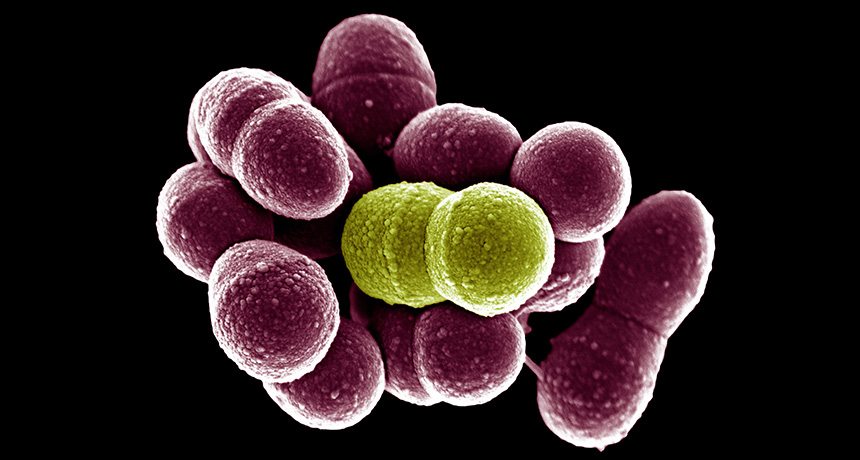
Normally harmless mouth bacteria can be a bad influence. When they pal around with tooth- and gum-attacking microbes, they can help those pathogens kick into high gear. This teamwork lets infections spread more easily — but also could offer a target for new treatments, scientists report online June 28 in mBio.

The way that bacteria interact with each other to cause disease is still poorly understood, says study coauthor Apollo Stacy, of the University of Texas at Austin. Lab work often focuses on individual bacteria species, but managing the communities of microbes found in living organisms is a more complex task. The new finding suggests that bacteria can change their metabolism in response to the presence or absence of other bacteria. A benign species of bacteria excretes oxygen, allowing the second species to switch to a more efficient aerobic means of energy production and helping it become a more robust pathogen.
This is the first time a normally harmless mouth bacterium has been shown to change a pathogen’s metabolism to make the microbe more dangerous, says Vanessa Sperandio, a microbiologist at University of Texas Southwestern Medical Center in Dallas who wasn’t part of the study. Similar interactions have been shown between gut bacteria, she says, but “it’s a very new field of research and there are very few examples.”

Stacy and his collaborators examined the relationship between two species of bacteria that tend to grow in the same place in the mouth. One, Streptococcus gordonii, is found in healthy mouths and only occasionally causes disease. The other, Aggregatibacter actinomycetemcomitans, frequently causes aggressive tooth and gum infections.

The researchers knew from previous work that the pathogenic bacteria grew better with a coconspirator. To figure out why, Stacy says, “we asked, ‘What genes do they need to live when they’re by themselves?’” The team compared the solo-living genes to those active in the pathogen while growing alongside S. gordonii. The analysis revealed that the pathogenic bacteria switched their metabolism when S. gordonii was around.

When A. actinomycetemcomitans grew alone, they produced energy without using oxygen — a slow way to grow. But with S. gordonii nearby, the pathogenic bacteria took advantage of the oxygen released by their neighbors and increased their energy production. When tested in mice, that increased energy let the pathogen grow faster and survive better in a wound.

The findings are part of a growing body of research showing that bacteria can sense the presence of other bacteria and adjust their behavior accordingly.
“This system has allowed us to begin to understand that microbes are really astute at evaluating this biochemistry, and in response, they have very specific behaviors,” says Marvin Whiteley, a microbiologist at the University of Texas at Austin who worked with Stacy.

Stacy plans to test the phenomenon in other bacteria pairs to see whether it holds up beyond these two species. Understanding the way bacteria interact with each other could let doctors target infections more efficiently, he says. For instance, if a bacterial infection isn’t responding to antibiotic treatment, targeting the sidekick bacteria might help take the primary pathogen down.

IVF doesn’t up long-term breast cancer risk, study says

For women thinking about fertility treatments, there may be one less thing to worry about.

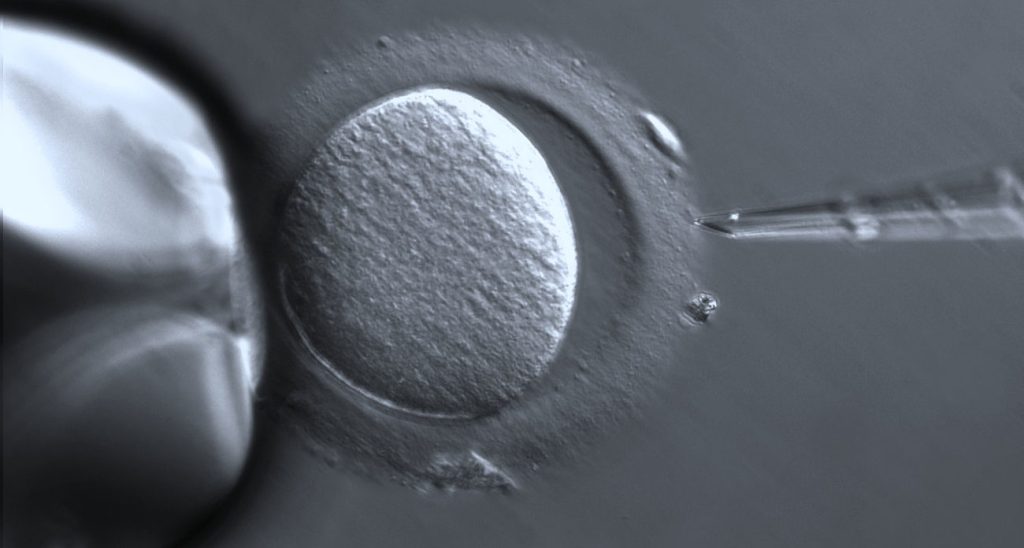
A long-term study shows that women who underwent in vitro fertilization are not significantly more likely to develop breast cancer than women in the general public or women who opted for other fertility treatments. The results are reported July 19 in JAMA.

The fertility treatment alters progesterone and estradiol levels in women trying to get pregnant. Yo-yoing hormones have been linked to an increase in a woman’s odds of developing breast cancer, but studies are divided on whether IVF itself actually ups cancer risk.

Alexandra van den Belt-Dusebout of the Netherlands Cancer Institute in Amsterdam and her colleagues tracked 19,158 women who underwent in vitro fertilization treatment between 1983 and 1995 and 5,950 women who underwent other fertility treatments between 1980 and 1995.

Following up two decades later, the team found that 948 of the women had developed breast cancer. But breast cancer rates didn’t differ much between groups: 163.5 per 100,000 women for those who had IVF compared to 167.2 women on other fertility treatments and 163.3 women in the general public.

Rosetta spacecraft has stopped listening for Philae lander

It’s time for a final farewell to the comet lander Philae.

The European Space Agency announced that on July 27 it would shut off the equipment that the Rosetta spacecraft uses to listen in on communications from Philae. The lander, which touched down on comet 67P/Churyumov-Gerasimenko in November 2014, briefly transmitted data before entering a deep slumber.

Except for a brief awakening in June and July 2015, Philae has been silent ever since. Now, as the solar-powered Rosetta gets farther from the sun, scientists need to conserve power by shutting off nonessential equipment. So Rosetta will listen no more.

Rosetta will continue scientific operations around comet 67P for another two months before completing its mission, when it will join Philae, descending down onto the comet.

Ancient reptiles saw red before turning red

You’ve got to see it to be it. A heightened sense of red color vision arose in ancient reptiles before bright red skin, scales and feathers, a new study suggests. The finding bolsters evidence that dinosaurs probably saw red and perhaps displayed red color.

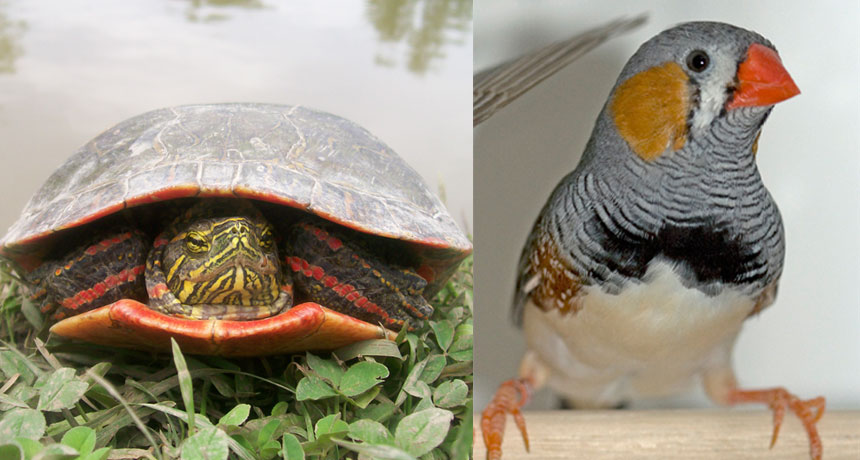
The new finding, published in the Aug. 17 Proceedings of the Royal Society B, rests on the discovery that birds and turtles share a gene used both for red vision and red coloration. More bird and turtle species use the gene, called CYP2J19, for vision than for coloration, however, suggesting that its first job was in sight.
“We have this single gene that has two very different functions,” says evolutionary biologist Nicholas Mundy of the University of Cambridge. Mundy’s team wondered which function came first: the red vision or the ornamentation.

In evolution, what an animal can see is often linked with what others can display, says paleontologist Martin Sander of the University of Bonn in Germany, who did not work on the new study. “We’re always getting at color from these two sides,” he says, because the point of seeing a strong color is often reading visual signals.

Scientists already knew that birds use CYP2J19 for vision and color. In bird eyes, the gene contains instructions for making bright red oil droplets that filter red light. Other forms of red color vision evolved earlier in other animals, but this form allows birds to see more shades of red than humans can. Elsewhere in the body, the same gene can code for pigments that stain feathers red. Turtles are the only other land vertebrates with bright red oil droplets in their eyes. But scientists weren’t sure if the same gene was responsible, Mundy says.

His team searched for CYP2J19 in the DNA of three turtle species: the western painted turtle, Chinese soft-shell turtle and green sea turtle. All three have the gene. Both birds and turtles, the researchers conclude, inherited the gene from a shared ancestor that lived at least 250 million years ago. (Crocodiles and alligators, close relatives of birds and turtles, probably lost the gene sometime after splitting from this common ancestor, Mundy says.)

Next, the scientists turned their attention to the gene’s function. Mundy’s team studied western painted turtles, which have a striking red shell. As in red birds, CYP2J19 is active in the eyes and bodies of these turtles, the scientists found, suggesting that the gene is involved in both vision and coloration.
Because most birds and turtles can see red, but only some have red feathers or scales, the researchers think the great-granddaddy of modern turtles and birds probably used the gene for vision, too. Whether that common ancestor was colored red is unclear.

That very old reptile would have passed CYP2J19 down to its descendants, including dinosaurs. Mounting evidence has pointed to dinosaurs as colorful, with good color vision. But the specifics of their coloration have been elusive. This study points to red as one color they could probably see, and perhaps display.

“If you would have asked me 10 years ago, ‘Will we ever know the color of dinosaurs?’” Sander says, “I would have said, ‘No way!’” But studies like this one are a new lens into dinosaur color. Seeing can mean displaying, and this study is solid evidence that dinosaurs saw red, Sander says. In the past, “we couldn’t really say that.”

Supersmall device uses individual atoms to store data

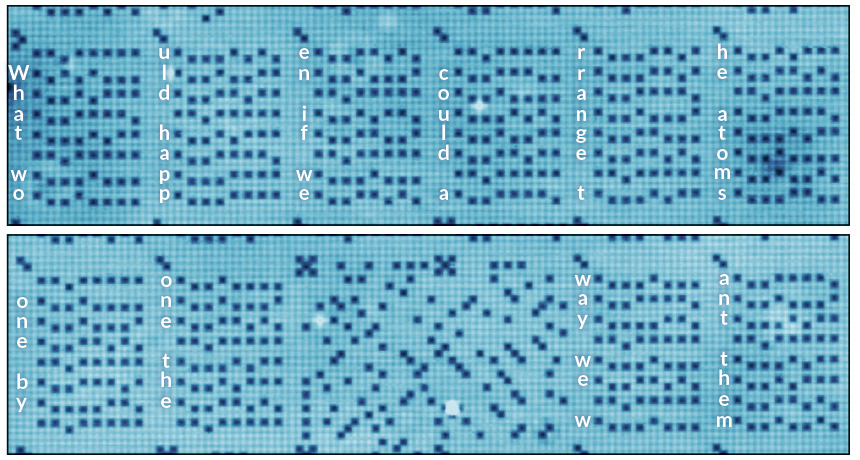
These orderly patterns of dark blue dots indicate where individual chlorine atoms are missing from an otherwise regular grid of atoms. Scientists manipulated these vacancies to create a supersmall data storage device.

The locations of vacancies encode bits of information in the device, which Sander Otte of Delft University of Technology in the Netherlands and colleagues describe July 18 in Nature Nanotechnology. The team arranged and imaged the vacancies using a scanning tunneling microscope. The storage system, which can hold a kilobyte of data, must be cooled to a chilly −196° Celsius to work.
To demonstrate the technique, the researchers transcribed an excerpt from a famous 1959 lecture by physicist Richard Feynman, “There’s Plenty of Room at the Bottom,” which predicted the importance of nanotechnology. In each block, paired rows represent letters. Blocks marked with an “X” were unusable. The encoded 159 words of text fill a region a ten-thousandth of a millimeter wide.

If scaled up, the researchers say, the technology could store the full contents of the U.S. Library of Congress in a cube a tenth of a millimeter on each side.

Thank (or blame) your genes for ability to handle java jolt

Coffee consumption may be in the genes.

Activity of a gene that lowers levels of caffeine-degrading enzymes in the liver is associated with how much coffee people drink, researchers say August 25 in Scientific Reports. The more active the gene, called PDSS2, the less coffee people drank.

Researchers tracked the coffee-drinking habits of 1,207 people in remote Italian villages and 1,731 people from the Netherlands. The researchers looked for an association between sipping java and people’s genetic makeup. The Dutch quaffed, on average, more than five cups of filtered coffee per day; the Italians sipped about two cups of espresso.
In the Italians, 21 genetic variants in DNA surrounding the PDSS2 gene were linked to coffee consumption, Nicola Pirastu, of the University of Edinburgh, and colleagues found. The strongest-acting variant changed espresso consumption by 1.09 cups per day. Only five of the variants found in the Italians seemed to alter coffee-drinking in Dutch people, and did so to a lesser extent.

Given the larger size of the cups, Dutch people consume about three times as much caffeine per cup as the Italians do. Other caffeine-processing genes, such as CYP1A2 (SN Online: 4/8/11), may control coffee consumption habits at higher caffeine doses, while PDSS2 limits low-level caffeine intake, the researchers speculate.