A traffic accident occurred on the G40 Shanghai-Xi'an Expressway at the K991+800 section in Tongbai county, Nanyang, Central China's Henan Province, at around 2:40 am on Thursday, leaving 13 people dead and three injured, according to a statement released by China's Ministry of Public Security on Thursday morning.
The accident took place as a passenger van rear-ended a semi-trailer truck traveling ahead of it.
The passenger vehicle was approved to carry nine people but was carrying 16 at the time of the crash, according to the statement.
Following the accident, the Ministry of Public Security immediately dispatched a working team to Nanyang to guide the investigation and the handling of the incident.
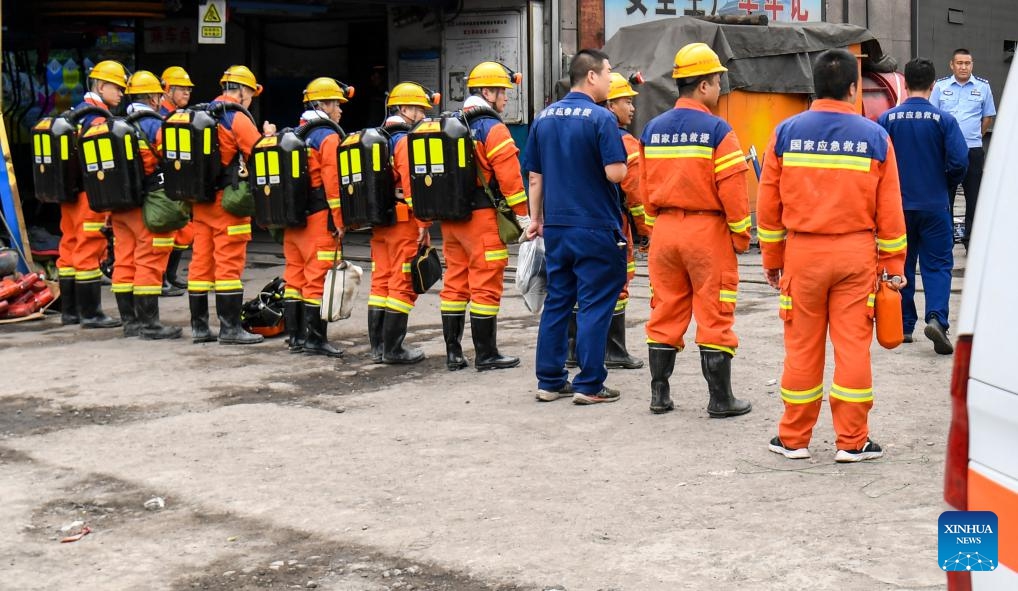
Following the gas explosion at a coal mine in Qinyuan County, North China's Shanxi Province, an investigation team sent by China's State Council has vowed to thoroughly and strictly investigate the deadly explosion on Saturday evening, according to Xinhua News Agency.
The investigation team announced to conduct a rigorous and uncompromising investigation into the gas explosion accident to identify the causes of the accident, clarify the responsibilities of local authorities, industry regulators, and the enterprise involved, and impose severe punishments in accordance with laws and regulations, per Xinhua News Agency.
At 7:29 pm on Friday, a gas explosion occurred at the Liushenyu coal mine, operated by Shanxi Tongzhou Group in Qinyuan County, where a total of 247 workers were underground at the time, per a release from the Qinyuan County Emergency Management Bureau published Saturday morning. As of the press time, the death toll had risen to 82, while 2 people remained missing and 128 people were injured and receiving treatment at hospitals, according to CCTV News.
Following the incident, Party committees and governments at the provincial, city, and county levels attached great importance to the situation. Principal officials immediately made arrangements and deployments, promptly activated the emergency response mechanism, and rushed to the scene to direct rescue operations, the release said.
According to Xinhua News Agency, China has dispatched six national mine emergency rescue teams, totaling 345 personnel with equipment, to assist in rescue efforts following the gas explosion, citing the Ministry of Emergency Management. It's also reported that Shanxi Province has sent 755 people including rescuers and medical personnel to the site. Rescue efforts are ongoing.
Meanwhile, following the the gas explosion, officials from China's National Health Commission came to the scene to coordinate emergency medical treatment efforts, while multidisciplinary medical experts from several top-tier hospitals in Beijing were organized to provide remote consultations and on-site medical support. Health Commission of Shanxi Province also promptly deployed 17 experts from local medical institutions and 86 ambulances to support medical rescue operations on the site, per Xinhua News Agency.
According to the People's Daily, a total of 128 people are receiving treatment at hospitals, including 124 with minor injuries, two with serious injuries, and two in critical condition. All 124 lightly injured patients have been transferred to tertiary hospitals for close monitoring and symptomatic treatment.
The CCTV News reported that Qinyuan County People's Hospital has received 27 of the injured, of which one is seriously injured. The doctors at the hospital said the injured were mainly harmed by exposure to toxic gases, and are currently receiving hyperbaric oxygen therapy as the primary treatment. As of press time, the seriously injured miner is being treated in the intensive care unit (ICU), with vital signs remaining stable. The other 26 miners with minor injuries are already able to eat independently, while some are also able to move around on their own, according to the report.
One surviving miner told CCTV News that he did not hear any explosion, but suddenly saw a cloud of smoke accompanied by a sulfur-like smell similar to blasting fumes. He said he lost consciousness while trying to escape, but woke up more than an hour later, helped nearby coworkers regain consciousness, and eventually made his way out of the mine with them.
The persons responsible for the company involved in the mine accident have been placed under control in accordance with the law, according to Xinhua News Agency.
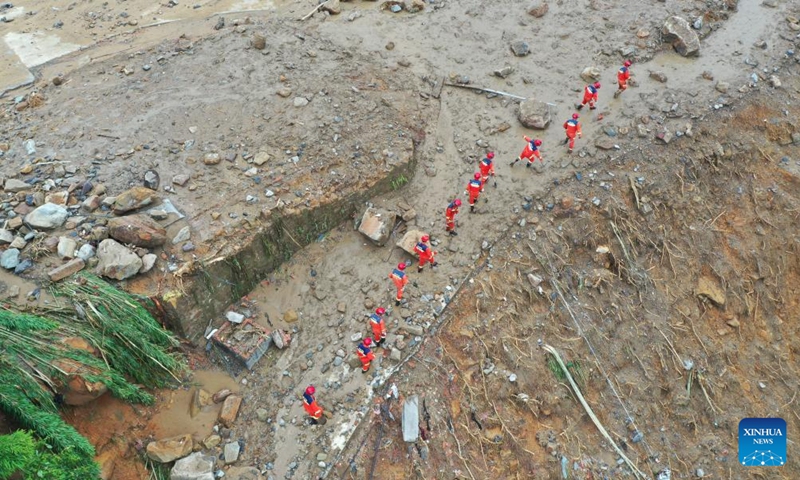
Record-breaking torrential rain battered Yongchuan District in southwest China's Chongqing Municipality from late Saturday to Sunday, triggering flash floods, landslides and mudslides. Rescue operations are still underway as multiple towns and subdistricts suffered severe damage.
By Sunday afternoon, three people were killed and another 17 were unaccounted for in Yongchuan. In addition, two people were also missing after the rain lashed Beibei District in the municipality.
As of 5 p.m. Sunday, authorities had evacuated 423 residents in Yongchuan to safety, while another 1,382 people had been swiftly relocated and resettled.
Meteorological data showed that rainfall at a monitoring station in Shuangshi Township reached 296.6 millimeters within six hours, shattering Chongqing's historical record since meteorological records began.
Starting from 2 p.m. Sunday, Chongqing has adjusted Yongchuan District to a Level-I flood control emergency response at the municipal level, 29 districts and counties to a Level-II response, and nine districts and counties to a Level-III response, said the flood control and drought relief headquarters of Chongqing.
Heavy rains have hit 22 districts and counties in Chongqing, and the water levels of 22 rivers in the municipality have exceeded the warning level, according to Chongqing's hydrological monitoring station.
The China National Commission for Disaster Reduction on Sunday activated a Level-IV emergency response for floods and geological disasters in Chongqing.
A work team has been dispatched to the disaster-hit areas to assess the situation on the ground and assist local disaster relief efforts, according to the Ministry of Emergency Management.
The National Development and Reform Commission said on Sunday that it has allocated 20 million yuan (about 2.93 million U.S. dollars) from the central government's budget to support post-flood emergency recovery efforts in Chongqing.
The funds will primarily be used for the emergency restoration of damaged roads, bridges and other infrastructure, as well as public service facilities such as schools and hospitals in the affected areas, to restore normal production and daily life as soon as possible.
At the invitation of Member of the Political Bureau of the CPC Central Committee and Foreign Minister Wang Yi, Singaporean Foreign Minister Vivian Balakrishnan will pay a working visit to China from May 24 to 26.
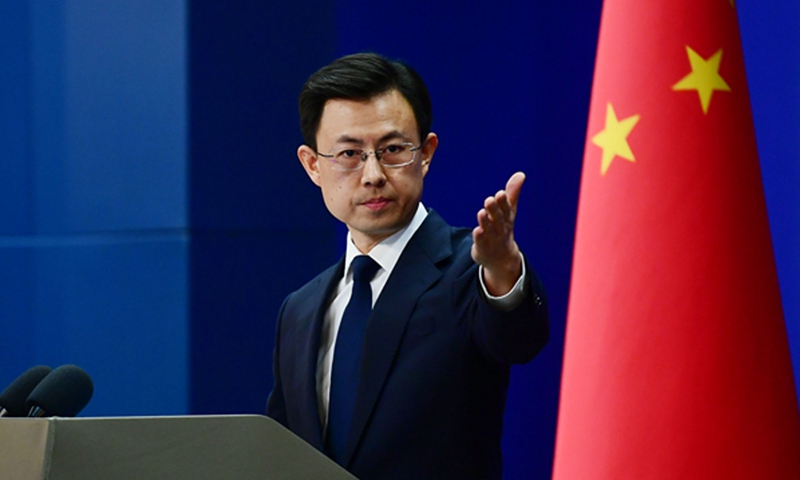
China has consistently opposed illegal unilateral sanctions lacking basis in international law, firmly supports Cuba in safeguarding its national sovereignty and security, and urges the US to immediately end its blockade against Cuba and all forms of coercion and pressure, and stop infringing upon the Cuban people's rights to survival and development, Chinese Foreign Ministry spokesperson Lin Jian stated on Tuesday.
These remarks were made when asked to comment on reports that Cuban President Miguel Diaz-Canel posted on social media on Monday that Cuba is facing threats of military aggression from the US and that the threat itself constitutes an international crime, warning that if carried out, it would trigger bloodshed and undermine regional peace. The Cuban president also stressed that Cuba has no intention of aggression against any country, including the US, but is suffering multidimensional aggression from Washington and therefore possesses the legitimate right to self-defense. Also on Monday, the US Department of the Treasury imposed a new round of sanctions on nine individuals linked to Cuba's intelligence agency.
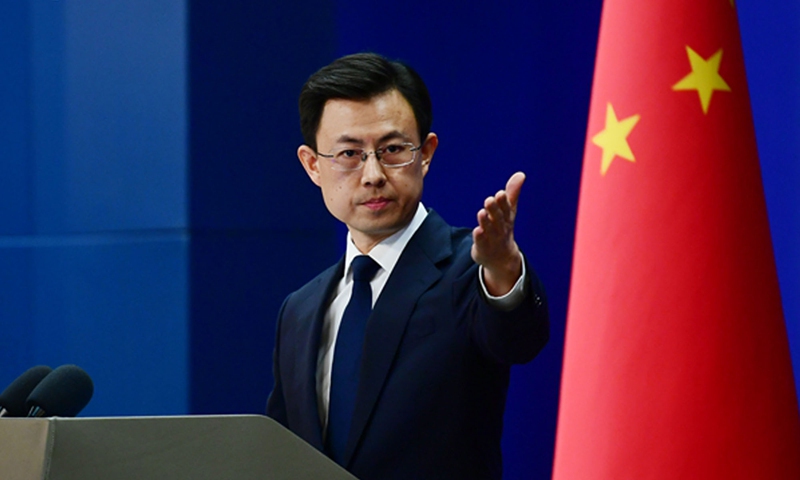
When responding to a foreign media reporter's question citing a Reuters report on Friday that British Foreign Secretary Yvette Cooper will visit China according to sources, and asking whether China could confirm the visit and what expectations China has for Cooper's planned visit, Chinese Foreign Ministry spokesperson Guo Jiakun said on Friday that both China and the UK are permanent members of the UN Security Council and major economies in the world. To develop a sustained and steady China-UK comprehensive strategic partnership is an important common understanding reached between the leaders of the two countries.
China stands ready to maintain close exchanges and dialogue with the UK side and jointly work for continued development in our friendly exchanges and mutually beneficial cooperation, the spokesperson noted.
"On the visit you mentioned, I have nothing to share at the moment," Guo said.
According to an exclusive Reuters report on Friday, Cooper is expected to visit China in early June, three sources said, as London seeks to capitalize on relatively cordial ties with Beijing before any fresh setback over a new Chinese embassy in the UK capital.
The British government announced in January that it had approved plans for the construction of a new Chinese embassy in London. The new embassy is scheduled to be built on the former Royal Mint Court site in the London Borough of Tower Hamlets, according to the Xinhua News Agency.
When asked to comment on the British government's announcement, Guo told a regular press conference in January that providing support and convenience for the construction of diplomatic premises is an international obligation of host countries. The planning proposal of the new Chinese embassy project is of high quality. The application and its approval are fully in line with international diplomatic practice as well as local legal regulations and procedures.
The recent period has seen improving momentum in China-UK relations. On March 19, Member of the Political Bureau of the CPC Central Committee and Foreign Minister Wang Yi had a phone call with Cooper at the latter's request, and the two sides exchanged views focusing on the current situation in the Middle East, per a readout from the Chinese Foreign Ministry.
The two sides also exchanged views on China-UK relations and agreed that both countries should actively implement the consensus reached by the leaders of both countries, enhance exchanges, and continuously advance the long-term, stable comprehensive strategic partnership between China and the UK, so as to inject stability and certainty to a world marked by turbulence and change, according to the readout.
In January, British Prime Minister Keir Starmer made an official visit to China, marking the first by a British prime minister in eight years, per Xinhua.
Starmer's official visit to China yielded fruitful results, demonstrating the breadth and depth of cooperation between the two countries, Guo told a regular press conference in January.
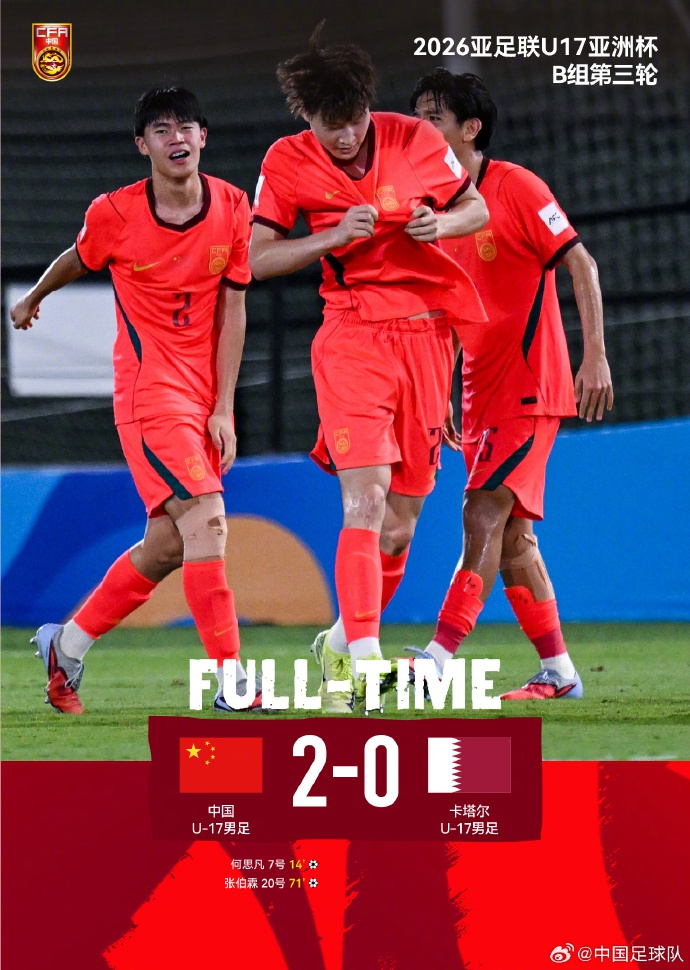
China's U17 men's national football team has secured qualification for the FIFA U-17 World Cup to be held in Qatar this year after advancing to the quarterfinals of the AFC U-17 Asian Cup Saudi Arabia 2026.
It marks the return of a Chinese men's football team to a global tournament for the first time since 2005.
China booked its place in the last eight after defeating Qatar 2-0 on Tuesday in Jeddah, Saudi Arabia to finish among the top two teams in its group.
This also guaranteed the team one of Asia's qualification berths for the FIFA U-17 World Cup, which was expanded to 48 teams last year.
Winger He Sifan scored the opening goal for China in the 13th minute. The Chinese youth team, which carries high hopes for the revival of Chinese football, had suffered two consecutive defeats to Indonesia and Japan prior to the game against Qatar in the group.
Substitute Zhang Bolin scored the second goal in the 70th minute to seal the win for China. The Chinese team had to secure a two-goal win to secure a berth for automatic qualification, while also needing Japan beat Indonesia.
The U17 World Cup is scheduled to be held in Qatar from November 20 to December 14, 2026. Under the new format, Asia is allocated nine spots, including the host Qatar.
Even though the game ended in the early hours of Wednesday Beijing time, the Chinese team's progress at the AFC U-17 Asian Cup has been closely followed, partly due to renewed hopes for the development of Chinese youth football, after decades of underachievement by the senior national teams.
The 2026 edition of the FIFA U-17 World Cup will be the second consecutive tournament staged in Qatar and the second under FIFA's expanded annual format, which increased the number of participating teams from 24 to 48.
As some US journalists who traveled to Beijing to cover the US President Donald Trump's visit to China experienced cashier-less supermarkets, watched performances by Unitree Robotics robots , tried new energy vehicles and tasted the delicious Chinese food, they were struck by the tremendous changes taking place in China, according to their posts on social media platforms.
Although some still viewed the country through a biased lens - complaining about the large number of surveillance cameras in Beijing - they nevertheless acknowledged how dramatically China has transformed.
"We're here in Beijing and one thing is clear - AI is front and center. This morning our coffee was served up by a robot," Fox News anchor Bret Baier said in a post on Instagram on Wednesday as he was doing a special coverage on China's artificial intelligence boom.
Baier also visited a Family Market convenience store in Beijing where he ended up asking a robot for sausage. He called it "the first of its kind of interaction," according to a Fox News video circulating on the social media.
Noticeably, this veteran US media anchor has not completely dropped his biased lens by claiming that there are many surveillance cameras in Beijing, which caused the Fox News crew ticketed for illegal parking.
However, this "camera-leads-ticketed" was mocked by some netizens on X platform, especially when another video clip circulating online showed that Baier was spotted walking through wide traffic to frame a shot.
"When you visit another country please follow their instructions, not yours, theirs," a netizen @AyveeZin01 said when commenting on the Fox News reporting.
"I don't understand what he is complaining about, is that his driver couldn't get away by parking illegally or is it China making people live by rules?" another netizen @arthajpalle asked.
Some other US journalists also acknowledged many changes that China has been going through during this visit to Beijing.
In a separate program hosted by Fox News' America's Newsroom's co-anchor Bill Hemmer with US Ambassador to China David Perdue, Hemmer said he has been in China 30 years ago, and "the changes are remarkable. I really just see what this country is done."
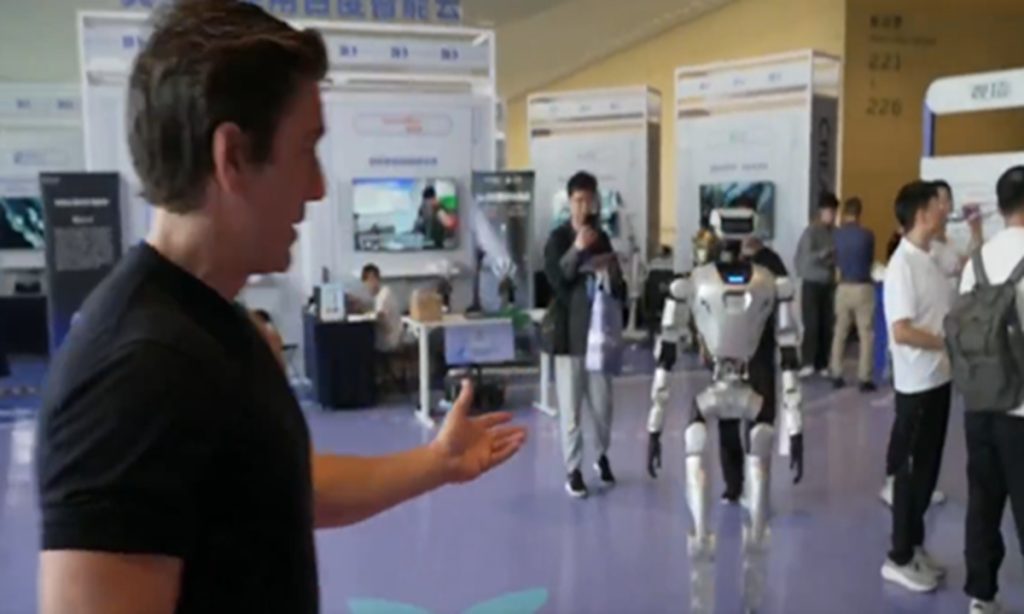
The same sentiment of witnessing dramatic changes has also been shared by ABC World News Tonight's anchor David Muir, who took a closer look at the humanoid robots being built in China - and how it could help humans with home chores and factory labor.
"You can see the future is walking right toward us," Muir said as he met a humanoid robot displayed at a major AI conference in Beijing.
He asked the staff members what the robot can do in the future, and watched the robot to lay down, and then get back up - just like human does. He also greeted a Unitree G1 humanoid robot that can perform martial arts and dance moves.
"Who win the AI race? China? US?" the US journalist asked a Chinese visitor to this conference. "I think it's China," the visitor answered.
"Tonight, the humanoid robots we witness coming right at us, part of this newest frontier to win AI," Muir said in ending this special coverage.
And for NBC News reporters, one of the things to do in China is to try the local specialties.
Tom Llamas took a food tour of Beijing, trying some of the most popular local dishes, according to a video NBC News published on YouTube on Thursday.
"At a cost of around $10, we are going to eat, explore, and try dishes like these," Llamas said at the beginning of the coverage.
He visited a restaurant that makes Chinese-style burgers and tried some dumplings and stem bun tofu pudding, and a fire stick known as Youtiao.
"Yummy!!!" a netizen @coolwalk11 said in commenting on this food program.
"I need to try those food," another netizen @curiouspeople 6441 said.
Besides the local dishes, Llamas also took a Chinese electric vehicle for a test drive to see why brands like BYD are dominating the global market and why a 100 percent US tariff is part of what's keeping them out of American driveways.
Beyond looking into China's future, some US journalists also shed the light on its past.
USA Today reporters visited the Temple of Heaven and interviewed a historian and walking tour founder Lars Ulrik Thom to learn stories and history about this place.
In recent years, "China Travel" has gained increasing popularity and we've seen many positive feedbacks from foreign travelers who have been to China. Convenient mobile apps, high-speed transportation network and safe streets late at night in China deeply impressed foreign visitors. In the first quarter of 2026, the number of foreigners who entered China visa-free continued to increase, up by nearly 30 percent year-on-year, Guo Jiakun, spokesperson of the Chinese Foreign Ministry, said at a press conference on April 23.
"Come to China and discover its true charm beyond imagination. As we embrace the spring-summer travel season, we welcome more foreign friends to come to China visa-free and have an immersive experience of the country where ancient history meets modern marvels," Guo said.
Visitors eagerly leaned forward to experience the C919 simulator cockpit, danced interactively with embodied intelligent robots, and watched rich hand gestures on brain-computer interface screens that illuminate the lives of people with disabilities. These vivid scenes capture the atmosphere of the 28th China Beijing International High-tech Expo, where people are witnessing countless visions of future life gradually turning into reality.
The three-day expo, which opened on Friday with the theme "Science and Technology for a Better Future", brought together more than 800 domestic and international enterprises and institutions, showcasing cutting-edge technological achievements and innovative application scenarios centered on "AI+."
As China's first large-scale international science and technology exchange and cooperation exhibition focused on science and technology, it highlighted the country's breakthroughs in hard technologies across various fields as well as its soft innovation capabilities.
Future life scenarios taking shape
A Global Times reporter personally experienced a variety of technological demonstrations on site: intelligent robots played football with the reporter; by concentrating on on-screen gestures while wearing a brain-computer interface headset and sensor gloves, various remote-control gestures could be performed in the air; relaxing with traditional Chinese-style massage delivered by robotic arms.
Through these immersive experiences, the reporter clearly felt how high-end technologies in fields such as information technology, medicine and health, green low-carbon solutions, and intelligent manufacturing are rapidly integrating into everyday life and reaching ordinary people.
Sergey, a Belarusian working in education in East China's Jiangsu Province, told the Global Times that he flew to Beijing specifically to attend the expo. "This is the first time I've seen an expo with such rich displays of AI technology. It's dazzling. What impressed me most were the AI+ intelligent education applications. I really hope these can reach Belarus and more countries."
AI and robotics featured far more prominently at this year's expo. Humanoid robots, embodied interaction control systems, bionic intelligent robots, and other cutting-edge equipment were prominently displayed.
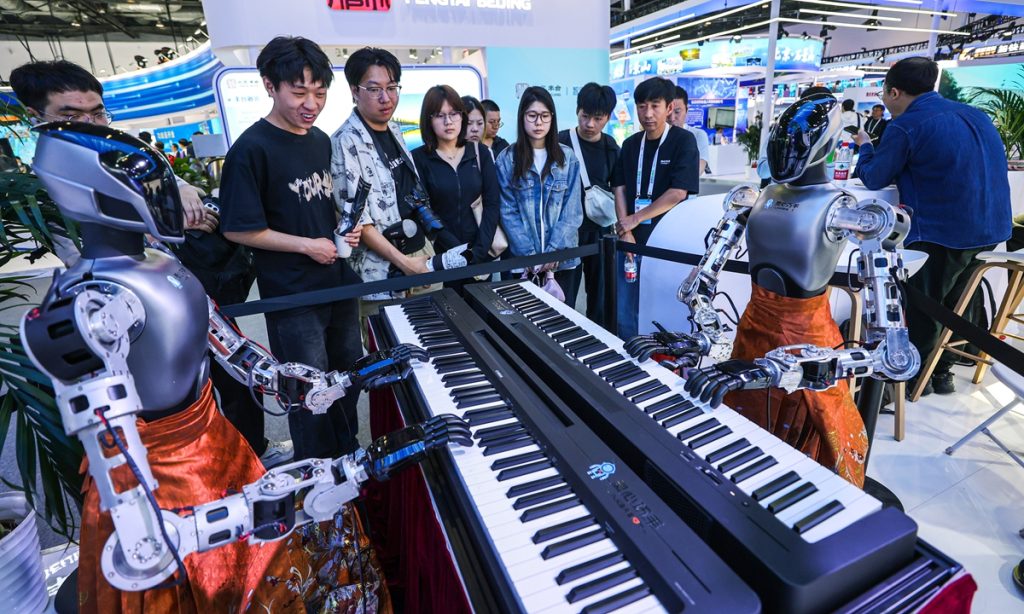
A towering 6-meter-tall ultra-realistic humanoid robot made its debut at the expo, currently the world's tallest and largest humanoid robot. A robot that can play music performed a lively rendition of Beijing Welcomes You, becoming a popular photo spot at the exhibition.
The Global Times reporter tried on a wearable exoskeleton robot and found it remarkably lightweight. It could intelligently recognize the user's body weight, age, joint mobility, and physical condition in real time and dynamically adjust its operating mode accordingly.
"This is literally the future! China is the most technologically advanced country I've ever seen," American vlogger Christian Grossi exclaimed while trying a wearable exoskeleton robot that assists in walking and running during a visit last September to Zhangjiajie National Forest Park in Central China's Hunan Province. The video of his first-hand account has since garnered over 10 million views as of early December last year.
The exoskeleton Grossi wore precisely embodies the future China is striving to build - one in which technology empowers people's lives, bringing hope and better living experiences to more individuals.
Yang Yongtao, deputy general manager of the wearable exoskeleton device exhibitor company China Beijing Ai Robot Technology Co, Ltd, told the Global Times that the growing international attention on Chinese exoskeleton robots has brought more focus to the technology. Foreign buyers have specifically come to customize products.
In the future, they are expected to become an important direction for AI-enabled health and wellness applications — helping elderly people with daily mobility assistance while also reducing the physical burden and fatigue for hiking enthusiasts, thereby supporting the "Healthy China" initiative, Yang said.
Accessible for more people
The expo also gathered top domestic research institutes and sci-tech innovation organizations, showcasing a batch of globally pioneering, independently controllable key core technologies.
Beijing AIForce Technology Co, Ltd, established with support from the Institute of Microelectronics of the Chinese Academy of Sciences, was a standout at the event. Its display of the world's first pure-electric intelligent high-horsepower tractor attracted significant attention, with foreign visitors stopping to inquire about details.
An Zhijian, strategic director of the company, told the Global Times that core technologies for high-horsepower tractors had long been monopolized by companies in Europe and America. Over the past two years, leveraging China's strategic layout in the new energy industry and its complete industrial chain advantages, the company has not only successfully applied new energy technologies to agricultural development but also overcome multiple critical technical bottlenecks that had long been controlled by others.
The company is currently in talks with several Global South nations regarding exports. In the future, this pure-electric agricultural machinery is expected to significantly reduce production and operating costs for farmers, according to An.
In response to recent hyping of the "China Shock 2.0" narrative by some Western media outlets and think tanks, which suggest that China is achieving fast development in high-tech sectors and relies on foreign markets to absorb its overcapacity, thus sending more serious shock waves to the global economy, Chinese Foreign Ministry spokesperson Lin Jian said on Friday that from the world's factory to the world's market and innovation powerhouse, China's development is achieved through strong performance driven by innovation and brings tangible cooperation opportunities and space to the world.
China's high-tech products represented by the "new new three" of robots, AI and innovative drugs have broken high-tech barriers and monopoly and enabled people in more countries to access affordable new technologies, Lin added.
"What really creates "shocks" to the world has never been the innovation of Chinese companies and efficiency of Chinese industrial capacity, but protectionist moves of setting up barriers, decoupling and severing industrial and supply chains. China will stay committed to high-standard opening up, defend the multilateral trading system and provide more certainty and new impetus to the world economy with its own steady development," Lin said.
The active participation of foreign enterprises at this year's expo also confirms that China's open and inclusive attitude is attracting more international cooperation. Companies from countries including South Korea, Sweden, and the US are showcasing their cutting-edge exhibits at the expo.
Swedish company Envac's pneumatic waste collection system, which can reduce road collection vehicle trips by 90 percent, is planning to establish its China headquarters to actively integrate into the "Beautiful China" initiative. Multinational companies such as AstraZeneca and Sanofi displayed innovative drugs in areas including oncology, respiratory health, cardiovascular diseases, and rare diseases. The Seoul Pavilion, promoted by the Seoul municipal government, featured products in AI+ education and smart healthcare from Korean universities and enterprises.
Jaehyun Lee, the manager in charge of the Seoul Pavilion, told the Global Times that they are full of confidence and expectations for China-Korea high-tech sharing and exchanges. They also hope to use this opportunity to showcase Korea's "Smart Life" philosophy to more Chinese audiences.
Technology-themed exhibitions are regarded as important windows for observing the implementation of new quality productive forces. From the Beijing Auto Show and the Digital China Summit to the upcoming Global AI Terminal Expo 2026 & 7th Shenzhen International AI Expo, the recent cluster of tech exhibitions not only demonstrates the scale and industrialization of China's scientific and technological innovation, but also reflects China's commitment to using technology for good and its open and inclusive spirit, analysts said.