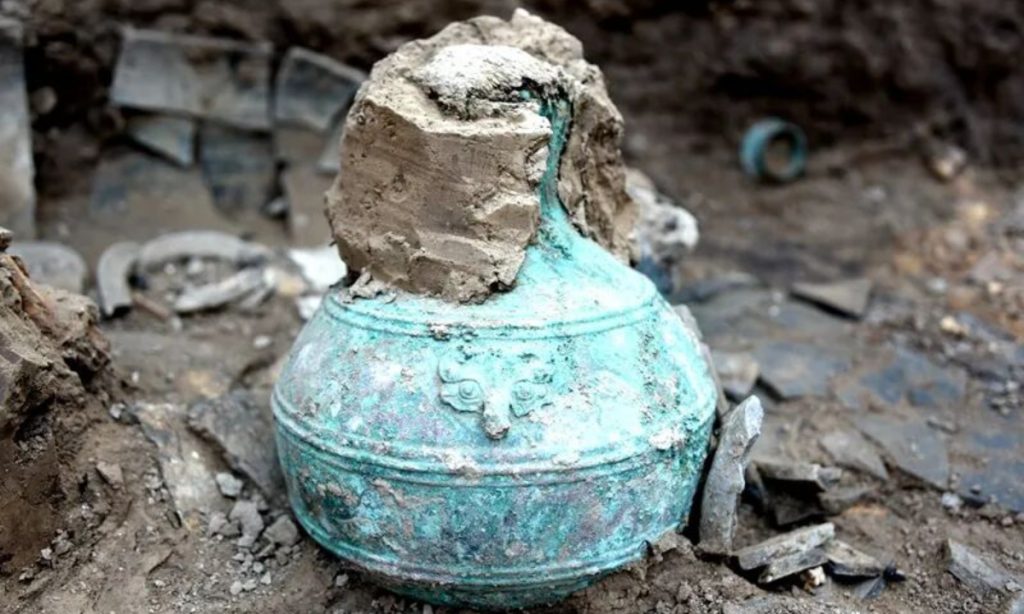
Chinese archaeologists have uncovered 2,300-year-old grain wine residues from a cemetery of people from Qin State during the Warring States Period (475BC-221BC) – roughly the time of Aristotle – in Northwest China’s Ningxia Hui Autonomous Region, revealing the ancient wine’s ingredients and brewing methods through multidisciplinary analysis, Xinhua News Agency reported on Monday.
The Qing State cemetery is located near the Qin Great Wall in Yuanzhou district, Guyuan city in Ningxia, where 183 ancient tombs dating back to the Warring States Period have been excavated.
The archaeologists recovered 3,740 milliliters of ancient liquid remains from a Qin-style bronze garlic-head-shaped pot. The bronze vessel’s double-layer sealing method, textiles inside and muddy outside, preserved the over 2,000-year-old wine with minimal evaporation, making it the most complete and information-rich Warring States Period Qin State-era alcohol relic publicly reported in China.
To accurately decode the recipe and brewing techniques of the ancient wine, the joint archaeological research team from the Ningxia Institute of Cultural Relics and Archaeology and the School of Cultural Heritage at Northwest University conducted multiple analyses and tests on the samples. Using advanced technologies, the team carried out a comprehensive traceability and identification study.
Researchers detected 24 categories of compounds in the liquid remains unearthed from the archaeological site, including organic acids and their derivatives, amino acids and their derivatives, and carbohydrates. The distribution pattern of organic acids was found to be consistent with that of artificially fermented Huangjiu (Chinese yellow wine), confirming that the liquid was a grain-based alcoholic beverage.
The study shows that the Qin people had mastered grain-based fermentation techniques more than 2,000 years ago, using fermentation starters to achieve simultaneous saccharification and fermentation, reflecting the sophistication of their brewing technology during the Warring States Period.
The discovery fills a gap in research on Warring States Period Qin brewing in Ningxia, providing new evidence of China’s ancient grain wine tradition and offering insights into agriculture, food culture, and craftsmanship of pre-Qin period.
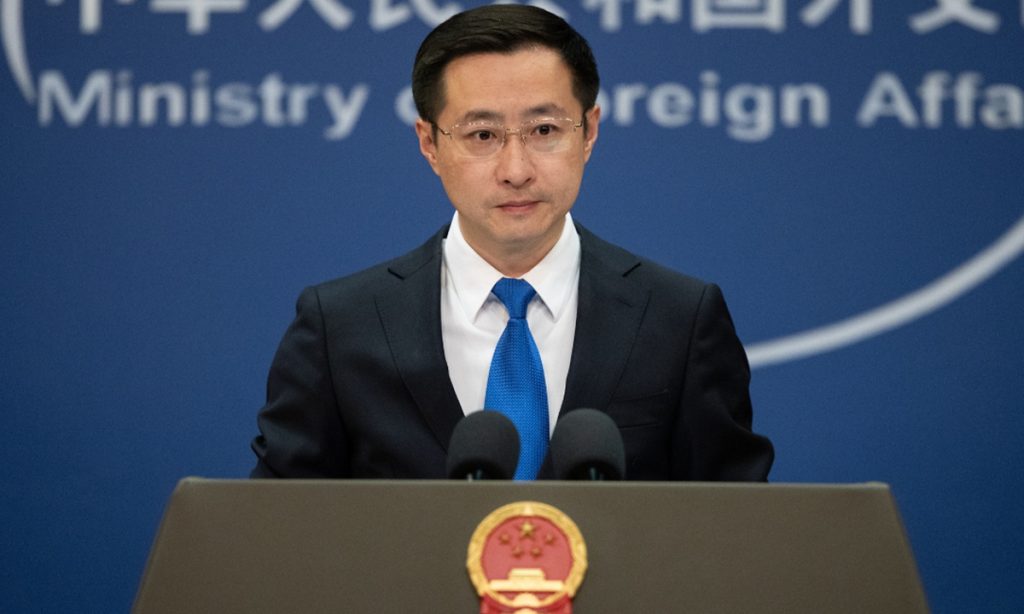
When asked whether Chinese Foreign Minister Wang Yi plans to hold a bilateral meeting with Russian Foreign Minister Sergey Lavrov, as both are attending the Shanghai Cooperation Organization (SCO) Foreign Ministers' meeting in Bishkek, Kyrgyzstan, Chinese Foreign Ministry spokesperson Lin Jian said on Thursday that according to the schedule, Wang is currently on his way to Kyrgyzstan to attend the SCO Foreign Ministers' meeting.
"Regarding his participation in the meeting, we will release information in due course. Please stay tuned for further updates," Lin said.
Global Times has learned that Chinese Foreign Minister Wang Yi had neither meetings nor conversations with the Japanese side during his visit to Manila.
At a regular press briefing on Thursday, Chinese Foreign Ministry spokesperson Lin Jian was asked by Japanese media Kyodo News about whether the Chinese and Japanese foreign ministers had contact and communication in Manila, Lin stated “as I’ve learned, a meeting with the Japanese side in Manila is not on Foreign Minister Wang Yi’s agenda.”
Founder of China's lithium battery sector Chen Liquan and radar technology expert Ben De were presented with China's top sci-tech award for the year 2025 in Beijing on Wednesday.
Chen, born in 1940, is a researcher at the Institute of Physics under the Chinese Academy of Sciences, and an academician of the Chinese Academy of Engineering (CAE). He is widely recognized as the founder, pioneer and leader of China's lithium battery sector.
Ben, born in 1938, is a researcher at the China Electronics Technology Group Corporation and also a CAE academician. He is acclaimed as the founder of China's airborne pulse Doppler radar technology, a major pioneer of phased array radar technology, and a forerunner of space-based surveillance radar technology.
They were presented the award at a meeting that brings together the national science and technology award conference, the general assemblies of the members of the Chinese Academy of Sciences and the CAE, and the 11th national congress of the China Association for Science and Technology.
Wednesday's meeting honored 258 projects and 11 scientific and technological experts. Among them, 51 projects received the State Natural Science Award, 58 projects the State Technological Invention Award, and 149 projects the State Scientific and Technological Progress Award.
In addition to the two recipients of the top award, nine experts were conferred the China International Science and Technology Cooperation Award.
Chinese and Russian naval vessels on Thursday started to carry out live-force, live-fire maritime drills in designated areas near the city of Qingdao, east China's Shandong Province.
The drills are part of the "Joint Sea-2026" exercise, which began on Monday and consists of three phases: force assembly, harbor-based planning and at-sea operations.
According to the exercise plan, the maritime phase includes drills on joint reconnaissance, air defense and anti-missile defense, and coordinated submarine search and rescue operations.
Before the maritime phase, Chinese and Russian participating personnel held a series of shore-based exchange activities, including visits to each other's naval vessels.
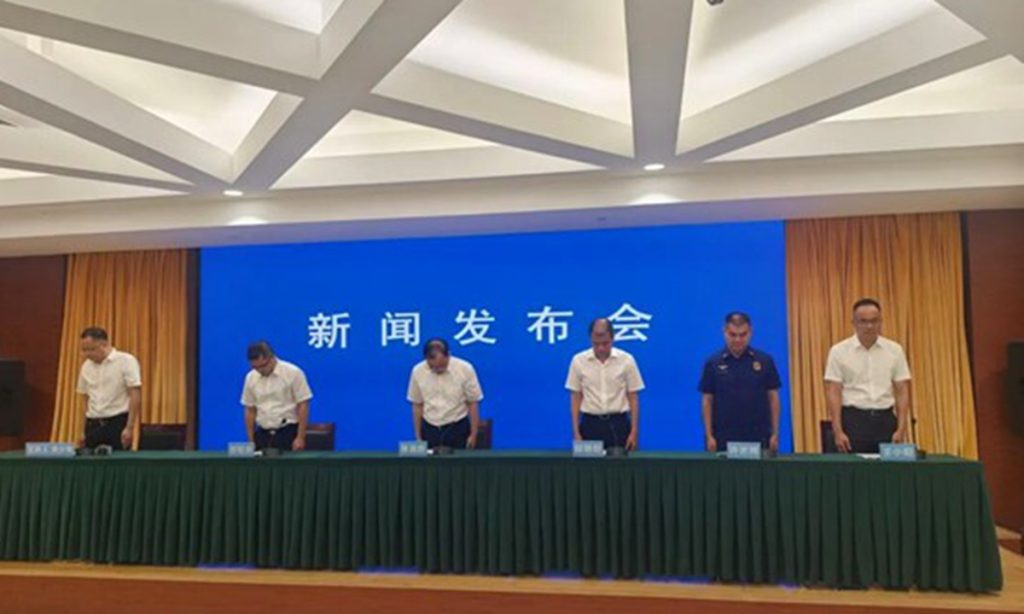
The search-and-rescue operation at the site of a fire at a shoe factory in Jinjiang, Quanzhou, East China's Fujian Province, has basically concluded, with 28 fatalities confirmed, local officials said at a press conference on Friday morning.
Before the press conference began, attendees observed a moment of silence for the victims. Quanzhou Mayor Cai Zhansheng also bowed to express his condolences and apology over the tragedy.
The fire broke out at the factory building of Huiteng Shoes Co in Jiangtou village, Chendai township at 12:04 pm on Thursday. More than 500 professional rescuers from firefighting, medical, emergency response, police and housing departments were dispatched, rescuing 213 people from the site. Two of them later died in hospital, while 26 missing people were confirmed dead after search operations, officials said at the press conference.
Rescue efforts were basically completed by 12:35 am on Friday, with authorities now focusing on post-disaster arrangements and support for affected families.
Fujian provincial authorities have established an investigation team to determine the cause of the fire as soon as possible and pursue accountability. Legal measures have been taken against the company's head and other responsible individuals, Cai said at the press conference.
"This accident resulted in heavy casualties, the cost has been devastating, and the lesson learned is profound," Cai said, vowing to launch a city-wide, comprehensive campaign to identify and rectify workplace safety hazards, ensure the meticulous implementation of safety measures, resolutely eliminate risks, prevent the recurrence of similar accidents, and effectively safeguard the lives and property of the people.
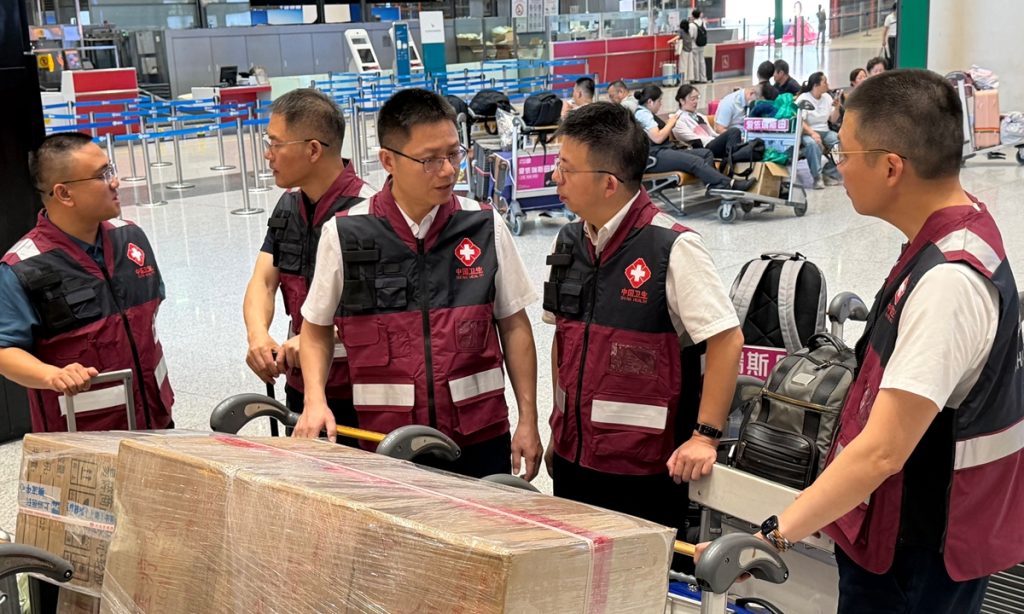
The second batch of China Medical Expert Teams departed Beijing on Thursday night for the Democratic Republic of the Congo (DRC) to support the Central African country's response to the Ebola outbreak, the Global Times learned from the National Health Commission (NHC).
The assistance efforts came after the African country declared the outbreak in mid-May. The outbreak, caused by the Bundibugyo virus, remains "active" in the DRC, with transmission continuing in several hotspot areas, according to the World Health Organization (WHO), the Xinhua News Agency reported.
China dispatched its first batch of medical experts to the DRC in June. Members of the second team told the Global Times on Thursday that their mission builds on the work of the first while also shifting its focus.
The leader of the second team, Gu Zhiqiang, director of the Division for African Affairs (Foreign Assistance) of Department of International Cooperation of the NHC, told the Global Times that they will place greater emphasis on strengthening institutional cooperation with relevant authorities in the DRC and international organizations such as the WHO by establishing regular communication channels.
As the epidemic continues to evolve, the team also hopes to gain a better understanding of the frontline situation and the international community's ongoing assistance efforts, Gu said.
Gu noted that the second priority is to advance scientific and technological cooperation by facilitating cooperation agreements between relevant Chinese institutions and their counterparts in the DRC and Uganda, with the aim of providing more public health products to the international community.
In addition, while the first team have developed contingency plans for Chinese enterprises and overseas Chinese communities in the region, the second team will conduct on-site visits to help implement those plans and ensure they are effectively put into practice, the expert added.
Having prepared more thoroughly and maintained close communication with colleagues already in the field, the second team is expected to transition seamlessly into the ongoing work, one of the team members, Wang Xinyu, a deputy director of the infectious diseases department at Huashan Hospital affiliated to Fudan University, told the Global Times.
The team will also work closely with local health authorities and frontline medical professionals to gain first-hand knowledge of the local epidemic situation and clinical response. Through these two-way exchanges, experts will learn from local experience while sharing China's treatment protocols and best practices in managing highly infectious diseases, Wang said.
The second team consists of five experts specializing in epidemiology, laboratory testing, and clinical treatment, with one specialist from customs, and its mission includes conducting a comprehensive assessment of the latest epidemic situation and trends.
The team also aims to promote cooperation on border health measures with the DRC and Uganda, offering recommendations to strengthen epidemic prevention and control at ports of entry.
The DRC has reported 1,406 confirmed Ebola cases, including 438 deaths, the government said in an update on Wednesday, Xinhua reported. The figures showed that 192 patients had recovered, while 609 others were receiving treatment or being cared for. The outbreak remains concentrated in the eastern provinces of Ituri, North Kivu and South Kivu, where surveillance, medical care and response operations are continuing.
Another team member, Su Qiudong, who is an associate research fellow of National Institute for Viral Disease Control and Prevention, Chinese Center for Disease Control and Prevention, said that he was deployed to Sierra Leone during the 2015 Ebola outbreak, where he was responsible for laboratory testing.
"This mission to the DRC feels different," Su said. It requires greater caution, as much remains unknown about its transmission chain. Su said that one of the primary tasks is to help improve local testing capacity and the goal is to improve testing efficiency so that results can be delivered more quickly.
Under the current arrangement, the Chinese medical team plans to work overseas for one month - three weeks in the DRC and one week in Uganda.
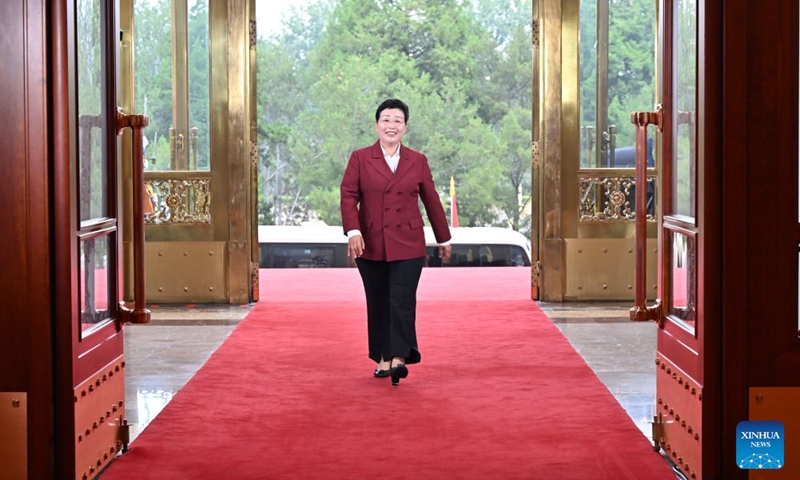
Wu Yaqin, recipient of the July 1 Medal, enters the Great Hall of the People in Beijing, capital of China, July 1, 2026. A gathering in celebration of the 105th founding anniversary of the Communist Party of China (CPC) started at the Great Hall of the People on Wednesday morning in central Beijing. (Xinhua/Yin Bogu)
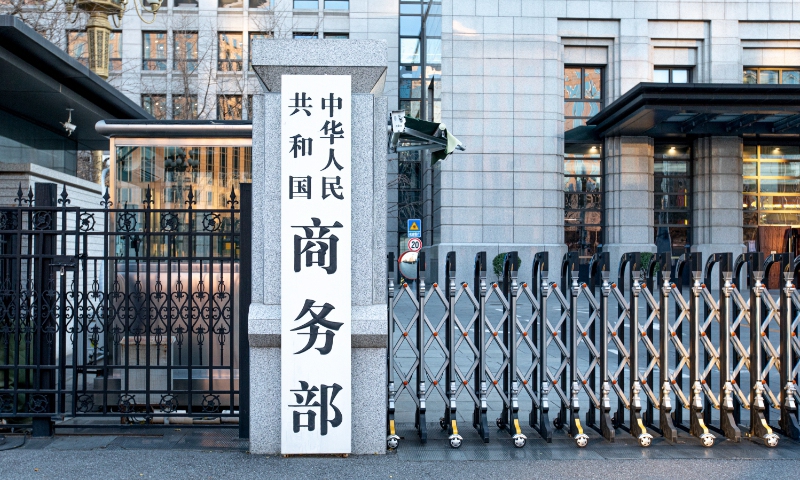
China's Ministry of Commerce (MOFCOM) on Monday expanded export controls on Japan by adding 20 Japanese entities to the control list for dual-use items. At the same time, it placed another 20 Japanese entities on the watch list. These measures aim to resolutely curb Japan's new militarist ambitions.
These measures represent another round of actions targeting Japan after the ministry implemented control measures on Japanese entities including Mitsubishi Heavy Industries Shipbuilding Co in February this year. Chinese experts noted that the latest measures are a stern response to Japan's militaristic move and demonstrates that China's export controls on Japan are continuing to upgrade in a more precise and in-depth direction.
According to the MOFCOM, it decided to include 20 Japanese entities, including the National Institute for Defense Studies, Ground Systems Research Center and Naval Systems Research Center to the export control list, in order to safeguard national security and interests and fulfill international obligations such as non-proliferation.
The ministry also announced the inclusion of 20 Japanese entities, including MITSUI E&S Co., Ltd, Mitsui Bussan Aerospace Co., Ltd. Maintenance Center, and Terra Drone Corporation on the watch list, because their final users and end uses of dual-use items cannot be verified.
Lü Chao, a research fellow at the Liaoning Academy of Social Sciences, told the Global Times on Monday that Japan's domestic neo-militarist ideology continues to spread unchecked. As Japan's production of large quantities of offensive weapons relies heavily on the import of core raw materials such as rare earths from China, the targeted implementation of dual-use item export restrictions is a necessary measure to safeguard China's security interests and curb Japan's dangerous actions, the expert noted.
The MOFCOM spokesperson said on Monday that on February 24, 2026, China added 20 Japanese entities including Mitsubishi Heavy Industries Shipbuilding Co to the export control list and another 20 such entities including SUBARU Corporation to the watch list to curb Japan's remilitarization and nuclear ambitions.
Regrettably, Japan has shown no remorse and instead moved further down the wrong path. Japan has stepped up its push for neo-militarism, accelerated remilitarization, deployed offensive weapons and launched offensive missiles outside its territory, the spokesperson noted.
The latest example came as Japanese media outlet NHK reported on Monday that Japan's Ground SDF says it has deployed a surface-to-ship missile launcher on the nation's easternmost island for the first time. Analysts claimed the deployment is part of the country's attempt to reinforce its Pacific-side defenses.
Lü noted that in the several months prior to the implementation of this round of controls, China's measures had not prompted the relevant Japanese companies and government to wake up and restrain their behavior. Instead, Japan's military expansion has intensified. "Against this backdrop, it is entirely reasonable and imperative for MOFCOM to roll out latest export control measures against Japan. These measures serve as a strong warning against Japan's neo-militarist expansionist actions."
Targeted measures
Zhang Junshe, a Chinese military affairs expert, told the Global Times that compared with the control lists issued in February, the latest measures clearly demonstrated that China's export controls on Japan are continuing to upgrade in a more precise and in-depth direction.
The control lists issued in February primarily targeted Japanese military-industrial manufacturing enterprises such as Mitsubishi Heavy Industries Shipbuilding Co, with the measures focusing on the production end and physical supply chains of Japan's military-industrial chain. The June measures newly include defense research institutions directly under Japan's Ministry of Defense, which further extends the scope of controls to the core of Japan's defense system and the deeper layers of its military-industrial chain, Zhang said.
Zhang further noted that the newly added military research institutions can be regarded as the "defense brain" of Japan's military development. According to Zhang, the National Institute for Defense Studies leads the drafting and formulation of Japan's defense policies and military strategies. It has long instilled right-wing militarist ideologies into Self-Defense Force officers and plays a key role in top-level design in advancing Japan's remilitarization process. The Ground Systems Research Center and Naval Systems Research Center directly support the technological R&D of various offensive weapons and equipment, forming the core support for Japan's expansion of military hardware capabilities.
"Incorporating these core research sources into the controls - compared to merely regulating production enterprises - carries greater strategic deterrent effect. It can impede the resurgence of Japanese militarism at its roots," Zhang noted.
At the same time, this round of controls further expands to subsidiaries and supporting service providers of military-industrial enterprises, encompassing affiliated companies in specialized fields while simultaneously covering upstream segments like special materials, precision processing, and logistics support - gray industrial chain links that were previously often overlooked, the expert added.
Moreover, the Chinese measures are well-founded, reasonable and proportionate. They are neither blind suppression nor a one-size-fits-all severance of cooperation, and will not affect normal economic and trade exchanges. Only those entities with ulterior motives that are using the opportunity to manufacture lethal weapons will face targeted controls. China's stance is entirely open and aboveboard, Lü said.
Shi Xiaoli, director of the WTO Law Research Center at the China University of Political Science and Law, told the Global Times on Monday that the control list and the watch list have each added only 20 entities. "The scale is far smaller than the US and European control lists. Throughout the process, the ministry has consistently adhered to using precise and targeted measures, constraining only entities involved in military industries or nuclear risks, without affecting normal civilian economic and trade activities," Shi noted.
Japanese media outlets have intensively covered the measures and linked them to Japanese Prime Minister Sanae Takaichi's erroneous remarks on China's Taiwan region. Asahi Shimbun said the move represents a further escalation of what amounts to a de facto countermeasure against Japanese Prime Minister Sanae Takaichi's remarks on Taiwan [island]. The Yomiuri Shimbun reported that the measures are seen as part of the economic pressure in response to Takaichi's remarks. NHK reported that Minoru Kihara, Japan's chief cabinet secretary, claimed that the Japanese government lodged a strong protest and demanded the withdrawal of the measures.
Yasukatsu Matsushima, a professor at Ryukoku University in Kyoto, told the Global Times on Monday that the root cause of the current situation lies with Japan.
He said that Takaichi should immediately retract those wrong statements, apologize, and completely abandon the erroneous path toward neo-militarism. Otherwise, not only will Japanese companies' economic activities face obstacles, but all resulting losses will ultimately be passed on to ordinary Japanese citizens, the professor warned.
When responding to the MOFCOM's latest measures targeting Japanese entities, Guo Jiakun, spokesperson from the Foreign Ministry, stressed that it's fully justified, legitimate and lawful for China to take these measures which aim to contain Japan's reckless moves of neo-militarism.
The relevant measures apply solely to dual-use items and do not affect normal economic and trade exchanges between China and Japan. Law-abiding and trustworthy Japanese entities have no need to worry at all, Guo said, noting that we hope that the Japanese side will realize its errors and return from the wrong path, correct its mistaken actions, truly reflect on its behavior, and return to the right track.
China's decision to place entities on the list, taken in accordance with the law, targets only a small number of Japanese entities. The relevant measures target only the dual-use items, and will not affect the normal business exchanges between China and Japan. Japanese entities have no need to worry as long as they operate in good faith and in compliance with the law, Guo said, noting that we hope Japan will turn back from the wrong path, correct its wrongdoings, do serious soul-searching and go back to the right track.