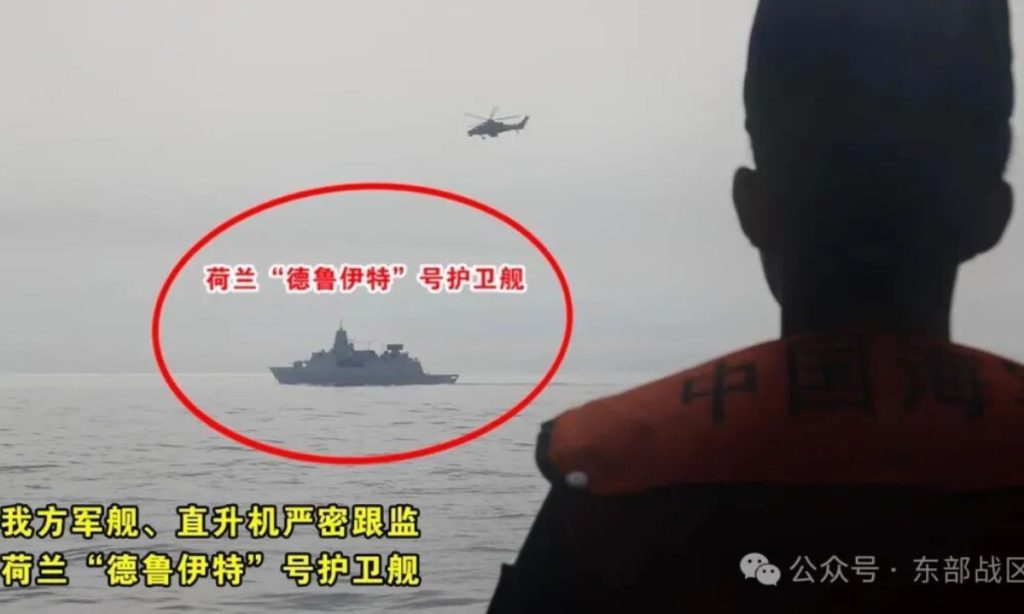
Since May 27, the ship-borne helicopter of the Dutch frigate HNLMS De Ruyter illegally intruded into the airspace over China’s Xisha Qundao, and then the frigate transited the Taiwan Straits, Senior Colonel Xu Chenghua, spokesperson for the People's Liberation Army (PLA) Eastern Theater Command, said on Friday.
The PLA Eastern Theater Command dispatched naval and air assets to track and monitor the Dutch frigate throughout its passage, and handled the situation effectively, the spokesperson said.
The theater command's troops will stay on high alert at all times and resolutely safeguard China’s sovereignty and security, as well as regional peace and stability.
After the photo of Spring Airlines flight attendants was found to be shared on the users forum of Rokid smart glasses recently, discussions and public concerns have emerged over the potential misuse of AI-equippedp wearable devices for covert photography, multiple media including chinanews.com reported on Sunday.
The concern emerged after Xiaoxiang Morning Herald reported that a Rokid glasses user surnamed Yun discovered a post in the Rokid app's online community section dated on May 27 showing a photo of two flight attendants at work taken by the smart glasses, accompanied by the caption: "Spring Airlines flight attendants are pretty good." Yun subsequently filed a complaint through the app and made a post on social media platform cautioning covert photography of smart glasses, raising concerns that smart glasses could become a new tool for unauthorized recording, per Xiaoxiang Morning Herald.
The Global Times reporter did not locate the original post in the smart glasses' app community as of press time, and whether the post had been removed remained unverified. However, many other users have also uploaded first-person videos of various activities in the community section, including footage of strangers in public spaces such as beaches, parks and subway systems.
Yun noted that smart glasses are highly convenient in daily life, particularly for functions such as translation and meeting transcription, but she was surprised to learn that some users were purchasing light-blocking stickers designed to conceal the device's recording indicators, effectively disguising the glasses as ordinary eyewear, according to Xiaoxiang Morning Herald.
Yun discovered that several online retailers are selling stickers intended to block the recording indicator lights. The light was originally designed by the manufacturer of smart glasses to alert people when recording is taking place and help protect privacy, "yet some people are doing everything possible to bypass these safeguards," per report.
One online seller reportedly with more than 5,000 sales of such stickers, advertised that they "do not trigger alerts and do not affect photography." Customer reviews described the products as "amazing," noting that "there is no light when taking photos" and even charging indicator lights were hidden.
Tests conducted by Xiaoxiang Morning Herald reporters found that after applying the stickers, recording with the AI glasses became nearly impossible for bystanders to detect, while notification sounds could only be heard by the wearer.
The incident has prompted discussion among Chinese netizens. One netizen expressed concern that unauthorized photography would become even more difficult to detect, while another said that "although advanced technology offers greater convenience, it is also making personal privacy increasingly vulnerable."
Both Spring Airlines and Rokid later responded to the controversy, while legal experts warned that people who secretly record and upload images without consent could face multiple forms of legal liability, according to the report.
A Spring Airlines staff member told Xiaoxiang Morning Herald on June 4 that photographing cabin crew without permission, particularly when the content is posted publicly online, could infringe upon an individual's portrait rights and privacy rights.
Rokid customer service said the matter had been forwarded to relevant staff for investigation. The company stated that if violations are confirmed, it will take action against the account in accordance with its user agreement and further strengthen guidance on proper use of the devices, according to the report.
Wan Qi, a lawyer with Hunan Jinzhou Law Firm, warned that individuals who secretly photograph others and upload the content online without consent could face civil liability as well as potential administrative or criminal penalties.
According to Wan, photographing and publishing images of individuals without their knowledge may constitute infringement of portrait and privacy rights under China's Civil Code. Victims may seek remedies including cessation of the infringement, public apologies and compensation for emotional distress. In serious cases, offenders could also violate public security regulations or even face criminal prosecution.
Wan added that merchants selling light-blocking stickers designed to circumvent privacy protections could be found to have knowingly facilitated infringement and may face joint liability, per report.
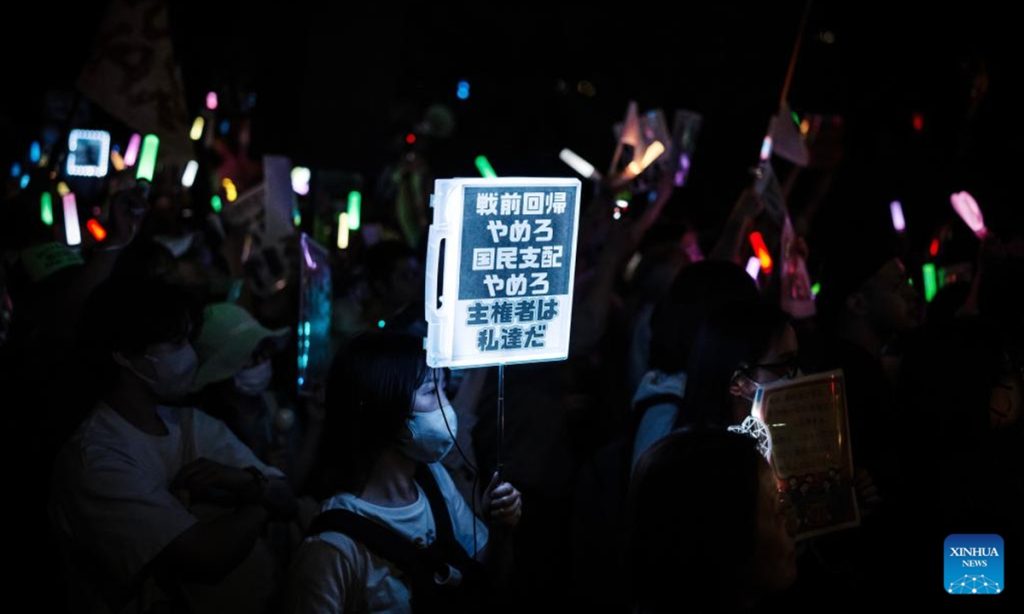
Amid a string of Japan's recent military expansion steps, Japanese media outlets on Wednesday revealed the outline of Japan's annual defense report, which claimed that China's military activities were "a grave concern," and highlighted the need for securing sustained combat capacity for potential "prolonged war."
Chinese experts said Japan is using a well-worn trick to portray itself as a victim to drum up global public opinion and fabricate excuses for its militaristic expansion. Tokyo's rapid military buildup has gone far beyond legitimate self-defense demands and serves to pave the way for a return to militarism, a development that warrants close vigilance from the international community.
On the same day, as it responded to yet another development pointing to Japan's dangerous military tilt, China's Foreign Ministry pushed back against the Japanese Defense Ministry's allegation that China kept repeating unfounded claims, underscoring word games cannot whitewash Japan's tangible steps to boost and expand its armed forces.
Well-worn trick
According to the outline of Japan's Defense White Paper, regarding China's military activities, it cites incidents including intermittent radar illumination of Self-Defense Forces aircraft by Chinese fighter jets last December and intensified Chinese carrier operations in the Pacific Ocean, the NHK reported on Wednesday.
The outline labels such military activities "a grave concern" for Japan and the international community and "an unprecedented top strategic challenge," using wording nearly identical to that in the 2025 White Paper, the Japanese media outlet said in the report.
Claiming China's intensifying military operations near Japanese territories, the outline frames the issue as one to be countered by comprehensive national strength plus cooperation and coordination with allies and like-minded partners, the Asahi Shimbun reported on Wednesday.
The full Defense White Paper is expected to be submitted to Japan's Cabinet for review this summer, according to NHK.
The worsening China-Japan relations stem entirely from rampant domestic neo-militarist sentiments in Japan, yet Japan habitually shifts blame on security issues. Worse still, Tokyo pretends to be an innocent victim to mislead the world and rebrand itself from a troublemaking provocateur into an aggrieved party. It is a well-worn trick to build public opinion and prepare for more provocations against China down the line, Lü Chao, an expert at the Liaoning Academy of Social Sciences, told the Global Times on Wednesday.
Hype over the so-called China threat works as a pretext for Japan to expand its military and roll out risky military initiatives, Lü said, noting that every unfounded allegation it levels at China is crafted to justify its own militaristic expansion.
According to NHK, the outline of the paper also creates a new section dedicated to "new forms of warfare," citing the extensive deployment of low-cost drones and protracted combat seen on Ukraine's battlefields. Building on that, the outline underscores the importance of preparing for emerging warfare leveraging AI and drones, securing sustained combat capacity for potential prolonged war, and bolstering defense industrial and technological foundations.
Neo-militarism in Japan has gained alarming momentum, with Tokyo's top priority being to shake off post-war legal shackles on its military, Lü said. "Its massive push for drones and other military equipment far exceeds genuine self-defense needs. This outright military expansion aims to grow Japan's regional leverage and clear the path for a militaristic comeback," the expert said.
Wordplay cannot whitewash military build-up
In response to previous media disclosures of the draft of the Sanae Takaichi administration's first Defense White Paper which reveal that it frames China's activities in the Pacific as a "security threat" and expresses vigilance, Jiang Bin, spokesperson for China's Ministry of National Defense, said on May 28 that what Japan does contradicts what it says. The more it tries to whitewash the inconsistency, the more obvious it gets, he said.
Jiang laid out a batch of dangerous moves taken by Japan. He told the press conference that in recent years, the Japanese government has sharply hiked its defense budget, developed and deployed offensive weapons, eased restrictions on exporting lethal weapons, pushed to revise the pacifist Constitution, clamored to be a war-capable nation, and even touted abandoning the three non-nuclear principles.
"If these actions still qualify as 'exclusively defense-oriented,' then there would be no such word as offensive in the dictionary," Jiang said.
Apart from the long-running policy shifts, fresh dangerous moves from Tokyo have kept emerging recently.
At the end of May, Japan and Philippines has agreed to begin formal negotiations to conclude a security intelligence-sharing agreement. The two countries also recently announced to start talks on maritime delimitation in the waters east of China's Taiwan island, which seriously infringed upon China's territorial sovereignty and maritime rights and interests.
Ironically, as reported by Reuters, at the just-concluded Shangri-La Dialogue in Singapore, Japan's Defence Minister Shinjiro Koizumi rebutted criticism that Japan was embracing new militarism, and claimed: "Think about it. There's a country that has a huge arsenal of nuclear weapons and strategic bombers. Japan has neither of such weapons, and yet Japan is labelled 'new militarism'?"
Refuting such claims, Chinese Foreign Ministry spokesperson Lin Jian said at a regular press conference on Monday that "the remarks from the Japanese official you mentioned have no basis at all. They have zero authority in front of history, law, facts and figures. There is no way that making such remarks will help Japan earn the trust of its Asian neighbors and the international community."
However, it seems to have become a repeated pattern for Japan to reject accusations over military expansion when such issues are raised. Following Lin's remarks, Japanese Defense Ministry spokesperson claimed the next day that China keeps repeating factually unfounded claims and called such reaction regrettable, Japanese media outlet Livedoor News reported.
Responding to the matter, Chinese Foreign Ministry spokesperson Mao Ning said on Wednesday that Japan's justification for its behavior is better characterized as evasion and denial, which is nothing but camouflage for remilitarization.
"The Japanese side has been mum about the militarist invasion and war crimes, still less Japan's obligations under international law. To this day, Japan remains unrepentant over its dark history," Mao said.
Now it is deceiving the Japanese public and international community by mixing up concepts - calling overseas deployment "collective self-defense," buildup of offensive capabilities "acquiring counter-strike capabilities" and export of lethal weapons "equipment and technology cooperation," said Mao.
"Japan's repeated denial of neo-militarism shows its unease, as China's remarks have laid bare the real nature of its continuous military buildup and left Japan fearing more countries will see what it is doing and grow wary of its defense direction," Da Zhigang, a researcher at the Institute of Northeast Asian Studies at the Heilongjiang Provincial Academy of Social Sciences, told the Global Times on Wednesday.
Noting such continuous military moves by Japan could carry long-term risks and adverse impacts on regional peace and security, Da said it is essential for more countries to recognize Japan's true strategic orientation.
"Facts do not lie. Juggling with words does not whitewash Japan's rearmament. The harder Japan tries to hide it, the louder the alarm for the international community," spokesperson Mao said.
Chinese people believe that letters are as valuable as gold. For thousands of years, letters, across mountains and oceans, have been delivering the writers' sentiments and conveying friendship and expectations.
Xi Jinping, general secretary of the Communist Party of China (CPC) Central Committee and Chinese president, has managed to find time to reply to some letters from different sectors of the society and different parts of the world despite his busy work schedule.
Through his letters, Xi has corresponded with international friends from all walks of life on numerous occasions, part of a series of excellent stories of China's international exchanges in the new era. The letters have also added vivid color to the diplomacy between China and other countries.
The Global Times traced and contacted some of the recipients of Xi's letters to hear the inspiring stories behind the letters and their communications with the Chinese president.
In this installment, Serbian steelworkers share with the Global Times their excitement at receiving Xi's reply letter before the Chinese president's visit to Serbia and the story of how close cooperation between the two countries revived the century-old Smederevo steel plant. At around 8 pm on April 30, 2024, when Serbians were ready to embrace the May Day holiday and the Orthodox Easter, Nenad Cvetanovic, head of operations at the hot mill at HBIS Smederevo steel plant, or Hesteel Serbia, got a phone call asking him to stay in the plant because the Chinese Ambassador to Serbia Li Ming would "come to share something with us."
"That was amazing," Cvetanovic and his colleagues thought when they got to know what the surprise was - Chinese President Xi Jinping had replied to their letter days before his second state visit to Serbia after eight years.
Cvetanovic first had the idea to write a letter to Xi in February 2024 when he read a media report saying that the Chinese president might be visiting Serbia again. The idea was widely embraced by his colleagues.
In the letter signed by workers from different departments at the steel plant, they expounded on the latest developments at the plant and its important role in the local economy and people's livelihoods, and they thanked Xi for his care and support for the joint venture located in Smederevo, a small city about 60 kilometers southeast of the Serbian capital Belgrade.
In his reply letter dated April 29, Xi recalled his visit to the plant in June 2016 when he deeply felt the workers' support for the mutually beneficial cooperation between China and Serbia, and their high expectations for a bright future for the steel plant, according to Xinhua News Agency.
It is a great pleasure to learn that the steel plant has turned losses into gains quickly after the investment of a Chinese-funded enterprise, with the jobs of more than 5,000 employees guaranteed, and thousands of families enjoying a peaceful and happy life, Xi said in the letter.
The development of the steel plant could not have been achieved without the dedication and hard work of the workers, who have been working diligently for the quick growth of the steel plant and have written a new chapter for the iron-clad friendship between China and Serbia.
I give you the "thumbs up," Xi said.
The reply letter shows that our efforts are recognized and appreciated and we feel honored and encouraged, Bojan Popovic, head of department of materials management and maintenance at the Hesteel Serbia, told the Global Times.
"It reinforced our belief that the strong bond between China and Serbia is built on the efforts of ordinary workers like us," Popovic said. "We are proud to be part of this partnership and to contribute to the growth and success of our steel plant, and thus, to the development and strengthening of our economic ties."
Rebirth of a plant
The steel plant, first established in 1913, has long been a pillar of former Yugoslavia's metal industry, but it encountered difficulties in the 1990s. The plant then entered two decades of struggle of survival and, in 2012, then owner US Steel Corporation sold the plant to the Serbian government, leaving it with more than 5,000 employees and massive liabilities.
The Global Times learned from senior workers of the steel plant that production was frequently halted at that time. The first thing they would do after waking up in the morning was to check whether smoke was rising from the plant's chimney or not. People did not dare to get married or have babies because they feared they would lose their jobs as the factory could close at any moment.
The light of hope arrived in April 2016 when China's Hesteel Group purchased the plant at a price of 46 million euros ($49.55 million), months after China and Serbia signed in November 2015 a memorandum of understanding within the framework of the China-proposed Belt and Road Initiative (BRI).
During President Xi's state visit to Serbia in June 2016, he made a trip to the steel plant and interacted with workers in the dining room, encouraging them to work hard to bring benefits to local residents.
The purchase and Xi's visit greatly boosted the morale of all the workers; smiles returned to their faces and they started to "plan for the future."
The Global Times learned that Chinese executives from Hesteel did a thorough investigation, finding out that the factory possessed quite good industrial bases and could produce some competitive products even with its then outdated equipment; but the implemented cost control was ineffective.
Therefore they enhanced the management of the steel plant, combining Chinese experience with local practices, streamlined the production process, increased workers' salaries, upgraded equipment and expanded recruitment, and made efforts to tackle the pollution problem.
Upholding the principle of localization of corporate culture, personnel, and benefits, the 13-member Chinese executive team and 5,000-strong Serbian managers and workers' body strived in solidarity to revive the plant and raise it to new heights.
Through unremitting efforts by and from both sides, the plant turned losses into profits in just a few months by year-end of 2016, made a record production volume of 1.77 million tons in 2018, marked a best-in-history revenue of 200 million euros in 2021, and the output value reached 1 billion euros in 2022, Song Sihai, executive director of Hesteel Serbia, told the Global Times.
Joint efforts for future
Plant worker Aleksandar Duncevic recalled all the changes brought about by the takeover and the joint efforts by the Chinese buyer and local Serbian staff, which gave Duncevic "a strong sense of certainty and security," and allowed him to "make plans for the future."
Felic Nenad, who was among the crowds to welcome Xi in 2016, described the China-Serbia cooperation as a "light at the end of the tunnel."
"Now we have new production lines, higher output, and cleaner air… It made a big difference for our city and our country," Nenad told the Global Times.
The Global Times learned that after an investment of 300 million euros to enhance energy efficiency and environmental protection in 2022, the company marked a new milestone in 2023 by dropping dust pollution to 34.8 mg/Nm3, the first time in the plant's history and way lower than EU standards.
Cvetanovic was obviously excited when talking about the plant's new gasholder, upgraded furnace, and finishing mill - industry terms that are concrete evidence of Hesteel Serbia's bright future.
Stefan Nesic, head of temper mills, cutting, packaging, and shipping in the cold rolling mill, started to work at Hesteel Serbia in late 2017. But through conversations with colleagues who were there during Xi's visit, he got the impression that "the visit was of great importance for the morale of the entire factory and has kept encouraging the Serbian workers to join hands for an even better future."
Nesic also told the Global Times that he appreciates the company's comprehensive support for employees from steady paychecks and an improved working environment, to future career development, including his own pursuit of doctoral studies in metallurgical engineering at Belgrade University.
"Our expectations for the future are very positive and optimistic, as the factory shows that it cares about process improvement, new investments, environmental protection, and the quality of its personnel," Nesic said, expressing his hope that Hesteel Serbia will be an increasingly competitive entity in the European and international steel markets.
In 2016, factory workers presented a round plate with the silhouette of the steel plant to President Xi as a gift, writing the first chapter of this time-weathered factory's new story featuring China-Serbia cooperation.
Now, the success of Hesteel Serbia is an embodiment of this "ironclad" friendship and continues to tell success stories of the BRI cooperation.
"Future" is a word that appeared frequently in conversations with Smederevo steelworkers, which is in sheer contrast with the uncertainty and insecurity of the past.
The future of the steel plant is being authored by every Serbian and Chinese personnel in pursuit of a better life; the future of China-Serbia relationship is to be determined by numerous Serbian and Chinese people who have made contribution to boost the warm bilateral exchanges and stronger ties in trade, economic cooperation, culture, and beyond.
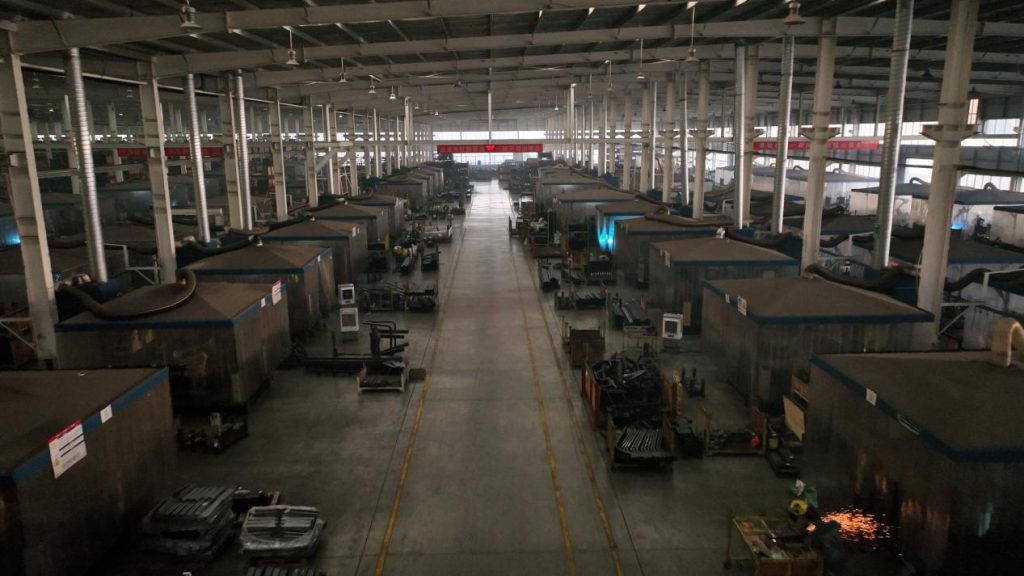
Recently, upon entering the production workshop of Roselot in Ningjin County, Dezhou City, Shandong Province, people would find 200 robotic arms and 180 intelligent machining centers independently processing. In the flickering flames, fitness equipment is gradually being assembled. The increasingly stable power supply has given us the confidence and determination to introduce high-tech and promote 'Robots instead of Labor'. Currently, the workshop has been able to achieve 24-hour on-site unmanned automated production, saving nearly 500 workers, reducing operating costs by 30 percent, reducing product defect rates by 23 percent, and increasing production capacity by nearly 5 times compared to ordinary production workshops.
Since the beginning of this year, Ningjin County has pursued the path of "Digital Economic" development, centering on the traditionally strong local industries of "Hardware and Furniture," focusing on enterprise "Intelligent and Digital Transformation," adhering to innovation driven growth, accelerating the promotion of industrial enterprises "Going cloud-ward to empower intelligence with data."
That is to promote the transformation and upgrading of traditional manufacturing industries with "intelligence" and "digitization", and help the overtaking of county's digital economy through government attracting platforms which to empower enterprises. The upgrading of industries cannot be separated from the support of a stable power grid.
In order to fully ensure the electricity supply for production in the park, State Grid Dezhou Power Supply Company strengthens its visits to enterprises in the park, to understand their electricity needs, assist them in identifying safety hazards, and develop electricity plans based on the current production situation of the enterprise to ensure the safety and reliability of electricity supply for production.
"In order to meet the development needs of the industrial park, we have also planned ahead and increased the construction of the power grid," said Li Haimeng, a representative of State Grid Dezhou Power Supply Company. "A new 110 kV substation and 13 kilometers of 10 kV transmission lines have been built for the industrial park, fully ensuring the development and electricity demand of the industrial park." Overlooking the industrial park, new photovoltaic panels are scattered on top of each factory building, shining brightly in the sunlight and illuminating the path of Ningjin's fitness industry to prosperity. "After the introduction of photovoltaic power generation, the roof area of the factory has been effectively utilized, the monthly electricity expenses have been greatly reduced, and the net profit of the enterprise has also been further improved." The person, in charge of Maibaohe Fitness Equipment Co., Ltd. in Ningjin County, Dezhou City, Shandong Province, said happily.
"By implementing TOU price and cooperating with enterprises to reasonably introduce photovoltaic new energy, the average monthly electricity cost for business can be reduced by tens of thousands of yuan, helping enterprises to lower costs and increase income." said Wang Haitao, a marketing representative from State Grid Dezhou Power Supply Company. In recent years, State Grid Dezhou Power Supply Company has implemented "fixed person, regular, and customized" services to deeply understand customer power needs. It provides one-on-one energy-saving consulting, comprehensive energy efficiency analysis and other electricity services to solve customer electricity problems, help enterprises optimize energy consumption methods, reduce energy costs, and inject sufficient electricity into efficient production. In 2022 alone, the total output value of the local fitness equipment industry was about 8.76 billion yuan, a year-on-year increase of 6.2 percent.
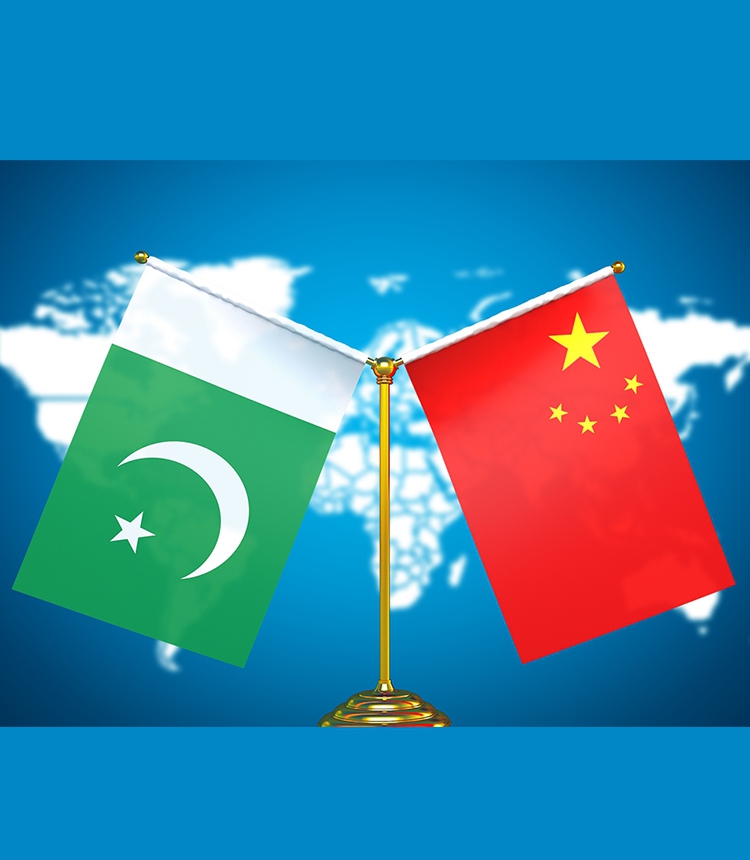
Pakistan’s Federal Minister for Planning, Development, and Special Initiatives Ahsan Iqbal said on Wednesday that China and Pakistan are deepening collaboration on the second phase of the China-Pakistan Economic Corridor (CPEC), with a focus on green energy and technology cooperation, among others.
Iqbal arrived in Beijing on Wednesday for a visit, in the first high-level visit by a Pakistani official to China since Pakistan’s new government came to power. During the visit, Iqbal also held meetings with various Chinese officials.
“China is a historical friend of Pakistan, and has supported us in difficult times,” Iqbal said as he arrived in Beijing, according to a press release sent to the Global Times on Wednesday.
Iqbal said that in the first phase of the CPEC, Pakistan’s energy and infrastructure sectors were upgraded, and in the second phase, the agriculture, industry, green energy and technology sectors will be promoted.
In terms of green energy cooperation, Iqbal said in a meeting with China’s Ambassador to Pakistan Jiang Zaidong in Islamabad on Tuesday that Pakistan’s aim is to establish industrial zones for the manufacturing of electric cars in collaboration with China, leveraging Pakistan's competitive advantages to reduce overall production costs and create employment opportunities for Pakistani workers, according to a separate press release.
During meetings in Beijing, Iqbal also reaffirmed Pakistan’s commitment to the high-quality development of the CPEC, outlining future cooperation in such priority sectors as information technology, agriculture modernization, textiles, minerals and renewable energy.
Iqbal also revealed details about enhanced security measures taken by Pakistan to ensure the security of Chinese personnel, according to the press release.
In mid-December 2022, after China started to ease COVID-19 restrictions that had lasted for three years, the world keenly anticipated a swift and robust recovery in China's economy in 2023. But at a tone-setting economic conference, top Chinese policymakers, while stressing that "an overall recovery and improvement is expected," also offered a sobering assessment of the difficulties that lay ahead.
"Economic work in 2023 will be complex," Xi Jinping, general secretary of the Communist Party of China (CPC) Central Committee, Chinese president and chairman of the Central Military Commission, concluded in a speech at the Central Economic Work Conference (CEWC) on December 15, 2022. The meeting, aimed at setting priorities for economic work in 2023, demanded making economic stability a top priority and pursuing steady progress while ensuring economic stability.
As 2023 draws to an end, what transpired in the Chinese economy over the last year is consistent with that assessment. The economy faced serious downward pressure from shrinking demand, supply shocks, and weakening expectations - "triple pressures" as officials put it. But it also mounted an impressive recovery, with the GDP growth rate widely expected to meet or even exceed an initial target of around 5 percent, a remarkable improvement from the previous three years during the pandemic. More crucially, China also achieved solid progress in high-quality development, with the rise of domestic consumption, scientific and technological innovation, and green development.
All told, China's recovery has become one of the biggest highlights for the global economy in 2023 amid a severe downturn and a complex geo-economic situation - China is expected to be the fastest-growing major economy and contribute roughly one-third of global growth, according to Chinese and foreign economists. Beyond the direct contribution to growth, faster growth in China also has positive spillover effects on the rest of the world: A single percentage point of growth in China, on average, increases output in other economies by 0.3 percent over the medium term, according to the IMF.
Behind such a hard-won, impressive outcome are objective and scientific decision-making by Chinese policymakers under Xi's leadership, a series of targeted and effective policies to tackle risks and challenges head-on, as well as the effective execution of those policies - the quintessential Chinese governance model that underpins China's long-running economic miracle, economists said.
This also vividly demonstrated how Xi Jinping's economic thought, which, among other things, stresses high-quality development, is put into practice to address problems and promote high-quality development, they noted.
Hard-won, impressive outcome China's economic recovery was by no means smooth in 2023.
"In fact, the post-pandemic economic recovery was full of difficulties and challenges. Some were unprecedented. Despite all these [challenges], China took a series of measures and deepened reforms and opening-up. We achieved an effective improvement in quality and reasonable growth in quantity," Guan Tao, global chief economist at BOC International under the Bank of China, told the Global Times. "This indeed is a very hard-won outcome."
China's economy grew by 5.2 percent year-on-year in the first three quarters, and the full-year GDP growth rate is expected to exceed the official growth target of around 5 percent. That is a remarkable comeback from a 3 percent rate in 2022 and significantly higher than the average growth rate of 4.5 percent between 2020 and 2022. Globally, a 5-percent growth rate in China would also largely outpace a projected global growth rate of 3 percent, 1.5 percent in advanced economies, and 4 percent in emerging markets and developing economies, according to the IMF.
What's more, international organizations have constantly upgraded China's growth forecasts, in stark contrast to grim predictions hyped by some Western economic pundits and media outlets.
"We recently upgraded our 2023 forecast to 5.4 percent. This forecast was increased by 0.4 percentage points in November," Steven Alan Barnett, senior IMF resident representative in China, told the Global Times in an exclusive interview. "At 5.4 percent growth, China by itself would explain around one-third of global growth in 2023."
Apart from growth in quantity, China's high-quality development also made significant strides in 2023, reflected in the rapid rise of new emerging industries, breakthroughs in critical technologies, the transition toward consumption-led growth, and the expansion of green development.
High-quality development Barnett highlighted China's rapid growth in new industries like electric vehicles (EVs) and green technologies that offered a cushion against other downward pressures. "China, in fact, stands out as a technological leader in the production of green technologies such as solar panels and EVs," he said.
In a remarkable example, China surpassed Japan to become the world's biggest auto exporter in the first quarter of 2023, thanks to the new-energy vehicles (NEVs) sector. In the first 11 months, NEVs output grew by 34.5 percent to 8.426 million units, while sales increased by 36.7 percent to 8.304 million units, according to the latest industry data. More than 64 percent of global NEVs sales were in China during the period, according to the 2023 World New Energy Vehicle Congress.
Also highlighting progress in China's innovation-driven high-quality development, in November, the added value of high-tech manufacturing above designated size increased by 6.2 percent year-on-year, 4.4 percentage points faster than that of the previous month. High-tech products such as solar cells, service robots, and integrated circuits continued their stellar performance, with their output rising 44.5 percent, 33.3 percent, and 27.9 percent, respectively.
That helped promote high-quality development in China's foreign trade, with the upgrade of the export structure. In the first 11 months, China's exports of NEVs, lithium batteries, and solar cells - collectively known as "the three new items" of China's exports - jumped by 41.7 percent to about 79.9 billion yuan.
Also underscoring China's optimizing trade structure, "during a period of declining orders from the US and Europe, China's trade with emerging markets continues to grow," Wei Jianguo, former Chinese vice minister of commerce and executive deputy director of the China Center for International Economic Exchanges, told the Global Times.
Another highlight of China's high-quality development is the rise of domestic consumption as the main economic growth driver. In the first 11 months, total retail sales, a main gauge of consumption, grew by 7.2 percent year-on-year to about 42.8 trillion yuan, with a 10.1 percent growth in November. "Consumption explained around 80 percent of growth in the first three quarters of the year," Barnett said.
Innovation-led and consumption-driven growth is a crucial part of China's high-quality development, which is at the front and center of China's economic policymaking. This year's CEWC, held on December 11 and 12, stressed that it is imperative to uphold high-quality development as the unyielding principle of the new era. The phrase has drawn much attention as it resembles the popular Chinese saying "development is the absolute principle," popularized during the decades of reform and opening-up that ushered in China's rapid economic rise.
Decisive top-down leadership
How did China overcome difficulties and challenges and achieve these hard-won gains? Decisive top-down leadership is the key, economists said.
Over the last year, at major meetings and inspection tours across the country, Xi has repeatedly called for efforts to tackle challenges, stabilize growth, and promote high-quality development.
In his speech at the CEWC last year, Xi stressed "We need to bear in mind the overall strategic picture and focus on major problems" and offered clear guidance on how to tackle them. He called for efforts to expand domestic demand, build a modern industrial system, develop the public sector and support the non-public sector, attract and utilize foreign investment, and forestall and defuse risks in areas such as real estate, financial market and local government debt.
This guidance has since turned into policy actions over the last year. Overall, China has adopted proactive fiscal and prudent monetary policies that have supported economic recovery. In the budget adopted in March, consumption, technological innovation, and high-quality development were prioritized.
Throughout the year, Chinese officials both at the central and local levels released an array of policy measures to support consumption, investment, and the private sector.
China also welcomed a long stream of global business executives and hosted many high-level trade fairs to boost cooperation.
Then in July, amid new challenges and weakening expectations, Xi presided over a meeting of the Political Bureau of the CPC, to set priorities for economic work in the second half of the year. While noting "new difficulties and challenges," the meeting called for solid efforts to expand domestic demand, shore up confidence, and prevent risks. That also led to strong policy measures in the second half of the year, including a plan to issue an additional 1 trillion yuan in treasury bonds in the fourth quarter.
The meeting also stressed that China's economic recovery was a "wave-like" and "zigzag" process. That demonstrated top officials' confidence in the economy, as they are trying to convey a message that China's economy may face high waves but it will always break through and it may zigzag but it will always move forward.
This is very typical of Chinese policymaking - confident in China's development, responsive to new situations, and swift and effective in responding to them, economists said.
"[Top officials] grasp issues in a very objective manner and take measures in a very swift and targeted manner," Guan said.
This has not only helped underpin China's stable economic recovery in 2023 but has also boosted confidence in China's 2024 economic recovery, despite lingering risks and challenges.
"Amid high winds and strong waves in the global economy, China's economy is making solid progress toward the future, forming synergy through optimization and balance, continuously releasing strong development momentum, and demonstrates bright prospects," Cheng Shi, chief economist of ICBC International, told the Global Times.
This year's CEWC, which sets the economic agenda for 2024, noted that some difficulties and challenges must be tackled to achieve further economic recovery and pledged a series of policy measures in a wide range of areas.
"The favorable conditions for China's development outweigh the unfavorable ones, and the overall trend of economic recovery and long-term improvement remains unchanged," it said.
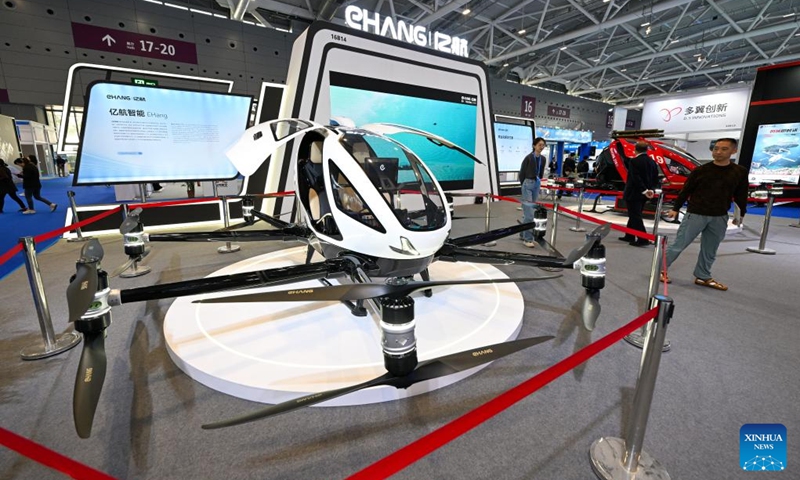
Chinese tech company EHang Holdings Limited has begun to sell its self-developed unmanned electric vertical take-off and landing (eVTOL) aircraft EH216-S on Chinese e-commerce platform Taobao at a cost of 2.39 million yuan ($332,032) per unit, the Global Times observed on Monday.
He Tianxing, a deputy president of EHang, told the Global Times that it was not only for online sale, but also aimed to inform the public the development potential of low-altitude economy in the future.
The EH216-S last December obtained the standard Airworthiness Certificate from the Civil Aviation Administration of China, which marked the eVTOL aircraft becoming eligible for commercial operation.
EH216-S Passenger-Carrying UAV System Obtains Standard Airworthiness Certificate from CAAC and the Certified Aircraft Delivered to Customer in Guangzhou.
Aside from its main selling points including its small size, easy take-off, landing and re-charge ability, as well as quietness, EHang made multiple backups for core parts such as propellers, electric engine, flying control system and batteries.
The Government Work Report released during the recently concluded two sessions earlier this month stated that China will foster new growth engines in fields such as biomanufacturing, commercial spaceflight, and the low-altitude economy.
Analysts pointed out that low-altitude transport can help reduce waste once ground transport has reached its limit in megacities.
Following the announced policy, many cities have taken measures to develop the sector. As the country's first trial province for low-altitude air space management, Southwest China's Sichuan Province simplified low-altitude flight test applications. East China's Anhui also crafted rules to develop low-altitude economy, stating to accelerate the development of the industry in Hefei and Wuhu, two major cities there.
In addition, Shenzhen city in South China's Guangdong Province has published a set of documents and government regulations supporting the development of the low-altitude economy in the province, according to Xinhua News Agency.
As of 2025, the output value of low-altitude economy in China is estimated to reach 3 to 5 trillion yuan, according to a recent survey by the International Digital Economy Academy.
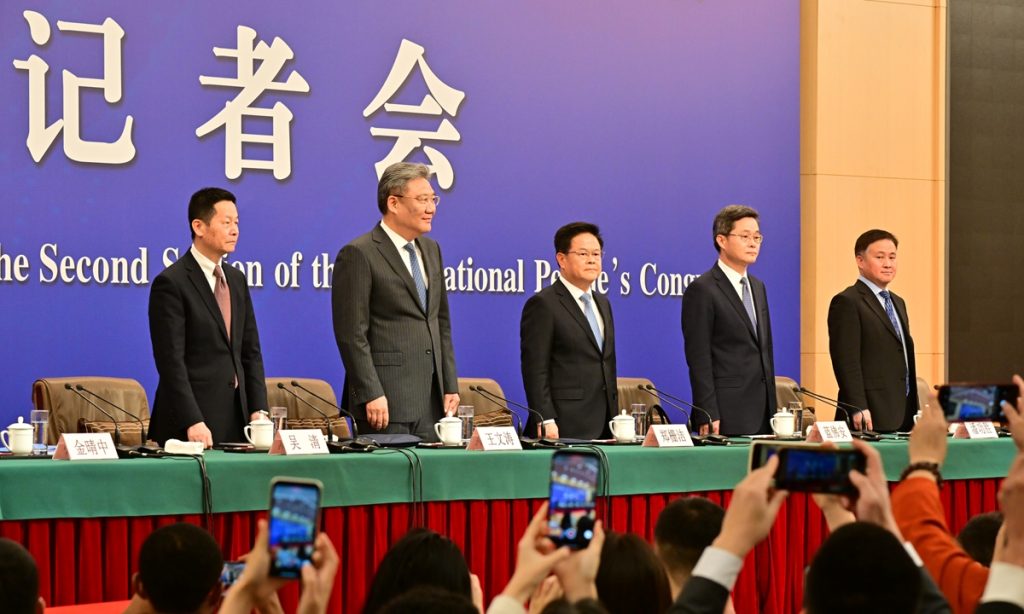
In his first public appearance before media since taking his new post, Wu Qing, head of China's securities watchdog, outlined on Wednesday his plan to ensure the stable development of the capital market, the world's second largest, and vowed to beef up institutional buildup and to better ensure investor protection.
Chinese analysts noted that the institutional and holistic approach outlined by the head of China Securities Regulatory Commission (CSRC), who takes a harsh tone on illegal behavior while being considerate to small investors, is a pragmatic approach that suits the market reality, and is set to boost market confidence, stabilize expectations and shore up the overall investment value of China's capital market.
A number of delegates to the ongoing two sessions also contributed their thoughts on the topic, which is under the global media spotlight and has become a target for Western doomsayers in recent weeks.
Wu's appearance at the press conference, held during the ongoing two sessions, along with several other top government officials in charge of China's economic and trade affairs, is one of the highlights of the political event, as ensuring the stability of the capital market was mentioned in the Government Work Report for the first time following a period of turbulence in the Chinese A-share market ahead of China's Spring Festival holidays in February.
The Government Work Report, delivered by Chinese Premier Li Qiang on Tuesday at the opening meeting of the second session of the 14th National People's Congress, set a growth target of around 5 percent for the country's economy in 2024.
Notably, the report pointed out that "the underlying stability of the capital market should be enhanced."
Giving his insight on how to ensure the stable development of the capital market, Wu the CSRC chairman, who is one day short of completing his first month in the new post, said enhancing institutional buildup and attracting long-term investment into the market will be among the measures to be taken to accomplish the task outlined in the Government Work Report.
Acknowledging that market operation has its own rules and should not be interfered with under normal circumstances, Wu told the press conference that the regulator "won't hesitate to act to correct extreme situations when the market seriously deviates from its fundamentals, irrational and violent fluctuations occur, liquidity is exhausted, market panic occurs and serious draining of confidence appears."
The first-time ever mentioning of enhancing the underlying stability of the capital market sends a strong signal of China's commitment to building itself into a financial powerhouse and sets the tone for the future development in related fields, delegates to the two sessions said.
Outside of the two sessions venue, Chinese scholars also shared their views on what Wu had said at the press conference.
Dong Shaopeng, a senior research fellow at the Chongyang Institute for Financial Studies at Renmin University of China, told the Global Times on Wednesday that the announcement made by CSRC chairman Wu, with an emphasis on both strength and toughness, laid out a clear-cut vision on improving the construction of fundamental institutions and better regulating the capital market, and is a "pragmatic approach in line with reality."
"The dual emphasis by the CSRC on strengthening regulation and bolstering investor protection are set to improve the stability and quality of the Chinese capital market," Dong noted.
Dong said that the emphasis on protecting small and medium-sized investors addresses the root of the problem facing China's capital market, as their ranks formed the ultimate source of long-term funding for the Chinese A-share market.
The stock market has drawn much attention during this year's two sessions, with members, legislators, and officials putting forward practical and broad-perspective suggestions and motions on stabilizing the capital market, Xi Junyang, a professor at the Shanghai University of Finance and Economics, told the Global Times on Wednesday.
Wu's remarks at the press conference will be heard by both domestic and overseas investors, Xi Junyang noted. "And his remarks, including protecting investors' interests, lifting the quality of listed companies, and implementing a stricter delisting system, are conducive to boosting investor confidence and the overall investment value of China's capital market."
"We can expect proactive measures to be announced in these areas," Xi Junyang said.
The Government Work Report set priorities and the direction for this year's economic work, and also offers much-needed reassurance to the capital market, Yang Delong, chief economist at Shenzhen-based First Seafront Fund Management Co, told the Global Times on Wednesday.
"The stock market is a barometer of a country's economy," Yang said. "Stepped-up macro-policies and stable economic recovery will contribute to a rebound in the A-share market."
A note of reassurance
With the sound development of the capital market a matter of vital concern, delegates to the two sessions are also contributing their ideas, with some pointing out that the Government Work Report has brought "a certain sense of reassurance to the market."
"The Chinese equities market was on a turbulent ride at the beginning of 2024, so the statement in the Government Work Report gives investors a sense of encouragement as well as a certain sense of reassurance," Fang Jie, a member of the National Committee of the Chinese People's Political Consultative Conference (CPPCC) and president of Hubei University of Economics, told the Global Times on Wednesday.
There is a lot of work to be done to improve the underlying stability of the capital market and ensure its sound development, and first and foremost is to continue shoring up the macroeconomy, which provides a foundation for market performance, noted Fang, who has also served as the deputy secretary general of Wuhan government in Central China's Hubei Province and the director of the Wuhan Financial Work Bureau.
Chinese financial authorities also need to further carry out sweeping market reforms, such as creating more innovative capital market products to help release market vigor, and improve the systemic design of the capital market through measures such as increasing the transparency of listed companies' information disclosure and carrying out holistic supervision over the A-share market, Fang said.
Yang Chengzhang, a member of the National Committee of the CPPCC and chief economist with Shenwan Hongyuan Securities, told the Global Times on Wednesday that in order to ensure the stable development of the capital market, the government should also continuously put efforts and resources into stemming risks in the property sector, local debt and small and medium-sized financial institutions, as these three sectors are major sources of concern for capital market investors in 2023.
The Government Work Report's call to tackle risks in key areas and beef up security in key sectors will help ease excessive worries and curb the pessimistic outlook in the market, according to Yang Chengzhang.
In order to promote the sound development of the capital market and protect investors' rights and interests, the CSRC has held symposiums to solicit opinions and suggestions on improving the basic system of the capital market, strengthening the protection of the rule of law, and it has also paid visits to listed firms to help them address difficulties to achieve high-quality development.
Since Wu took office, the Chinese A-share market has recovered much of its losses from the recent cycle, finishing at 3,039.93 points at the Shanghai bourse and 9,395.65 points at the Shenzhen bourse on Wednesday.
Following robust travel and tourism activity during the eight-day Spring Festival holidays, the Chinese economy is off to a good start.
Preliminary economic indicators suggest that China is poised to achieve a good start in the first quarter, Zheng Shanjie, head of the National Development and Reform Commission, the country's top economic planner, said at the same press conference.
Zheng revealed that industrial power use grew at 9.7 percent in the January-February period, exports are likely to grow 10 percent year-on-year, indicating robustness in the economy.
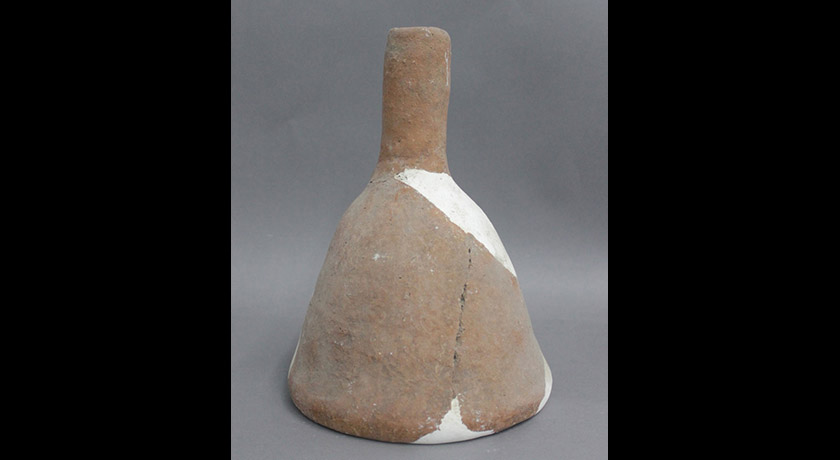
Back in 2004, archaeologists excavated two pits in northern China that looked a lot like homebrewing operations. Constructed between 3400 and 2900 B.C. by the Yangshao culture, each pit contained the remnants of a stove and assorted funnels, pots and amphorae.
Now, Jiajing Wang of Stanford University and colleagues report that the pottery shards contain residue and other evidence of starches, chemicals and plant minerals from specific fermented grains. The ancient beer recipe included broomcorn millet, barley, Job’s tears and tubers — that probably gave the beer a sweet flavor, the team writes May 23 in the Proceedings of the National Academy of Sciences.
The findings predate the earliest evidence of barley in China by around 1,000 years. Beer may have been consumed at social gatherings, and brewing, not agriculture, spurred the introduction of barley to China, the researchers argue.