Enterprises from the Taiwan region are optimistic about the economic development of the Chinese mainland and pledge to continue investing to better take advantage of the economic recovery in 2024, representatives of business and industry groups from the island told the Global Times on Monday.
The representatives also stressed their strong expectations for the mainland and the Taiwan region to continue to uphold the 1992 Consensus, opposing secessionism while maintaining peaceful and steady relations and cooperation across the Straits.
The remarks came on the sidelines of the annual two sessions, during which the Government Work Report will be released, outlining the development direction of the world's second-largest economy and setting economic and policy goals for 2024.
On this special occasion, businesses from the Taiwan region are embracing the mainland market, calling for peaceful and integrated development across the Straits with more interaction and cooperation.
The mainland's active efforts on promoting infrastructure development nationwide in recent years, with new roads being built and subway systems being launched, reflected the determination of the central and local governments in boosting the economy, Lai Cheng-i, chairman of the General Chamber of Commerce of the Taiwan island, told the Global Times on Monday.
Despite facing challenges such as China-US trade tensions, the lingering impact from the COVID-19 pandemic and the Russia-Ukraine conflict, the mainland's economy still achieved a remarkable growth rate of 5.2 percent in 2023. This growth rate significantly surpassed that of other major economies worldwide including the US at 2.5 percent, the EU at 0.5 percent, the UK at 0.1 percent and Japan at 1.9 percent.
The mainland's GDP growth also far exceeded the 1.31 percent rate of the Taiwan region.
Business representatives of the Taiwan region said that this economic achievement is commendable and it reaffirms the nation's position as the primary engine driving global economic growth.
"Despite the tough international situation in 2023, the mainland's economic growth remained strong, backed up by the government's efforts and consumption recovery, and I am confident that this trend will continue in 2024," Lai said.
Local governments, including East China's Fujian Province, neighboring the Taiwan region, are constantly improving policies and measures to promote the integrated development of their regions and Taiwan, which have brought significant benefits to businesspeople from the island. It's also made more companies, including those headed by young entrepreneurs, more willing to develop and invest in the mainland, the chamber head said.
There are strong expectations for more trade to take place on both sides.
The first shipment of 23.96 tons of grouper fish from the island of Taiwan arrived in Xiamen, Fujian Province on January 11, marking the formal resumption of related trade after the mainland customs lifted the ban on imports in late December, according to media reports.
Lai expects that there will be more farm and fishery products exported to the mainland.
Moreover, there are expectations for more tourism activities to be promoted across the Straits.
Speaking about the new potential for cooperation, Teng Tai-Hsien, secretary-general of the Straits Economic & Cultural Interchange Association, gives the examples of the mainland's continuous adjustment of its economic structure in moving in the direction of low-carbon consumption, high automation and digitalization, and companies from the island love to take part in the industrial transformation.
Opportunities have emerged in the vast domestic market ranging from the healthcare industry, spurred by an aging population, to modern agriculture and education, Teng said, noting that "businesses of the island of Taiwan should seize the opportunity presented by the mainland's economic transformation and upgrading."
Businesses of the Taiwan island remain optimistic about investing in the mainland this year as the mainland's economy is expected to continue its steady growth trajectory.
In 2023, the Taiwan region approved 328 cases of direct investment in the mainland totaling $3.04 billion. Teng said that 71.23 percent of listed companies in Taiwan had invested in business operations in the mainland.
"After these enterprises generate profits in the mainland, they often intend to reinvest. I believe that the scope of investment will expand this year," Teng said.
The Taiwan secessionist Democratic Progressive Party continues to implement a decoupling policy targeting the mainland, including on the chip industry and people-to-people exchanges, which has affected normal economic interactions across the Straits. Regional business representatives have called for sustainable and stable cross-Straits relations.
This year, the annual two sessions are crucial for the development of cross-Straits relations, especially given the severe impact of "Taiwan independence" secessionist forces and external forces, business representatives told the Global Times.
It is hoped that the two sessions will continue to uphold peaceful and integrated development, promote more exchanges and cooperation across the Straits, and naturally bring the two sides closer together, Teng said.
Over the years, the mainland has offered many preferential policies to businesses from the Taiwan region. For example, the nation is making Fujian Province a demonstration zone for integrated development across the Taiwan Straits, a move that is highly attractive to the businesses from the island.
"It is hoped that more measures like this will be implemented, allowing businesses from the Taiwan region to thrive in the mainland while creating a closer cooperation space for cross-Straits economic and trade exchanges," Teng said.
Chinese officials have called on Chinese and US businesses to expand cooperation and help stabilize bilateral ties, as US companies continue to express great interest in the Chinese market; however, Chinese officials are also firmly countering Washington's slander and crackdowns against China.
This is the current dynamic between China and the US in terms of economic and trade ties, and it will remain the situation for the foreseeable future, as Washington has adopted a "two-faced" approach in both seeking to stabilize ties as well as cracking down on China in areas where the US is lagging behind, experts said on Sunday.
On Friday, when addressing the annual appreciation dinner of the American Chamber of Commerce in China (AmCham China) in Beijing, Chinese Vice President Han Zheng called for business circles of the two countries to consolidate the foundation of friendship and mutual trust and expand areas of cooperation, the Xinhua News Agency reported on Saturday.
Han said that the Chinese economy has strong resilience, potential and vast space, and new drivers and advantages are still growing, China will unswervingly expand opening-up at a high level, and it welcomes more US companies to invest and develop in China.
Such a welcoming attitude has also been echoed by many Chinese officials amid increasing interactions between officials and businesses of the two countries in recent months. In the latest positive engagement, senior Chinese officials met with a visiting US delegation led by Suzanne P. Clark, president and CEO of the US Chamber of Commerce (USCC). During meetings, Chinese officials welcomed US businesses to invest and do business in China, while also firmly pushing back against "decoupling" and "small yard and high fence" approaches.
Many US business leaders have expressed opposition to economic decoupling. In a statement sent to the Global Times, the USCC said that in meetings with Chinese leaders during the trip, it "emphasized its longstanding support of mutually beneficial US-China commercial ties that do not compromise US national security interests" and "underscored that decoupling is not an option."
However, the USCC statement also contained claims that have been widely hyped by US officials and media outlets, including "heavy-handed commercial pressure tactics, digital protectionism and intellectual property theft."
The need for the US business community to strike a delicate balance between pursuing win-win cooperation and supporting the US government's efforts to protect "national security" underscored the chilling effect of Washington's efforts to contain China's rise, even though the US officially and publicly repeats pledges not to seek to decouple from or contain China, experts said.
"The 'two-faced' US approach when it comes to economic and trade ties with China has been very clear. It has always been seeking to cooperate in areas where it needs cooperation, while cracking down on China where it cannot compete," Gao Lingyun, an expert at the Chinese Academy of Social Sciences, told the Global Times on Sunday.
Such an approach has also been vividly displayed over the past few days. At the AmCham China dinner on Friday, US Ambassador to China Nicholas Burns said that "the [US] wants to keep trade going forward with China. We are not seeking to decouple these two major global economies."
However, almost at the same time as Burns uttered those words, the US government announced on Friday that it was opening an investigation into whether Chinese vehicle imports pose national security risks to the US, which could lead to restrictions or even bans on imports of Chinese-made electric vehicles (EVs), according to Reuters.
In what has been widely described on Chinese social media as absurd, clichéd "China threat" claims against Chinese EVs, US Commerce Secretary Gina Raimondo even suggested that China could, "with the flip of a switch," make millions of cars "disabled."
"Forget about how few Chinese EVs are in the US… we didn't know until now how powerful Chinese EVs are," a Chinese auto industry analyst surnamed Zhang told the Global Times in a mocking tone.
"But think about it again, with so many Tesla cars in China, does it mean Washington can also realize this 'with the flip of a switch'?"
Chinese officials have harshly criticized unfounded US claims against Chinese EVs.
In responding to the planned US probe, Mao Ning, a spokesperson for the Chinese Foreign Ministry, said on Friday that China's door has been open to global auto companies, including US auto companies, but by contrast, the US has engaged in trade protectionism and set up obstacles including discriminatory subsidy policies to obstruct access to the US market by China-made cars.
"Such acts of politicizing economic and trade issues will only hinder the development of the US auto industry itself," Mao said.
Gao said that China has been very clear and consistent about its approach toward the US, that it aims to boost mutually beneficial cooperation with the US, but will also counter crackdowns by the US whenever necessary.
"Even when we are fighting back against the US crackdown measures, our ultimate goal is to ensure win-win cooperation," Gao said.
The "price war" among automakers in China that started in early 2023 has shown no signs of abating. Particularly in the new-energy vehicle (NEV) sector, both traditional and emerging players keep cutting prices or launching limited-time promotions, tactics that analysts anticipate will persist throughout the year.
XPeng Motors, one of the smart EV startups, announced on Sunday that all models of its G6 series will be discounted by 20,000 yuan ($2,779) until March 31, with prices starting at 189,900 yuan after the discount.
Huawei-backed AITO on Saturday launched limited-time promotions for its M5 series. On Friday, nine carmakers, including Geely, SAIC Volkswagen, Rising Auto and Chery, announced price reductions or limited-time promotions.
Auto giant BYD fired the first shot in this round of the "price war" after the Spring Festival holidays, introducing new versions of two models that are 20,000 yuan cheaper than the previous versions. US-based Tesla followed suit by launching limited-time discounts of up to 34,600 yuan for buyers.
The recent "price war" in the passenger vehicle market is fundamentally driven by the replacement of old technologies with new ones, and the transition from traditional fuel vehicles to NEVs, Cui Dongshu, secretary-general of the China Passenger Car Association, told the Global Times on Sunday.
"As a new market order emerges, intense competition between old and new manufacturers ensues, and this process is expected to persist for several years until a new industry landscape takes shape," Cui said.
In the rapid growth expected in the coming years, 2024 is expected to be a pivotal year for NEV producers to establish a solid footing in the market, Cui said.
China's NEV industry started early and has developed rapidly. With more than 100 manufacturers in the market, the competition is fierce. Top players are leveraging "price wars" to squeeze out smaller firms with limited innovation and funding, Zhang Xiang, director of the Digital Automotive International Cooperation Research Center of the World Digital Economy Forum, told the Global Times on Sunday.
The "price war" will persist throughout the year, Zhang said, noting that 2024 will be very significant for the players as governments at all levels roll out policies to promote vehicle consumption.
During the tone-setting Central Economic Work Conference held in Beijing in December 2023, Chinese leaders stressed that consumption of products, including NEVs and electronic products, should be stimulated.
In January, domestic NEV sales reached 1.06 million, accounting for 66 percent of the global market share, data from the CPCA showed.
"Price competition in the electric vehicle sector reflects a fully competitive market, offering consumers better deals and serving as a key competitive advantage for China's electric vehicles in the global market," Cui said.
NEV exports also performed strongly in January, particularly in Southeast Asian and European markets, which reflected the strength of China's industry chain and produced growth in both the domestic market and exports, Cui noted.
In 2023, China's vehicle production reached 30.16 million, up 11.6 percent year-on-year, while sales hit 30.09 million, up 12 percent. Both output and sales set new records, ranking first in the world for 15 consecutive years, data from the China Association of Automobile Manufacturers showed.
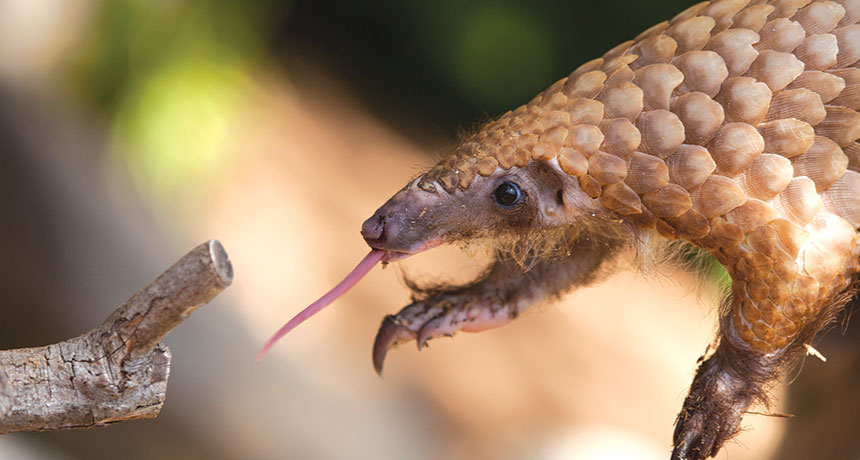
Perhaps the most unsettling scene in Poached, by science journalist Rachel Love Nuwer, comes early in the book, in a fancy restaurant in Ho Chi Minh City, Vietnam. The author and two friends sit down and are handed leather-bound menus offering roasted civet, fried tortoise, stewed pangolin and other delicacies made from rare or endangered species. The trio makes an abrupt exit, but only after seeing a live cobra gutted at one table and a still-living civet brought out to feed another group of diners. Statistics on the illegal wildlife trade can be mind-numbing. Rhinos have dwindled to just 30,000 animals globally and tigers to fewer than 4,000. Over a million pangolins — scaly anteaters found in Africa and Asia — have been killed in the last 10 years. Just last month came a report from the Humane Society of the United States and the Humane Society International that the United States imported some 40,000 giraffe parts, from about 4,000 animals, between 2006 and 2015.
But in Poached, Nuwer gives readers a firsthand view of what the illegal wildlife trade is like on the ground and what, if anything, can be done to stop it. She accompanies a poacher into the U Minh forest of Vietnam in search of water monitors, cobras and civets. (Thankfully, they don’t find any.) She has dinner with a man who keeps a rhino horn in an Oreo tin. She visits a zoo in Japan that may have helped popularize trade in the rare earless monitor lizard. And she attends numerous meetings of wildlife officials and conservationists as they attempt to fight back against the illegal trade.
Poached isn’t all gloom and doom; there are a few success stories. Nuwer, for instance, visits Zakouma National Park in Chad where managers have halted the slaughter of elephants. This hard-won accomplishment exemplifies the book’s underlying message: There are no easy solutions to stopping wildlife trafficking. The effort in Zakouma required a lot of money and training for its rangers, which is not available in most places.
What’s most needed, Nuwer argues, is changing how we think about wildlife crime. Many people view poaching as belonging to a special category of illegal activity. But it’s not; it’s just crime. Those involved are often also dealing in drugs or conflict diamonds or human trafficking. A change in mind-set could help overcome a major conservation obstacle, Nuwer notes. Rather than detectives and the courts being tasked with handling this sort of crime, the job has been left to rangers, wildlife managers and conservationists. “As some have put it,” she writes, “it is like asking botanists to stop the cocaine trade.” The world’s wildlife deserves better than that.
A strand of spaghetti snaps easily, but an exotic substance known as nuclear pasta is an entirely different story.
Predicted to exist in ultradense dead stars called neutron stars, nuclear pasta may be the strongest material in the universe. Breaking the stuff requires 10 billion times the force needed to crack steel, for example, researchers report in a study accepted in Physical Review Letters.
“This is a crazy-big figure, but the material is also very, very dense, so that helps make it stronger,” says study coauthor and physicist Charles Horowitz of Indiana University Bloomington. Neutron stars form when a dying star explodes, leaving behind a neutron-rich remnant that is squished to extreme pressures by powerful gravitational forces, resulting in materials with bizarre properties (SN: 12/23/17, p. 7).
About a kilometer below the surface of a neutron star, atomic nuclei are squeezed together so close that they merge into clumps of nuclear matter, a dense mixture of neutrons and protons. These as-yet theoretical clumps are thought to be shaped like blobs, tubes or sheets, and are named after their noodle look-alikes, including gnocchi, spaghetti and lasagna. Even deeper in the neutron star, the nuclear matter fully takes over. The burnt-out star’s entire core is nuclear matter, like one giant atomic nucleus.
Nuclear pasta is incredibly dense, about 100 trillion times the density of water. It’s impossible to study such an extreme material in the laboratory, says physicist Constança Providência of the University of Coimbra in Portugal who was not involved with the research. Instead, the researchers used computer simulations to stretch nuclear lasagna sheets and explore how the material responded. Immense pressures were required to deform the material, and the pressure required to snap the pasta was greater than for any other known material.
Earlier simulations had revealed that the outer crust of a neutron star was likewise vastly stronger than steel. But the inner crust, where nuclear pasta lurks, was unexplored territory. “Now, what [the researchers] see is that the inner crust is even stronger,” Providência says.
Physicists are still aiming to find real-world evidence of nuclear pasta. The new results may provide a glimmer of hope. Neutron stars tend to spin very rapidly, and, as a result, might emit ripples in spacetime called gravitational waves, which scientists could detect at facilities like the Advanced Laser Interferometer Gravitational-wave Observatory, or LIGO. But the spacetime ripples will occur only if a neutron star’s crust is lumpy — meaning that it has “mountains,” or mounds of dense material either on the surface or within the crust.
“The tricky part is, you need a big mountain,” says physicist Edward Brown of Michigan State University in East Lansing. A stiffer, stronger crust would support larger mountains, which could produce more powerful gravitational waves. But “large” is a relative term. Due to the intense gravity of neutron stars, their mountains would be a far cry from Mount Everest, rising centimeters tall, not kilometers. Previously, scientists didn’t know how large a mountain nuclear pasta could support.
“That’s where these simulations come in,” Brown says. The results suggest that nuclear pasta could support mountains tens of centimeters tall — big enough that LIGO could spot neutron stars’ gravitational waves. If LIGO caught such signals, scientists could estimate the mountains’ size, and confirm that neutron stars have superstrong materials in their crusts.
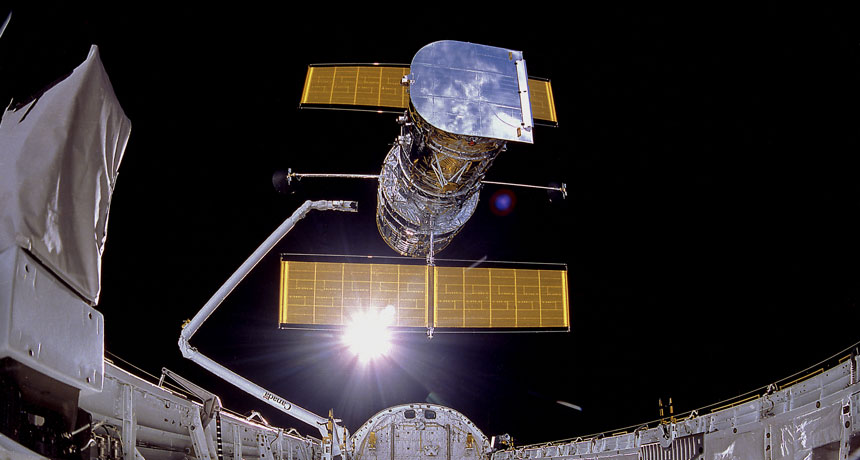
The 28-year-old space telescope, in orbit around the Earth, put itself to sleep on October 5 because of an undiagnosed problem with one of its steering wheels. But once more, astronomers are optimistic about Hubble’s chances of recovery. After all, it’s just the latest nail-biting moment in the history of a telescope that has defied all life-expectancy predictions.
There is one major difference this time. Hubble was designed to be repaired by astronauts on the space shuttle. Each time the telescope broke previously, a shuttle mission fixed it. “That we can’t do anymore, because there ain’t no shuttle,” says astronomer Helmut Jenkner of the Space Telescope Science Institute in Baltimore, who is Hubble’s deputy mission head. The most recent problem started when one of the three gyroscopes that control where the telescope points failed. That wasn’t surprising, says Hubble senior project scientist Jennifer Wiseman of NASA’s Goddard Space Flight Center in Greenbelt, Md. That particular gyroscope had been glitching for about a year. But when the team turned on a backup gyroscope, it didn’t function properly either.
Astronomers are working to figure out what went wrong and how to fix it from the ground. The mood is upbeat, Wiseman says. But even if the gyroscope doesn’t come back online, there are ways to point Hubble and continue observing with as few as one gyroscope.
“This is not a catastrophic failure, but it is a sign of mortality,” says astronomer Robert Kirshner of the Harvard-Smithsonian Center for Astrophysics in Cambridge, Mass. Like cataracts, he says, it’s “a sign of aging, but there’s a very good remedy.” While we wait for news of how Hubble is faring, here’s a look back at some of its previous hiccups and repair missions.
1990: The blurry mirror On June 27, 1990, three months after the space telescope launched, astronomers discovered an aberration in Hubble’s primary mirror. Its curvature was off by two micrometers, making the images slightly blurry.
The telescope soldiered on, despite being the butt of jokes on late-night TV. It observed a supernova that exploded in 1987 (SN: 2/18/17, p. 20), measured the distance to a satellite galaxy of the Milky Way and took its first look at Jupiter before the space shuttle Endeavour arrived to fix the mirror in December 1993. 1999: The first gyroscope crisis On November 13, 1999, Hubble was put into safe mode after the fourth of its six gyroscopes failed, leaving it without the three working gyros necessary to point precisely. An already planned preventative maintenance shuttle mission suddenly became more urgent. NASA split the mission into two parts to get to the telescope more quickly. The first part became a rescue mission: Astronauts flew the space shuttle Discovery to Hubble that December to install all new gyroscopes and a new computer.
2004: Final shuttle mission canceled After the space shuttle Columbia disintegrated while re-entering Earth’s atmosphere in 2003, NASA canceled the planned fifth and final Hubble reservicing mission. “That could really have been the beginning of the end,” Jenkner says.
The team has known for more than a decade that someday Hubble will have to work with fewer than three gyroscopes. To prepare, Hubble’s operations team deliberately shut down one of the telescope’s gyroscopes in 2005, to observe with only two.
“We’ve been thinking about this possibility for many years,” Wiseman says. “This time will come at some point in Hubble’s mission, either now or later.”
Shutting down the third gyroscope was expected to extend Hubble’s life by only eight months, until mid-2008. In the meantime, two of the telescope’s scientific instruments — the Space Telescope Imaging Spectrograph and the Advanced Camera for Surveys — stopped working due to power supply failures. 2009: New lease on life Fortunately, NASA restored the final servicing mission, and the space shuttle Atlantis visited Hubble in May 2009 (SN Online: 5/11/09). That mission restored Hubble’s cameras, installed new ones and crucially, left the space telescope with six new gyroscopes, three for immediate use and three backups. The three gyroscopes still in operation (including the backup that is currently malfunctioning) are of a newer type, and are expected to live five times as long as the older ones, which last four to six years.
The team expects Hubble to continue doing science well into the 2020s and to have years of overlap with its successor, the James Webb Space Telescope, due to launch in 2021. “We are always worried,” says Jenkner, who has been working on Hubble since 1983. “At the same time, we are confident that we will be running for quite some time more.”
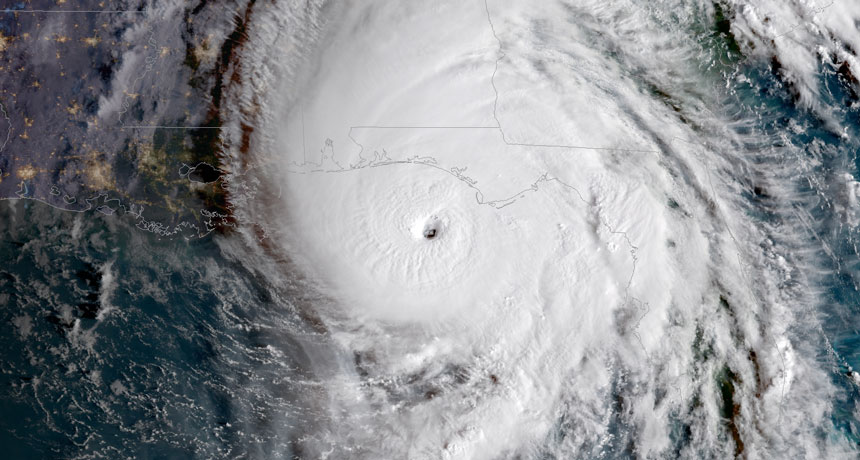
Call it an October surprise: Hurricane Michael strengthened unusually quickly before slamming into the Florida panhandle on October 10 and remained abnormally strong as it swept into Georgia. The storm made landfall with sustained winds of about 250 kilometers per hour, just shy of a category 5 storm, making it the strongest storm ever to hit the region, according to the National Oceanographic and Atmospheric Administration’s National Hurricane Center, or NHC.
Warm ocean waters are known to fuel hurricanes’ fury by adding heat and moisture; the drier air over land masses, by contrast, can help strip storms of strength. So hurricanes nearing the Florida panhandle, a curving landmass surrounding the northeastern Gulf of Mexico, tend to weaken as they pull in drier air from land. But waters in the Gulf that were about 1 degree to 2 degrees Celsius warmer than average for this time of year, as well as abundant moisture in the air over the eastern United States, helped to supercharge Michael. Despite some wind conditions that scientists expected to weaken the storm, it strengthened steadily until it made landfall, which the NHC noted “defies traditional logic.” The fast-moving storm weakened only slightly, to a category 3, before hurtling into Georgia. Although it is not possible to attribute the generation of any one storm to climate change, scientists have long predicted that warming ocean waters would lead to more intense tropical cyclones in the future. More recent attribution studies have borne out that prediction, suggesting that very warm waters in the tropical Atlantic helped to fuel 2017’s powerful storm season, which spawned hurricanes Irma and Maria.
Hurricane Harvey, fueled by unusually warm waters in the Gulf of Mexico in August 2017, also underwent a rapid intensification, strengthening from a tropical storm to a category 4 hurricane within about 30 hours. And this year, scientists reported that Hurricane Florence, which slammed into the Carolinas in September, was probably warmer and wetter due to warmer than average sea surface temperatures in the Atlantic Ocean.
We may truly be led by our noses. A sense of smell and a sense of navigation are linked in our brains, scientists propose.
Neuroscientist Louisa Dahmani and colleagues asked 57 young people to navigate through a virtual town on a computer screen before being tested on how well they could get from one spot to another. The same young people’s smelling abilities were also scrutinized. After a sniff of one of 40 odor-infused felt-tip pens, participants were shown four words on a screen and asked to choose the one that matched the smell. On these two seemingly different tasks, the superior smellers and the superior navigators turned out to be one and the same, the team found.
Scientists linked both skills to certain spots in the brain: The left orbitofrontal cortex and the right hippocampus were both bigger in the better smellers and better navigators. While the orbitofrontal cortex has been tied to smelling, the hippocampus is known to be involved in both smelling and navigation. A separate group of nine people who had damaged orbitofrontal cortices had more trouble with navigation and smell identification, the researchers report October 16 in Nature Communications. Dahmani, who’s now at Harvard University, did the work while she was at McGill University in Montreal.
A sense of smell may have evolved to help people find their way around, an idea called the olfactory spatial hypothesis. More specific aspects of smell, such as how good people are at detecting faint whiffs, could also be tied to navigation, the researchers suggest.
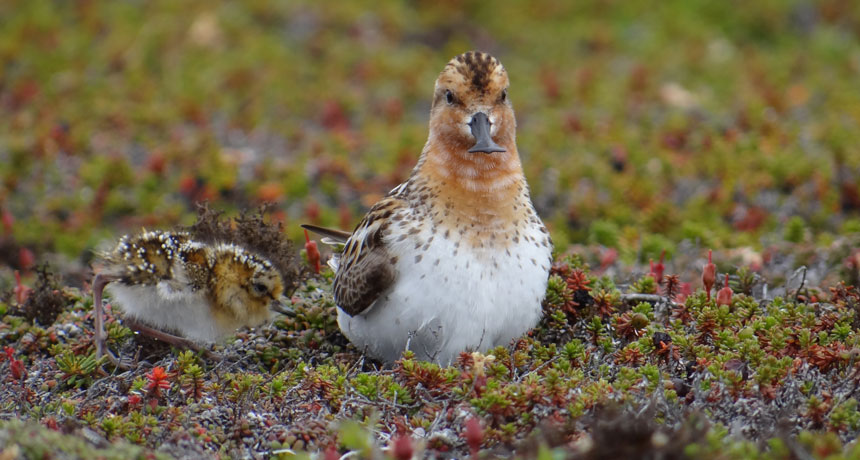
Climate change may be flipping good Arctic neighborhoods into killing fields for baby birds.
Every year, shorebirds migrate thousands of kilometers from their southern winter refuges to reach Arctic breeding grounds. But what was once a safer region for birds that nest on the ground now has higher risks from predators than nesting in the tropics, says Vojtěch Kubelka, an evolutionary ecologist and ornithologist at Charles University in Prague. With many shorebird populations dwindling, nest success matters more every year. A longtime fan of shorebirds, Kubelka had heard about regional tests of how predator risk changes by latitude for bird nests. He, however, wanted to go global. Shorebirds make a great group for such a large-scale comparison, he says, because there’s not a lot of variation in how nests look to predators. A feral dog in the United States and a fox in Russia are both creeping up on some variation of a slight depression in the ground. So Kubelka and his colleagues crunched data from decades of records of predator attack rates on about 38,000 nests of various sandpipers, plovers and other shorebirds. After a massive literature search, the study zeroed in on the experiences of 237 populations of a total of 111 shorebird species at 149 places on six continents. It’s the first attempt at a global comparison by latitude of predator attack rates on shorebird nests over time, he says.
Historical data of predator attack rates worldwide averaged about 43 percent before 1999, but has since reached 57 percent, the team reports in the Nov. 9 Science. The most dramatic upward swoop came from the Arctic nest reports. There, the rate of predator attacks averaged around 40 percent in the last century, jumping to about 65 or 70 percent since 1999. Meanwhile, tropical perils in the Northern Hemisphere changed “only modestly” the researchers say, from around 50 percent to about 55 percent. Researchers also looked at how much, and how erratically, temperatures had changed at each site. Overall, the growing dangers to nests fit with climate change trends. Biologists have discussed the idea that nest predation generally lessens when birds move out of the tropics. One advantage of migrating toward the pole to breed was, in theory, to escape from tropical abundance of snakes, rodents and other egg-lovers.
But rapid warming in the Arctic might have discombobulated some of the old predator-prey relationships, says coauthor Tamás Székely, a conservation biologist at the University of Bath in England. For instance, Arctic foxes used to get much of their nourishment from lemmings, voles and other small rodents. Skimpy snow cover in warmer winters, however, doesn’t insulate little rodents as well as it used to. Boom-and-bust cycles of lemming populations are in many places now “mostly bust,” he says. Foxes and other predators may be shifting more to bird eggs and nestlings.
That scenario of rodent-loving predators hunting more birds sounds “highly probable,” but may be just part of what’s going on, says Dominique Fauteux, an ecologist at the Canadian Museum of Nature in Ottawa who studies small mammals. Lemming collapses haven’t been reported across the whole Canadian Arctic, he says.
Instead, some researchers have proposed that shorebird nest failures come from a boom in geese that attract more bird predators overall. Also, a 2010 study suggests that nest predation in the Canadian Arctic was still lower than in temperate areas. There may be some global pattern, but on the ground, Fauteux says, “there clearly are nuances.”
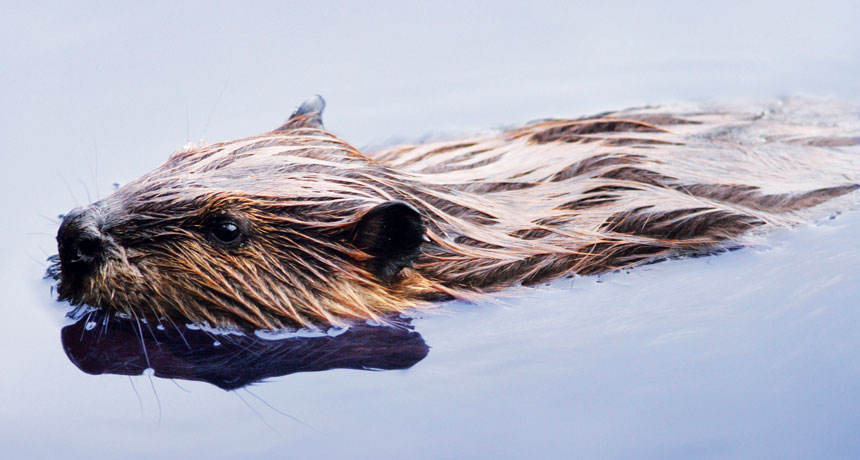
In a broad swath of northwestern Alaska, small groups of recent immigrants are hard at work. Like many residents of this remote area, they’re living off the land. But these industrious foreigners are neither prospecting for gold nor trapping animals for their pelts. In fact, their own luxurious fur was once a hot commodity. Say hello to Castor canadensis, the American beaver.
Much like humans, beavers can have an oversized effect on the landscape (SN: 8/4/18, p. 28). People who live near beaver habitat complain of downed trees and flooded land. But in areas populated mostly by critters, the effects can be positive. Beaver dams broaden and deepen small streams, forming new ponds and warming up local waters. Those beaver-built enhancements create or expand habitats hospitable to many other species — one of the main reasons that researchers refer to beavers as ecosystem engineers. Beavers’ tireless toils — to erect lodges that provide a measure of security against land-based predators and to build a larder of limbs, bark and other vegetation to tide them over until spring thaw — benefit the wildlife community.
A couple of decades ago, the dam-building rodents were hard to find in northwestern Alaska. “There’s a lot of beaver around here now, a lot of lodges and dams,” says Robert Kirk, a long-time resident of Noatak, Alaska — ground zero for much of the recent beaver expansion. His village of less than 600 people is the only human population center in the Noatak River watershed. Beavers may be infiltrating the region for the first time in recent history as climate change makes conditions more hospitable, says Ken Tape, an ecologist at the University of Alaska Fairbanks. Or maybe the expansion is a rebound after trapping reduced beaver numbers to imperceptible levels in the early 1900s, he says. Nobody knows for sure. And the full range of changes the rodents are generating in their new Arctic ecosystems hasn’t been studied in detail. But from what Tape and a few other researchers can tell so far, the effects could be profound, and most of them will probably be beneficial for other species.
In the areas newly colonized by beavers, “some really interesting processes are unfolding,” says John Benson, a wildlife ecologist at the University of Nebraska–Lincoln who studies wolves and coyotes, among other beaver predators. “I’d expect some pretty dramatic changes to the areas they take over.”
Beavers’ biggest effects on Arctic ecosystems may come from the added biodiversity within the ponds they create, says James Roth, an ecologist at the University of Manitoba in Winnipeg, Canada. These “oases on the tundra” will not only provide permanent habitat for fish and amphibians, they’ll serve as seasonal stopover spots for migratory waterfowl. Physical changes to the environment could be just as dramatic, thawing permafrost decades faster than climate change alone would.
The Arctic tundra isn’t the first place beavers have made their mark. Changes seen in beaver-rich areas at lower latitudes may offer some clues to the future of the Alaskan tundra, home to moose, caribou and snowshoe hares.
North through Alaska As Earth’s climate has warmed in recent years, some plants and animals — such as the mountain-dwelling pika, a small mammal related to rabbits — have fled the heat by moving to higher altitudes (SN: 6/30/12, p. 16). Others, from moose and snowshoe hares to bull sharks and bottlenosed dolphins, have moved toward the poles to take advantage of newly hospitable ecosystems (SN: 5/26/18, p. 9).
Arctic environments have changed more than most, Tape says. Polar regions are warming much faster than other parts of the world, he says. Studies estimate that average temperatures in the Arctic have risen about 1.8 degrees Celsius since 1900, about 60 percent faster than the Northern Hemisphere as a whole.
This warming is bringing great change to the Alaskan tundra, Tape says. Winter snow cover doesn’t persist as long as it used to. Streams freeze later in the fall and melt earlier in the spring. Permafrost, the perennially frozen ground, is thawing, allowing shrubs to take hold. New species are moving in, few more noticeable than the beaver. The dams they build and the ponds they create are hard to miss; these newly formed bodies of water even show up on satellite images. Beavers have infiltrated three watersheds in northwestern Alaska in the last couple of decades. Together these drainages cover more than 18,000 square kilometers — an area larger than Connecticut.
On images of the region collected by Landsat satellites in summer months from 1999 through 2014, Tape and colleagues looked for new areas of wetness that covered at least half a hectare (1.24 acres), or about four times the area covered by an Olympic swimming pool.
The researchers then used newer, high-resolution satellite images to verify the presence of beaver ponds. Available aerial photographs taken before 1999 didn’t pick up any signs of beaver activity in the area, Tape says. Kirk notes that beavers were present in the Lower Noatak River watershed before 1999, but in vastly smaller numbers than they are today.
Based on the images at hand, the researchers found 56 new complexes of beaver ponds in the area over the 16-year study period. On average, beavers expanded their range about 8 kilometers per year, Tape and colleagues reported in the October Global Change Biology.
“This is remarkable, but it shouldn’t come as a surprise,” Tape says. “Beavers are engineers that work every day, all summer long.”
The animals have also made their way into western Alaska’s Seward Peninsula and the northern foothills of the Brooks Range, mountains that stretch east to west across northern Alaska, the researchers found. If the animals’ recent rate of expansion continues, beavers could spread throughout Alaska’s North Slope in the next 20 to 40 years, the researchers say. The Lower Noatak River watershed, one of the areas that Tape and colleagues studied, is mostly tundra. By definition that means treeless plain. But the area also is about 3.5 percent forest, mainly concentrated along the river and its tributaries. The watersheds just to the north are completely tundra. So how do the beavers there build dams without trees? In those areas, Tape says, the animals construct smaller dams than they might at lower latitudes, using the branches, twigs and foliage of willows and other shrubs.
“I never expected to see beavers on the tundra,” Roth says, intrigued by Tape’s team’s findings.
Happy place The beavers are not only persisting on the tundra, they’re thriving. The moderately sized streams and flat terrain provide ideal habitat. And once they gain a foothold, these industrious creatures set about making improvements that are probably an overall plus for myriad other species, Tape says.
For instance, frigid conditions in the region cause shallow streams to freeze solid in winter. But when a beaver builds a dam, the water that gathers upstream of the structure becomes deep enough to remain liquid below a sheet of ice that provides insulation from the chilly winter air.
That persistent liquid lets the beavers move about under the ice even in the depths of winter. The water gives them a place to stockpile food, too, Tape notes. That constant supply of liquid water also provides year-round habitat for fish, amphibians and even some insects in their larval stages. None of these species are part of the beaver’s diet, but they could serve as food for other creatures. “All that diversity would add whole new layers to food webs,” Roth says. Ecological changes could extend well beyond the beaver pond. The water impounded by beaver dams sometimes finds its way past the dam, Tape says. The satellite photos that he and his colleagues analyzed revealed that some stretches of river just downstream of beaver dams now remain unfrozen even in winter. That flowing water probably spills over the dam or around its edges, but some may seep through or under the structure.
That liquid water also helps thaw the underlying permafrost. Previous studies have shown that even a shallow pond less than a meter deep can boost sediment temperature by as much as 10 degrees C above the locale’s average air temperature. That kind of warming causes permafrost to thaw decades earlier than it would without the pond. Although scientists are concerned that permafrost thawing will release stored carbon into the atmosphere, no one yet knows how that thawing will affect the balance of carbon emissions to the atmosphere (SN: 1/21/17, p. 15).
Field studies at lower latitudes hint that beavers will probably bring about other ecological changes, too, Tape says, which might shift over time. For example, moose and snowshoe hares eat the same willow shrubs that beavers consume and build their dams with. And ptarmigan, a crow-sized bird in the grouse family, rely on those shrubs for cover, especially during winter. So immediately after beavers move into an area and start clearing that brush, populations of those species may decline.
But the long-term benefits will probably outweigh the short-term impacts on those species, says Matthew Mumma, an ecologist at the University of Northern British Columbia in Prince George, Canada. Permafrost that thaws along the fringe of a beaver pond will probably boost numbers of the shrubs that these species depend on, Tape and colleagues suggest. So in the long run, the overall numbers of moose, hares and ptarmigan may rise. Likewise, Mumma notes, beavers could provide big benefits for salmon and other migratory fish. Beaver dams were once thought to impede the travel of such fish upstream or to reduce the number of places where fish could spawn. But studies in the western United States, among other places, have suggested that the presence of beavers actually helps boost populations of salmon. For instance, the aquatic grasses in beaver ponds offer hiding places for young fish. Also, the languid ponds provide a resting spot for adult fish migrating upstream to spawning sites.
Better-fed wolves Boosting herbivore populations on the tundra would be a boon for local predators, of course. Larger numbers of snowshoe hares, for example, could feed the populations of the arctic foxes that prey upon them, Mumma says. And more moose could mean better-fed wolves.
Beavers themselves make a meal for bears, wolverines and wolves. In areas where wolves and beavers coexist, the rodents make up as much as 30 percent of the wolf diet, Roth says. The presence of a more reliable and more diversified food supply could lead wolves to settle down in smaller territories rather than migrating widely.
Benson and his team have already seen the impact of beaver populations on wolves, coyotes and wolf-coyote hybrids in Ontario’s Algonquin Provincial Park from August 2002 until April 2011.
In that time, 37 of the 105 pups that had been tagged with radio transmitters died, Benson says. The second-highest cause of death was starvation. Every one of those starvation-related deaths took place in the western portion of the park, which has relatively rugged terrain and few beavers. In the eastern portion of the park, where beavers are plentiful, none of the pups starved, Benson and his team reported in 2013 in Biological Conservation. In a separate study, Mumma and colleagues analyzed aerial surveys of beaver populations within seven broad regions in northeastern British Columbia in 2011 and 2012. Proximity to human activity, such as roadbuilding or oil and gas exploration, didn’t seem to affect beavers’ decisions to build at a particular locale. Nor did the presence of wolves in the area, the researchers reported in February in the Canadian Journal of Zoology.
Although having wolves nearby seemed to affect the number of beavers present (quite possibly via consumption), the predators didn’t seem to scare the rodents away entirely, Mumma notes.
More beavers, fewer sick moose Whether the presence of beavers on the Alaskan tundra ends up boosting the numbers of moose and other ungulates, the dam builders could have a big, though indirect, impact on the hoofed browsers’ health.
Roth and parasitologist Olwyn Friesen, now at the University of Otago in Dunedin, New Zealand, recently studied how a wolf’s diet affects the parasites it carries — which can then be passed on to other creatures in the environment. The researchers analyzed 32 wolf carcasses collected by provincial conservation officers in southeastern Manitoba in 2011 and 2012. Those remains came from hunters, trappers and roadkill.
In particular, the team tallied the parasites in the wolves’ lungs, liver, heart and intestines. The group also measured the ratio of carbon-12 and carbon-13 isotopes in the wolf tissues, which provided insight into what sorts of prey each individual wolf had eaten near the time those tissues formed.
Typical prey for wolves in this area are, from most consumed to least: white-tailed deer, snowshoe hare, moose, beaver and caribou, Roth says. Each of these creatures has a distinct ratio of the two carbon isotopes in its tissues. That ratio gets passed along to the predators that eat them.
The wolves with diets heavier in beaver had, on average, fewer intestinal parasites called cestodes. (Tapeworms are the best-known members of that group.)
The implications are clear, Roth and Friesen reported in 2016 in the Journal of Animal Ecology. Beaver-eating wolves are much less likely to excrete parasites into the environment where they could be picked up by ungulates, such as moose and caribou. Wolves don’t seem to be detrimentally affected by such parasites. But ungulates that become infected — especially older animals — may have reduced lung capacity, making escape from predators more difficult. A new resource Although beavers may speed changes in the Arctic, those effects may still take a long time to manifest.
Despite the proliferation of beavers in the Lower Noatak River watershed in the last couple of decades, “things around here grow so slowly, they’re not really having a long-term impact yet,” says local resident Kirk. Shrubs haven’t yet noticeably spread into any areas of permafrost that have been thawed by waters impounded by recent dam-building.
Nor have the beavers made much of a mark on the local economy, he says. “There’s a lot of people harvesting them now, since there’s so many of them around,” he adds. However, the pelts from those rodents are so far used by the trappers themselves, not sold to others.
The beavers haven’t become a big draw on the local food scene, either. Even connoisseurs say the meat has a gamey, greasy taste. As Kirk puts it, “we haven’t adjusted our taste buds to them yet.”