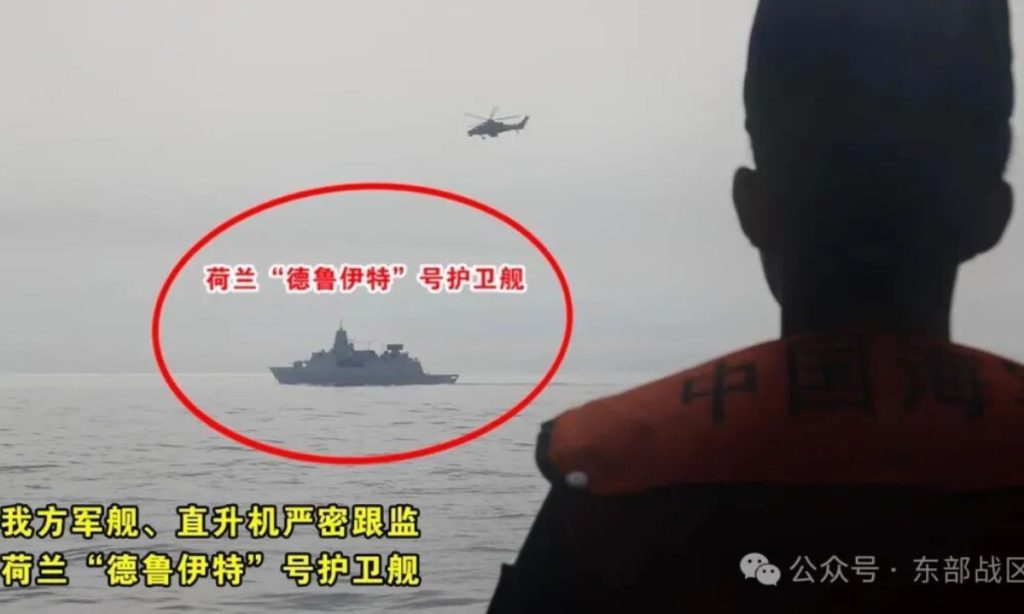
Since May 27, the ship-borne helicopter of the Dutch frigate HNLMS De Ruyter illegally intruded into the airspace over China’s Xisha Qundao, and then the frigate transited the Taiwan Straits, Senior Colonel Xu Chenghua, spokesperson for the People's Liberation Army (PLA) Eastern Theater Command, said on Friday.
The PLA Eastern Theater Command dispatched naval and air assets to track and monitor the Dutch frigate throughout its passage, and handled the situation effectively, the spokesperson said.
The theater command's troops will stay on high alert at all times and resolutely safeguard China’s sovereignty and security, as well as regional peace and stability.
After the photo of Spring Airlines flight attendants was found to be shared on the users forum of Rokid smart glasses recently, discussions and public concerns have emerged over the potential misuse of AI-equippedp wearable devices for covert photography, multiple media including chinanews.com reported on Sunday.
The concern emerged after Xiaoxiang Morning Herald reported that a Rokid glasses user surnamed Yun discovered a post in the Rokid app's online community section dated on May 27 showing a photo of two flight attendants at work taken by the smart glasses, accompanied by the caption: "Spring Airlines flight attendants are pretty good." Yun subsequently filed a complaint through the app and made a post on social media platform cautioning covert photography of smart glasses, raising concerns that smart glasses could become a new tool for unauthorized recording, per Xiaoxiang Morning Herald.
The Global Times reporter did not locate the original post in the smart glasses' app community as of press time, and whether the post had been removed remained unverified. However, many other users have also uploaded first-person videos of various activities in the community section, including footage of strangers in public spaces such as beaches, parks and subway systems.
Yun noted that smart glasses are highly convenient in daily life, particularly for functions such as translation and meeting transcription, but she was surprised to learn that some users were purchasing light-blocking stickers designed to conceal the device's recording indicators, effectively disguising the glasses as ordinary eyewear, according to Xiaoxiang Morning Herald.
Yun discovered that several online retailers are selling stickers intended to block the recording indicator lights. The light was originally designed by the manufacturer of smart glasses to alert people when recording is taking place and help protect privacy, "yet some people are doing everything possible to bypass these safeguards," per report.
One online seller reportedly with more than 5,000 sales of such stickers, advertised that they "do not trigger alerts and do not affect photography." Customer reviews described the products as "amazing," noting that "there is no light when taking photos" and even charging indicator lights were hidden.
Tests conducted by Xiaoxiang Morning Herald reporters found that after applying the stickers, recording with the AI glasses became nearly impossible for bystanders to detect, while notification sounds could only be heard by the wearer.
The incident has prompted discussion among Chinese netizens. One netizen expressed concern that unauthorized photography would become even more difficult to detect, while another said that "although advanced technology offers greater convenience, it is also making personal privacy increasingly vulnerable."
Both Spring Airlines and Rokid later responded to the controversy, while legal experts warned that people who secretly record and upload images without consent could face multiple forms of legal liability, according to the report.
A Spring Airlines staff member told Xiaoxiang Morning Herald on June 4 that photographing cabin crew without permission, particularly when the content is posted publicly online, could infringe upon an individual's portrait rights and privacy rights.
Rokid customer service said the matter had been forwarded to relevant staff for investigation. The company stated that if violations are confirmed, it will take action against the account in accordance with its user agreement and further strengthen guidance on proper use of the devices, according to the report.
Wan Qi, a lawyer with Hunan Jinzhou Law Firm, warned that individuals who secretly photograph others and upload the content online without consent could face civil liability as well as potential administrative or criminal penalties.
According to Wan, photographing and publishing images of individuals without their knowledge may constitute infringement of portrait and privacy rights under China's Civil Code. Victims may seek remedies including cessation of the infringement, public apologies and compensation for emotional distress. In serious cases, offenders could also violate public security regulations or even face criminal prosecution.
Wan added that merchants selling light-blocking stickers designed to circumvent privacy protections could be found to have knowingly facilitated infringement and may face joint liability, per report.
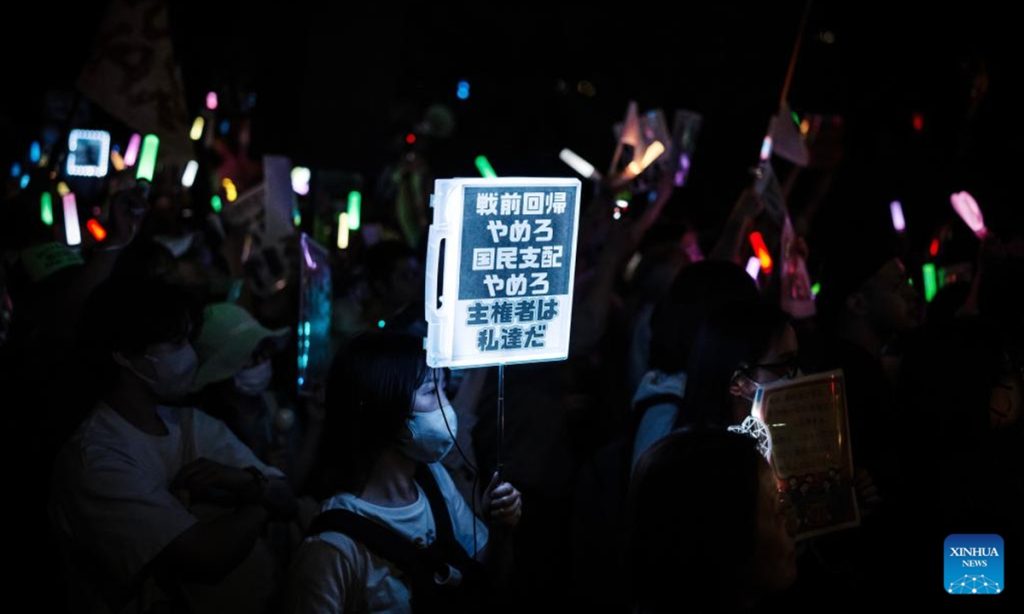
Amid a string of Japan's recent military expansion steps, Japanese media outlets on Wednesday revealed the outline of Japan's annual defense report, which claimed that China's military activities were "a grave concern," and highlighted the need for securing sustained combat capacity for potential "prolonged war."
Chinese experts said Japan is using a well-worn trick to portray itself as a victim to drum up global public opinion and fabricate excuses for its militaristic expansion. Tokyo's rapid military buildup has gone far beyond legitimate self-defense demands and serves to pave the way for a return to militarism, a development that warrants close vigilance from the international community.
On the same day, as it responded to yet another development pointing to Japan's dangerous military tilt, China's Foreign Ministry pushed back against the Japanese Defense Ministry's allegation that China kept repeating unfounded claims, underscoring word games cannot whitewash Japan's tangible steps to boost and expand its armed forces.
Well-worn trick
According to the outline of Japan's Defense White Paper, regarding China's military activities, it cites incidents including intermittent radar illumination of Self-Defense Forces aircraft by Chinese fighter jets last December and intensified Chinese carrier operations in the Pacific Ocean, the NHK reported on Wednesday.
The outline labels such military activities "a grave concern" for Japan and the international community and "an unprecedented top strategic challenge," using wording nearly identical to that in the 2025 White Paper, the Japanese media outlet said in the report.
Claiming China's intensifying military operations near Japanese territories, the outline frames the issue as one to be countered by comprehensive national strength plus cooperation and coordination with allies and like-minded partners, the Asahi Shimbun reported on Wednesday.
The full Defense White Paper is expected to be submitted to Japan's Cabinet for review this summer, according to NHK.
The worsening China-Japan relations stem entirely from rampant domestic neo-militarist sentiments in Japan, yet Japan habitually shifts blame on security issues. Worse still, Tokyo pretends to be an innocent victim to mislead the world and rebrand itself from a troublemaking provocateur into an aggrieved party. It is a well-worn trick to build public opinion and prepare for more provocations against China down the line, Lü Chao, an expert at the Liaoning Academy of Social Sciences, told the Global Times on Wednesday.
Hype over the so-called China threat works as a pretext for Japan to expand its military and roll out risky military initiatives, Lü said, noting that every unfounded allegation it levels at China is crafted to justify its own militaristic expansion.
According to NHK, the outline of the paper also creates a new section dedicated to "new forms of warfare," citing the extensive deployment of low-cost drones and protracted combat seen on Ukraine's battlefields. Building on that, the outline underscores the importance of preparing for emerging warfare leveraging AI and drones, securing sustained combat capacity for potential prolonged war, and bolstering defense industrial and technological foundations.
Neo-militarism in Japan has gained alarming momentum, with Tokyo's top priority being to shake off post-war legal shackles on its military, Lü said. "Its massive push for drones and other military equipment far exceeds genuine self-defense needs. This outright military expansion aims to grow Japan's regional leverage and clear the path for a militaristic comeback," the expert said.
Wordplay cannot whitewash military build-up
In response to previous media disclosures of the draft of the Sanae Takaichi administration's first Defense White Paper which reveal that it frames China's activities in the Pacific as a "security threat" and expresses vigilance, Jiang Bin, spokesperson for China's Ministry of National Defense, said on May 28 that what Japan does contradicts what it says. The more it tries to whitewash the inconsistency, the more obvious it gets, he said.
Jiang laid out a batch of dangerous moves taken by Japan. He told the press conference that in recent years, the Japanese government has sharply hiked its defense budget, developed and deployed offensive weapons, eased restrictions on exporting lethal weapons, pushed to revise the pacifist Constitution, clamored to be a war-capable nation, and even touted abandoning the three non-nuclear principles.
"If these actions still qualify as 'exclusively defense-oriented,' then there would be no such word as offensive in the dictionary," Jiang said.
Apart from the long-running policy shifts, fresh dangerous moves from Tokyo have kept emerging recently.
At the end of May, Japan and Philippines has agreed to begin formal negotiations to conclude a security intelligence-sharing agreement. The two countries also recently announced to start talks on maritime delimitation in the waters east of China's Taiwan island, which seriously infringed upon China's territorial sovereignty and maritime rights and interests.
Ironically, as reported by Reuters, at the just-concluded Shangri-La Dialogue in Singapore, Japan's Defence Minister Shinjiro Koizumi rebutted criticism that Japan was embracing new militarism, and claimed: "Think about it. There's a country that has a huge arsenal of nuclear weapons and strategic bombers. Japan has neither of such weapons, and yet Japan is labelled 'new militarism'?"
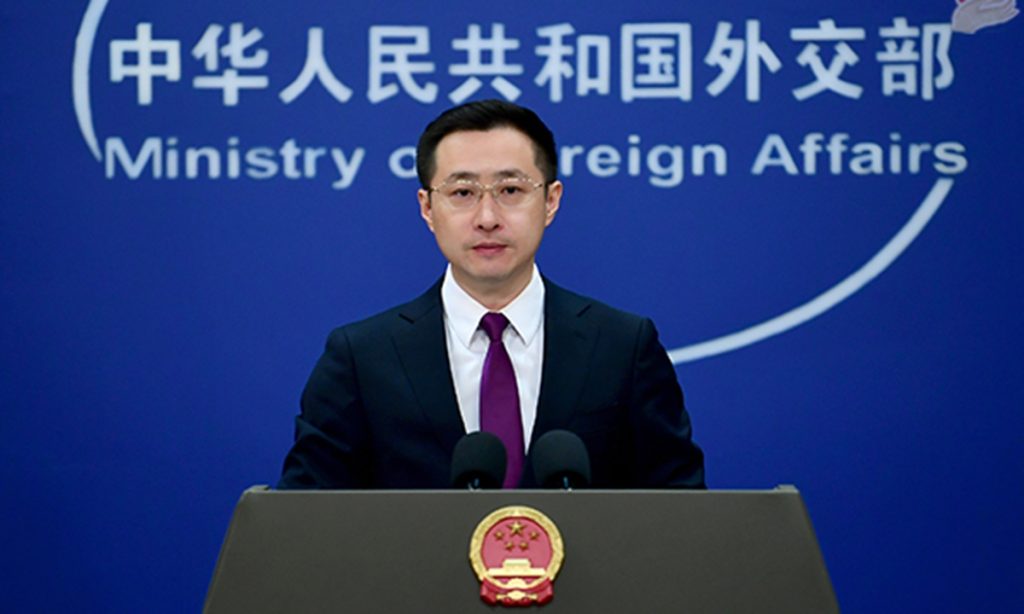
Refuting such claims, Chinese Foreign Ministry spokesperson Lin Jian said at a regular press conference on Monday that "the remarks from the Japanese official you mentioned have no basis at all. They have zero authority in front of history, law, facts and figures. There is no way that making such remarks will help Japan earn the trust of its Asian neighbors and the international community."
However, it seems to have become a repeated pattern for Japan to reject accusations over military expansion when such issues are raised. Following Lin's remarks, Japanese Defense Ministry spokesperson claimed the next day that China keeps repeating factually unfounded claims and called such reaction regrettable, Japanese media outlet Livedoor News reported.
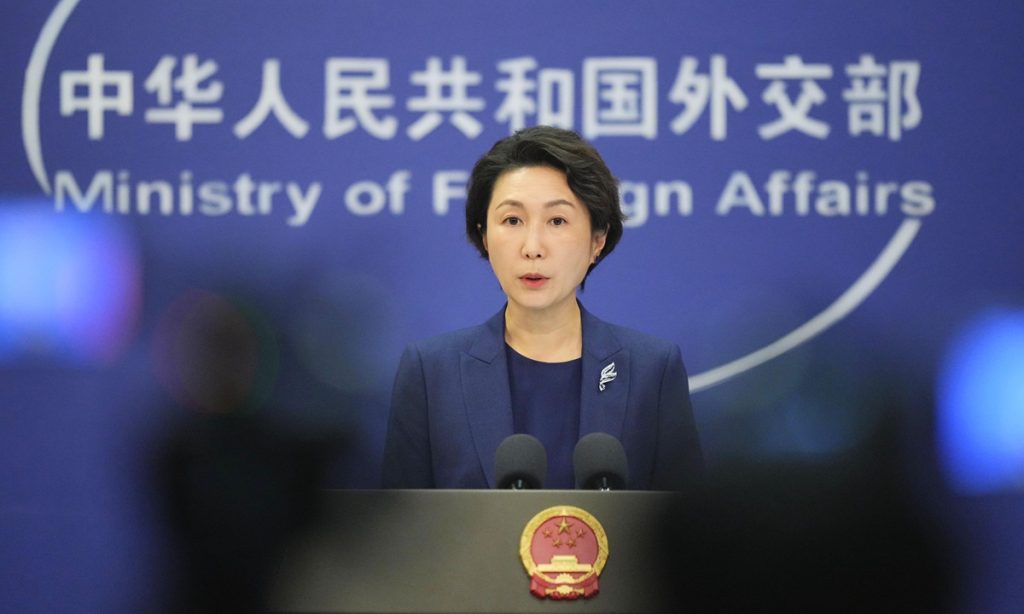
Responding to the matter, Chinese Foreign Ministry spokesperson Mao Ning said on Wednesday that Japan's justification for its behavior is better characterized as evasion and denial, which is nothing but camouflage for remilitarization.
"The Japanese side has been mum about the militarist invasion and war crimes, still less Japan's obligations under international law. To this day, Japan remains unrepentant over its dark history," Mao said.
Now it is deceiving the Japanese public and international community by mixing up concepts - calling overseas deployment "collective self-defense," buildup of offensive capabilities "acquiring counter-strike capabilities" and export of lethal weapons "equipment and technology cooperation," said Mao.
"Japan's repeated denial of neo-militarism shows its unease, as China's remarks have laid bare the real nature of its continuous military buildup and left Japan fearing more countries will see what it is doing and grow wary of its defense direction," Da Zhigang, a researcher at the Institute of Northeast Asian Studies at the Heilongjiang Provincial Academy of Social Sciences, told the Global Times on Wednesday.
Noting such continuous military moves by Japan could carry long-term risks and adverse impacts on regional peace and security, Da said it is essential for more countries to recognize Japan's true strategic orientation.
"Facts do not lie. Juggling with words does not whitewash Japan's rearmament. The harder Japan tries to hide it, the louder the alarm for the international community," spokesperson Mao said.
When asked to comment on the US designating two criminal groups in Brazil as terrorist organizations, a move that Brazil has denounced as undue interference in its politics, Chinese Foreign Ministry spokesperson Mao Ning said on Friday that China has noted the relevant reports. China consistently advocates non-interference in the internal affairs of other countries.
The Russia-Ukraine conflict is at its most dangerous moment, and the more difficult the situation becomes, the more it is needed for Global South countries, such as China and Brazil, to play a greater role, a Chinese scholar said at the Global Times Annual Conference 2025, themed "Moving forward in Partnership: Resonance of Values between China and the World," which is held in Beijing on Saturday.
Explaining why it is at the most dangerous moment, Wu Dahui, a professor of international relations and expert on China-Russia ties at Tsinghua University, said that Putin signed a decree in November ratifying the updated nuclear doctrine, sending a signal to the world: one more step forward could lead to the use of nuclear weapons, not just against Ukraine, but against US military and all NATO bases.
Wu gave an example of a massive attack launched by Russian forces on Friday, one missile came within just 9 kilometers of the Polish border. As 87 percent of Western weapons are continuously flowing into Ukraine through three entry-ports in Poland, is there a possibility that Russia might one day use ballistic missiles to directly destroy these entry-ports? Wu believes that this possibility does exist.
On the other hand, there are significant differences between the US and Russia regarding how the Russia-Ukraine conflict would end. Wu noted that, based on the current situation, there is little possibility of a peace treaty being reached between Russia and Ukraine by the first half of 2025, or even by the end of 2025.
Wu said security is the absence of threats objectively and the absence of fear subjectively; and that peace is a process of reconciliation achieved through dialogue. Only in this way can there be lasting peace.
China is not a party to the Russia-Ukraine conflict and can only do its best within its capacity. China has proposed the "China's Position on the Political Settlement of the Ukraine Crisis" and has reached consensus with Brazil on the political settlement of the Ukraine crisis. The Chinese value harmony and have always advocated for peace and dialogue. The more difficult the situation, the more needed it is for Global South countries, including China and Brazil, to play a greater role, said Wu.
The renewal of the Agreement Between the United States and China on Cooperation in Science and Technology will advance technological progress in both nations, drive socio-economic development, enhance collaboration on global challenges, and improve the well-being of people worldwide, Chinese Foreign Ministry spokesperson Lin Jian stated on Monday.
China and the US on December 13 signed a protocol to amend and extend the Agreement Between the United States and China on Cooperation in Science and Technology. They have agreed to extend the Agreement for additional five years, effective from August 27, 2024, Lin said.
Lin noted that China-US scientific and technological cooperation is fundamentally rooted in mutual benefit and shared success. The China-US Science and Technology Cooperation Agreement is one of the first intergovernmental agreements signed after the establishment of diplomatic relations between the two countries, providing strong support for scientific and technological exchanges and cooperation.
The renewal of the Agreement reflects the consensus achieved during recent meetings between the leaders of the two countries, aligning with mutual interests and global expectations, Lin said. It will not only promote technological progress and socio-economic development in both countries but also enhance cooperation in addressing global challenges and improve the well-being of people around the world.
Lin also expressed hope that the US side can work together with China in the same direction, earnestly implement the agreements and arrangements, and ensure that the outcomes of China-US scientific and technological cooperation truly benefit both countries and the world.
Six people have been detained for suspected criminal involvement in the partial collapse of an ice rink in Baicheng, Northeast China's Jilin Province, the provincial authorities announced on Friday, revealing the investigation result of the collapse.
The collapse on November 18 was caused by substandard construction quality, the Jilin authorities revealed. Apart from the six, other persons responsible remain under investigation, China Central Television reported on Saturday.
The investigation was announced during a provincial production safety meeting chaired by Jilin provincial governor Hu Yuting, Jilin Daily reported. At the meeting, Hu stressed that relevant authorities should address major safety risks while learning from incidents of the same kind elsewhere, and turning lessons into preventive measures.
Hu also urged the need to strengthen accountability for incidents and dig out the roots of the problem. Meanwhile, regular professional inspections should be in place and focus on key issues.
Special attention should be placed on high-risk areas such as commercial venues, large buildings, crowded places, and self-built commercial properties. A comprehensive safety review should be conducted across the province to identify design flaws, construction quality issues, and potential hazards, the governor said.
Further, responsibilities must be clarified to prevent accidents due to negligence, the Jilin Daily report noted.
As the year-end and early-year is a time period of high incident occurrences, Hu said the local government must maintain vigilance, enhance risk assessment, and protect against major accidents.
Part of the roof of an ice rink in Baicheng of Jilin collapsed in the early morning of November 18, with no injuries or casualties reported, according to CCTV. Local officials had said that preliminary findings suggest the accident was caused by deformation of the rooftop steel structure, potentially due to construction quality issues.
Chinese President Xi Jinping has called for efforts to build a strong, modernized information support force, and to realize the leapfrog development of the Chinese military's network information system.
Xi, also general secretary of the Communist Party of China (CPC) Central Committee and chairman of the Central Military Commission (CMC), made the remarks when inspecting the information support force of the Chinese People's Liberation Army (PLA) on Wednesday.
The PLA information support force is a strategic service branch established amid China's efforts to adjust and reform the structure of its military services and arms. Xi presented a flag to the force at its establishment ceremony in April.
During Wednesday's inspection, Xi said that the network information system is playing an increasingly prominent role in modern warfare, and that all relevant personnel should be fully aware that enhancing the system is extremely important.
He called on the force to accelerate its efforts to build the network information system and strengthen its capabilities in serving and supporting the military's combat readiness and capabilities.
Stressing the need for solid work in the development of the network information system, Xi said that the information services guarantee should be enhanced and great importance should be attached to the protection of network information security.
He also called for efforts to facilitate innovation in the command modes and the transformation of combat methods.
Xi demanded the information support force adhere to the fundamental principle of the Party's absolute leadership over the armed forces. He called for efforts to improve conduct, enforce discipline and combat corruption, stressing that the force must be entirely loyal, pure and reliable.
He urged the Party committee of the information support force to shoulder its responsibility in developing the force, and to build a team of highly competent professionals.
Xi requested coordinated efforts from the CMC, as well as other relevant authorities and units, to promote the development of the information support force.
Senior military officials Zhang Youxia, He Weidong, Liu Zhenli and Zhang Shengmin attended the event.
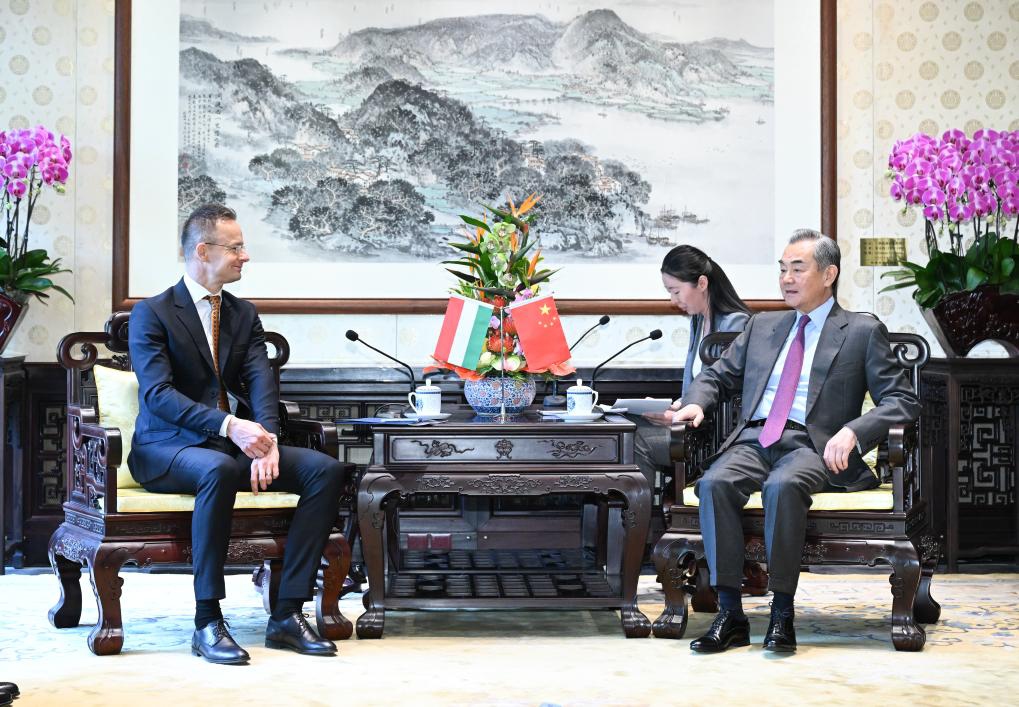
Chinese Foreign Minister Wang Yi held talks with Hungarian Minister of Foreign Affairs and Trade Peter Szijjarto in Beijing on Tuesday, discussing issues including deepening bilateral cooperation and developing a healthy and stable China-EU relationship.
Both sides highlighted the historic significance of the elevation of bilateral ties to an all-weather comprehensive strategic partnership for a new era in May when Chinese President Xi Jinping paid a state visit to Hungary.
Noting that Hungary was the first European country to sign a cooperation document on the Belt and Road Initiative with China, Wang said the practical bilateral cooperation has yielded fruitful results, which fully demonstrates that as long as there is mutual respect, trust, and support, economic cooperation between the two sides will enjoy broad prospects.
Wang expressed the hope that the new European Union institutions will adhere to the orientation and cooperative tone of the China-EU partnership, view China's development objectively, pursue a positive and pragmatic policy toward China, and promote the sustained, healthy, and stable development of China-EU relations.
Szijjarto said that Hungary looks forward to expanding and deepening cooperation in various fields with China, facilitating personnel exchanges, and enhancing friendship between the two peoples.
Noting that both Hungary and China support peace and advocate an international system based on mutual respect, Szijjarto said Hungary is committed to promoting the positive and healthy development of EU-China relations and is willing to work with China to promote world peace and stability.
China Satellite Navigation Office (CSNO) on Thursday released major plans for the next stage of BeiDou Navigation Satellite System (BDS), featuring cutting-edge technologies and enhanced services. The plan includes the launch of three pilot test satellites around 2027 and the completion of the system by 2035.
The BDS Development Plan for 2035 was announced on Thursday at a symposium in Beijing to mark the 30th anniversary of the BeiDou project. More than 100 participants attended the event, including representatives from national authorities, as well as key personnel from the project's engineering leadership and design teams.
The new plan outlines the future of China's satellite navigation network. "Building on the stable operation of the BDS-3, China aims to establish a next-generation BDS that is more advanced, robust, and user-focused," the Global Times learned from the event.
The timeline specifies that breakthroughs in key technologies are expected by 2025. By 2027, three pilot satellites will be launched to test new technologies, and by 2029, the deployment of the system's network satellites will begin. The full completion of the next-generation BDS is expected by 2035, according to the plan.
The new system will feature characteristics like accuracy, flexibility, intelligence, and adaptability, offering global users real-time, high-precision, and highly reliable navigation, positioning, and timing services across Earth and near-Earth spaces, with accuracy ranging from meter-level to decimeter-level.
The system will cater to a variety of user terminals spanning from Earth's surface to deep space, and seamlessly integrate with other non-satellite-based navigation and timing technologies.
The CSNO noted that the next-generation BDS will optimize the constellation architecture, forming a hybrid configuration of high-, medium- and low-orbit to enhance the accuracy of time-space benchmarks and the system's autonomous operation capabilities.
An integrated and efficient ground system will also be established to ensure resource flexibility, data sharing, and continuous operations, according to the office.
"Currently, we have initiated a series of research projects focusing on key technologies, particularly emerging technologies such as low Earth orbit (LEO) satellites," Xie Jun, a deputy chief designer of the BDS project and researcher at the China Aerospace Science and Technology Corp, told the Global Times on Wednesday.
He explained that the BDS has innovatively adopted a combination of medium Earth orbit (MEO) and high Earth orbit (HEO) satellites. In the next-generation system, LEO satellites will be integrated into the constellation, with the current MEO and HEO configuration of BDS serving as the core.
The LEO satellites can offer faster positioning speeds and better accuracy from the 10-meter to the 1-meter level, or even decimeter- and centimeter-level precision. "At that point, users will clearly notice that even in environments with interference or obstructions, the BDS will maintain high reliability, with excellent accuracy in positioning and timing," Xie noted.
As a core global supplier recognized by the United Nations, China has continued to expand its international "circle of friends" by signing BDS cooperation agreements with countries such as Russia, Pakistan, Belarus and Arab nations, the Global Times learned at the event.
BDS products are now exported to more than 140 countries and regions, and the system has been integrated into the standards of 13 international organizations, including those for civil aviation, maritime, and mobile communications. This makes it a striking example of China's efforts to promote the construction of a global community of shared future.
As one of the four major global satellite navigation service providers, China's BDS stands out for its extensive range of services. "Most other satellite navigation systems primarily focus on positioning, navigation, and timing. In addition to providing high-precision timing services, BDS offers satellite-based augmentation and its unique feature - short message communication services. In regional services, our large-capacity short message communication can now transmit messages containing up to 1,000 Chinese characters," Xie told the Global Times.
He added that BDS currently ranks among the top satellite navigation systems in terms of positioning accuracy. Regular evaluations by global monitoring stations show that BDS' navigation precision is among the best. "In terms of safety and reliability, the BDS system is comparable to the US GPS. Overall, I believe that BDS' comprehensive performance is leading the field," Xie concluded.
Currently, BDS applications are rapidly expanding across key sectors of China's national economy, with coverage rates surpassing 90 percent in areas such as transportation, energy, natural resources and emergency response, said Xiang Libin, a deputy director of the National Development and Reform Commission and academician with the Chinese Academy of Sciences, at the third International Summit on BDS Applications late October.
Industry insiders hailed the vast potential of BDS application as being "limited only by human imagination," while anticipating its future integration with other advanced technologies such as artificial intelligence.