Since May 27, the ship-borne helicopter of the Dutch frigate HNLMS De Ruyter illegally intruded into the airspace over China’s Xisha Qundao, and then the frigate transited the Taiwan Straits, Senior Colonel Xu Chenghua, spokesperson for the People's Liberation Army (PLA) Eastern Theater Command, said on Friday.
The PLA Eastern Theater Command dispatched naval and air assets to track and monitor the Dutch frigate throughout its passage, and handled the situation effectively, the spokesperson said.
The theater command's troops will stay on high alert at all times and resolutely safeguard China’s sovereignty and security, as well as regional peace and stability.
After the photo of Spring Airlines flight attendants was found to be shared on the users forum of Rokid smart glasses recently, discussions and public concerns have emerged over the potential misuse of AI-equippedp wearable devices for covert photography, multiple media including chinanews.com reported on Sunday.
The concern emerged after Xiaoxiang Morning Herald reported that a Rokid glasses user surnamed Yun discovered a post in the Rokid app's online community section dated on May 27 showing a photo of two flight attendants at work taken by the smart glasses, accompanied by the caption: "Spring Airlines flight attendants are pretty good." Yun subsequently filed a complaint through the app and made a post on social media platform cautioning covert photography of smart glasses, raising concerns that smart glasses could become a new tool for unauthorized recording, per Xiaoxiang Morning Herald.
The Global Times reporter did not locate the original post in the smart glasses' app community as of press time, and whether the post had been removed remained unverified. However, many other users have also uploaded first-person videos of various activities in the community section, including footage of strangers in public spaces such as beaches, parks and subway systems.
Yun noted that smart glasses are highly convenient in daily life, particularly for functions such as translation and meeting transcription, but she was surprised to learn that some users were purchasing light-blocking stickers designed to conceal the device's recording indicators, effectively disguising the glasses as ordinary eyewear, according to Xiaoxiang Morning Herald.
Yun discovered that several online retailers are selling stickers intended to block the recording indicator lights. The light was originally designed by the manufacturer of smart glasses to alert people when recording is taking place and help protect privacy, "yet some people are doing everything possible to bypass these safeguards," per report.
One online seller reportedly with more than 5,000 sales of such stickers, advertised that they "do not trigger alerts and do not affect photography." Customer reviews described the products as "amazing," noting that "there is no light when taking photos" and even charging indicator lights were hidden.
Tests conducted by Xiaoxiang Morning Herald reporters found that after applying the stickers, recording with the AI glasses became nearly impossible for bystanders to detect, while notification sounds could only be heard by the wearer.
The incident has prompted discussion among Chinese netizens. One netizen expressed concern that unauthorized photography would become even more difficult to detect, while another said that "although advanced technology offers greater convenience, it is also making personal privacy increasingly vulnerable."
Both Spring Airlines and Rokid later responded to the controversy, while legal experts warned that people who secretly record and upload images without consent could face multiple forms of legal liability, according to the report.
A Spring Airlines staff member told Xiaoxiang Morning Herald on June 4 that photographing cabin crew without permission, particularly when the content is posted publicly online, could infringe upon an individual's portrait rights and privacy rights.
Rokid customer service said the matter had been forwarded to relevant staff for investigation. The company stated that if violations are confirmed, it will take action against the account in accordance with its user agreement and further strengthen guidance on proper use of the devices, according to the report.
Wan Qi, a lawyer with Hunan Jinzhou Law Firm, warned that individuals who secretly photograph others and upload the content online without consent could face civil liability as well as potential administrative or criminal penalties.
According to Wan, photographing and publishing images of individuals without their knowledge may constitute infringement of portrait and privacy rights under China's Civil Code. Victims may seek remedies including cessation of the infringement, public apologies and compensation for emotional distress. In serious cases, offenders could also violate public security regulations or even face criminal prosecution.
Wan added that merchants selling light-blocking stickers designed to circumvent privacy protections could be found to have knowingly facilitated infringement and may face joint liability, per report.
Amid a string of Japan's recent military expansion steps, Japanese media outlets on Wednesday revealed the outline of Japan's annual defense report, which claimed that China's military activities were "a grave concern," and highlighted the need for securing sustained combat capacity for potential "prolonged war."
Chinese experts said Japan is using a well-worn trick to portray itself as a victim to drum up global public opinion and fabricate excuses for its militaristic expansion. Tokyo's rapid military buildup has gone far beyond legitimate self-defense demands and serves to pave the way for a return to militarism, a development that warrants close vigilance from the international community.
On the same day, as it responded to yet another development pointing to Japan's dangerous military tilt, China's Foreign Ministry pushed back against the Japanese Defense Ministry's allegation that China kept repeating unfounded claims, underscoring word games cannot whitewash Japan's tangible steps to boost and expand its armed forces.
Well-worn trick
According to the outline of Japan's Defense White Paper, regarding China's military activities, it cites incidents including intermittent radar illumination of Self-Defense Forces aircraft by Chinese fighter jets last December and intensified Chinese carrier operations in the Pacific Ocean, the NHK reported on Wednesday.
The outline labels such military activities "a grave concern" for Japan and the international community and "an unprecedented top strategic challenge," using wording nearly identical to that in the 2025 White Paper, the Japanese media outlet said in the report.
Claiming China's intensifying military operations near Japanese territories, the outline frames the issue as one to be countered by comprehensive national strength plus cooperation and coordination with allies and like-minded partners, the Asahi Shimbun reported on Wednesday.
The full Defense White Paper is expected to be submitted to Japan's Cabinet for review this summer, according to NHK.
The worsening China-Japan relations stem entirely from rampant domestic neo-militarist sentiments in Japan, yet Japan habitually shifts blame on security issues. Worse still, Tokyo pretends to be an innocent victim to mislead the world and rebrand itself from a troublemaking provocateur into an aggrieved party. It is a well-worn trick to build public opinion and prepare for more provocations against China down the line, Lü Chao, an expert at the Liaoning Academy of Social Sciences, told the Global Times on Wednesday.
Hype over the so-called China threat works as a pretext for Japan to expand its military and roll out risky military initiatives, Lü said, noting that every unfounded allegation it levels at China is crafted to justify its own militaristic expansion.
According to NHK, the outline of the paper also creates a new section dedicated to "new forms of warfare," citing the extensive deployment of low-cost drones and protracted combat seen on Ukraine's battlefields. Building on that, the outline underscores the importance of preparing for emerging warfare leveraging AI and drones, securing sustained combat capacity for potential prolonged war, and bolstering defense industrial and technological foundations.
Neo-militarism in Japan has gained alarming momentum, with Tokyo's top priority being to shake off post-war legal shackles on its military, Lü said. "Its massive push for drones and other military equipment far exceeds genuine self-defense needs. This outright military expansion aims to grow Japan's regional leverage and clear the path for a militaristic comeback," the expert said.
Wordplay cannot whitewash military build-up
In response to previous media disclosures of the draft of the Sanae Takaichi administration's first Defense White Paper which reveal that it frames China's activities in the Pacific as a "security threat" and expresses vigilance, Jiang Bin, spokesperson for China's Ministry of National Defense, said on May 28 that what Japan does contradicts what it says. The more it tries to whitewash the inconsistency, the more obvious it gets, he said.
Jiang laid out a batch of dangerous moves taken by Japan. He told the press conference that in recent years, the Japanese government has sharply hiked its defense budget, developed and deployed offensive weapons, eased restrictions on exporting lethal weapons, pushed to revise the pacifist Constitution, clamored to be a war-capable nation, and even touted abandoning the three non-nuclear principles.
"If these actions still qualify as 'exclusively defense-oriented,' then there would be no such word as offensive in the dictionary," Jiang said.
Apart from the long-running policy shifts, fresh dangerous moves from Tokyo have kept emerging recently.
At the end of May, Japan and Philippines has agreed to begin formal negotiations to conclude a security intelligence-sharing agreement. The two countries also recently announced to start talks on maritime delimitation in the waters east of China's Taiwan island, which seriously infringed upon China's territorial sovereignty and maritime rights and interests.
Ironically, as reported by Reuters, at the just-concluded Shangri-La Dialogue in Singapore, Japan's Defence Minister Shinjiro Koizumi rebutted criticism that Japan was embracing new militarism, and claimed: "Think about it. There's a country that has a huge arsenal of nuclear weapons and strategic bombers. Japan has neither of such weapons, and yet Japan is labelled 'new militarism'?"
Refuting such claims, Chinese Foreign Ministry spokesperson Lin Jian said at a regular press conference on Monday that "the remarks from the Japanese official you mentioned have no basis at all. They have zero authority in front of history, law, facts and figures. There is no way that making such remarks will help Japan earn the trust of its Asian neighbors and the international community."
However, it seems to have become a repeated pattern for Japan to reject accusations over military expansion when such issues are raised. Following Lin's remarks, Japanese Defense Ministry spokesperson claimed the next day that China keeps repeating factually unfounded claims and called such reaction regrettable, Japanese media outlet Livedoor News reported.
Responding to the matter, Chinese Foreign Ministry spokesperson Mao Ning said on Wednesday that Japan's justification for its behavior is better characterized as evasion and denial, which is nothing but camouflage for remilitarization.
"The Japanese side has been mum about the militarist invasion and war crimes, still less Japan's obligations under international law. To this day, Japan remains unrepentant over its dark history," Mao said.
Now it is deceiving the Japanese public and international community by mixing up concepts - calling overseas deployment "collective self-defense," buildup of offensive capabilities "acquiring counter-strike capabilities" and export of lethal weapons "equipment and technology cooperation," said Mao.
"Japan's repeated denial of neo-militarism shows its unease, as China's remarks have laid bare the real nature of its continuous military buildup and left Japan fearing more countries will see what it is doing and grow wary of its defense direction," Da Zhigang, a researcher at the Institute of Northeast Asian Studies at the Heilongjiang Provincial Academy of Social Sciences, told the Global Times on Wednesday.
Noting such continuous military moves by Japan could carry long-term risks and adverse impacts on regional peace and security, Da said it is essential for more countries to recognize Japan's true strategic orientation.
"Facts do not lie. Juggling with words does not whitewash Japan's rearmament. The harder Japan tries to hide it, the louder the alarm for the international community," spokesperson Mao said.
When asked to comment on the US designating two criminal groups in Brazil as terrorist organizations, a move that Brazil has denounced as undue interference in its politics, Chinese Foreign Ministry spokesperson Mao Ning said on Friday that China has noted the relevant reports. China consistently advocates non-interference in the internal affairs of other countries.
Chinese President Xi Jinping on Saturday exchanged congratulations with Egyptian President Abdel-Fattah al-Sisi on the 70th anniversary of diplomatic ties between the two countries.
Xi said that Egypt was the first Arab and African country to establish diplomatic relations with the People's Republic of China.
Over the past 70 years, no matter how the international and regional landscapes have evolved, the two countries have always respected each other, treated each other as equals, placed mutual trust in each other and helped each other in times of need, Xi said.
He said China-Egypt relations have become a model of amity, solidarity and cooperation among developing countries, as well as a benchmark for collective cooperation between China and Arab states and between China and Africa, thereby advancing steadily toward building a China-Egypt community with a shared future in the new era.
As two ancient civilizations and important members of the Global South, Xi said, China and Egypt should draw wisdom and strength from history, strive to accomplish the historical missions of pursuing peace, development, cooperation and upholding justice so as to inject strong impetus into building a community with a shared future for humanity.
Xi said that he attaches great importance to the development of China-Egypt relations and stands ready to work together with Sisi to take the 70th anniversary of diplomatic ties as a new starting point, carry forward the traditional friendship, strengthen exchanges and cooperation in various fields, and push for the growth of China-Egypt relations featuring greater strategic guidance, stronger synergy for development and broader international influence, so as to deliver more benefits to the two peoples and make greater contributions to peace and development in the region and beyond.
For his part, Sisi said that Egypt and China have stood shoulder to shoulder through various historical periods and under the joint guidance of the leaders of the two countries over the past 70 years, Egypt-China relations have sustained steady growth.
Applauding the important achievements in Egypt-China relations, Sisi voiced hope of working with Xi to push for further progress in bilateral ties, and jointly build a more stable multipolar world with greater capacity to address global challenges, so as to enable all countries to share the fruits of comprehensive development and jointly realize peace and security.
Also on Saturday, Chinese Premier Li Qiang and his Egyptian counterpart Mostafa Madbouly exchanged congratulations.
Li voiced China's willingness to work with Egypt to follow through on the important consensus reached by the two heads of state, accelerate high-quality Belt and Road cooperation, enhance exchanges and cooperation across various fields and work for steady growth of the China-Egypt comprehensive strategic partnership so as to deliver more benefits to the two peoples.
For his part, Madbouly said that over the past 70 years, Egypt-China relations have made remarkable progress and bilateral cooperation has achieved unprecedented results.
Egypt looks forward to further strengthening cooperation with China and making steady headway in such fields as economy, science and technology so as to deliver benefits to the two friendly countries and the two peoples.
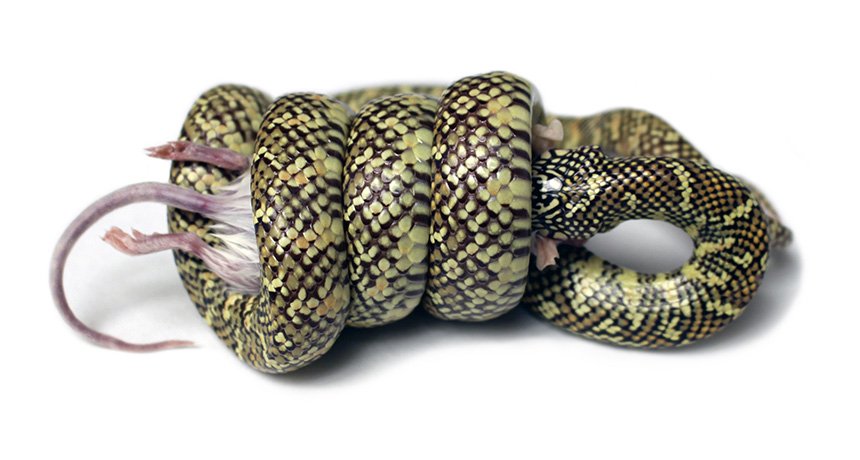
It’s not the size of a snake’s muscles that matter, but how it uses them. King snakes can defeat larger snakes in a wrestling match to the death because of how they coil around their prey, researchers report March 15 in the Journal of Experimental Biology.
King snakes wrap around their food and squeeze with about twice as much pressure as rat snakes do, says David Penning, a functional morphologist at Missouri Southern State University in Joplin. Penning, along with colleague Brad Moon at the University of Louisiana at Lafayette, measured the constriction capabilities of almost 200 snakes. “King snakes are just little brutes,” Penning says. King snakes, which are common in North American forests and grasslands, are constrictor snakes that “wrestle for a living,” Penning says. They mainly eat rodents, birds and eggs, squeezing so hard, they can stop their prey’s heart (SN: 8/22/15, p. 4). In addition, about a quarter of the king snake diet is other snakes. King snakes can easily attack and eat vipers because they’re immune to the venom, but when they take on larger constrictors, such as rat snakes, it has been unclear what gives them the edge. “That’s not how nature goes,” Penning says, because predators are usually larger than their prey.
King snakes, though, can eat snakes up to 35 percent larger than themselves. One of the largest king snake conquests on record, from 1893, is of a 5-foot-3-inch rat snake, about 17 percent larger than the 4-foot-6-inch king snake that consumed it, Penning says. “David Penning is really one of the first researchers that has been looking at the anatomy, physiology and function of these snakes” to understand how king snakes are superior to rat snakes, says Anthony Herrel, a functional morphologist and evolutionary biologist at the French National Museum of Natural History in Paris. To determine what makes these snakes kings, Penning and Moon compared their muscle size, ability to escape attack and the strength of their squeeze to that of rat snakes. In one test, the researchers shook dead rodents enticingly in front of the snakes to goad them into striking and squeezing. Sensors on the rodents recorded the pressure of the squeeze.
The king snakes constricted with an average pressure of about 20 kilopascals, stronger than the pumping pressure of a human heart. Rat snakes in the same tests applied only about 10 kilopascals of pressure.
But the king snakes weren’t bigger body builders. Controlling for body size, the two kinds of snakes “had the exact same quantity of muscle,” Penning says.
The snakes’ more powerful constriction is probably due to how they use their muscles, not how much muscle they have, the researchers conclude. They observed that the majority of king snakes in the study wrapped around their food like a spring in what Penning calls the “curly fry pattern.” Rat snakes didn’t always coil in the same way and often ended up looking like a “weird pile of spaghetti,” he says.
Penning plans to study how other factors influence constriction as well, such as how long the king snakes can squeeze, how hungry they are and the temperature of their environment.
In the scientific version of her obituary, Dolly the Sheep was reported to have suffered from severe arthritis in her knees. The finding and Dolly’s early death from an infection led many researchers to think that cloning might cause animals to age prematurely.
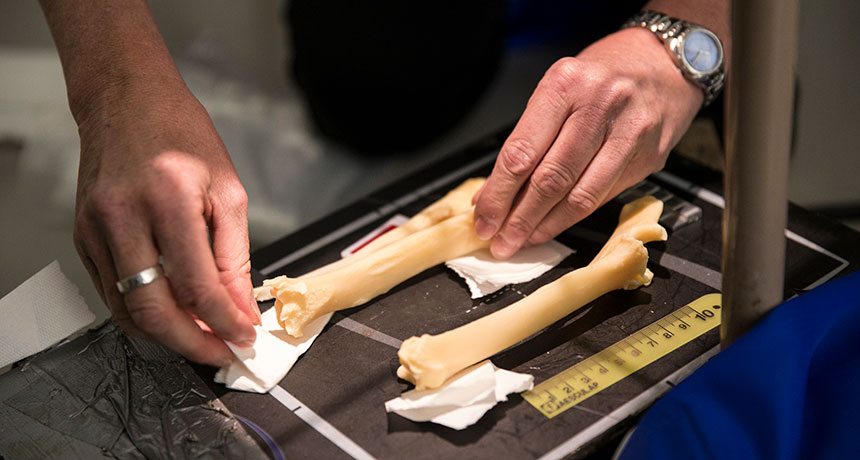
But new X-rays of Dolly’s skeleton and those of other cloned sheep and Dolly’s naturally conceived daughter Bonnie indicate that the world’s first cloned mammal had the joints of normal sheep of her age. Just like other sheep, Dolly had a little bit of arthritis in her hips, knees and elbows, developmental biologist Kevin Sinclair of the University of Nottingham in England and colleagues report November 23 in Scientific Reports. The researchers decided to reexamine Dolly’s remains after finding that her cloned “sisters” have aged normally and didn’t have massive arthritis (SN: 8/20/16, p. 6). No formal records of Dolly’s original arthritis exams were kept, so Sinclair and colleagues got Dolly’s and Bonnie’s skeletons and those of two other cloned sheep, Megan and Morag, from the National Museums Scotland in Edinburgh. Megan and Bonnie were both older than Dolly at the time of their deaths and had more bone damage than Dolly did. Morag died younger and had less damage. Dolly’s arthritis levels were similar to those of naturally conceived sheep her age, indicating that cloning wasn’t to blame. “If there were a direct link with cloning and osteoarthritis, we would have expected to find a lot worse, and it would be more extensive and have a different distribution than what we’re finding in ordinary sheep,” says study coauthor Sandra Corr, a veterinary orthopedic specialist at the University of Glasgow in Scotland. Dolly’s slightly creaky joints may have stemmed from giving birth to six lambs, including Bonnie. Pregnancy is a risk factor for arthritis in sheep.
For decades, the name “virus” meant small and simple. Not anymore. Meet the giants.
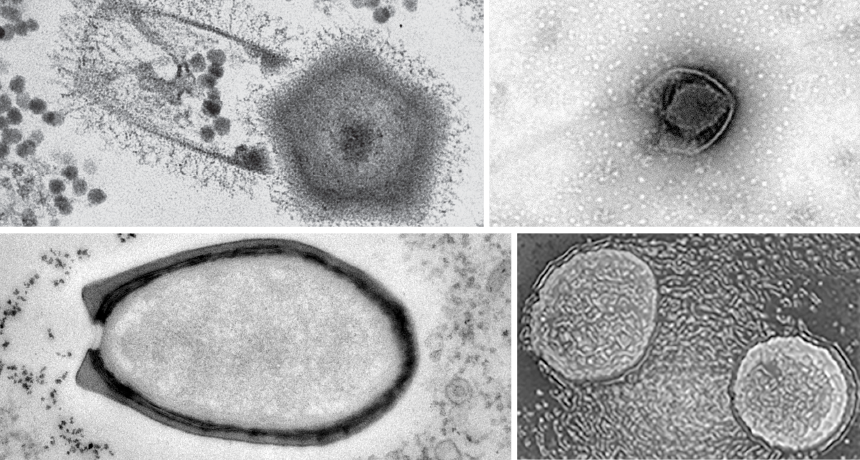
Today, scientists are finding ever bigger viruses that pack impressive amounts of genetic material. The era of the giant virus began in 2003 with the discovery of the first Mimivirus (SN: 5/23/09, p. 9). The viral titan is about 750 nanometers across with a genetic pantry boasting around 1.2 million base pairs of DNA, the information-toting bits often represented with A, T, C and G. Influenza A, for example, is roughly 100 nanometers across with only about 13,500 base pairs of genetic material.
In 2009, another giant virus called Marseillevirus was identified. It is different enough from mimiviruses to earn its own family. Since 2013, mega-sized viruses falling into another eight potential virus families have been found, showcasing a long-unexplored viral diversity, researchers reported last year in Annual Review of Virology and in January in Frontiers in Microbiology.
Giant viruses mostly come in two shapes: polyhedral capsules and egglike ovals. But one, Mollivirus, skews more spherical. Pacmanvirus was named for the broken appearance of its outer shell. Both represent potential families. Two newly discovered members of the mimivirus family, both called tupanviruses and both with tails, have the most complete set of genes related to assembling proteins yet seen in viruses (SN Online: 2/27/18). Once unheard of, giant viruses may be common in water and soils worldwide. Only time — and more discoveries — will tell. Virus length and genome size for a representative from each of two recognized giant virus families (mimivirus and marseillevirus families) and eight potential families are shown. Circles are scaled to genome size and shaded by size range, with influenza A and E. coli bacterium included for comparison. Years indicate when the first viruses were described.
Graphic: C. Chang; Sources: P. Colson, B. La Scola and D. Raoult/Annual Review of Virology 2017; J. Andreani et al/Frontiers in Microbiology 2018
When you’re stressed and anxious, you might feel your heart race. Is your heart racing because you’re afraid? Or does your speeding heart itself contribute to your anxiety? Both could be true, a new study in mice suggests.
By artificially increasing the heart rates of mice, scientists were able to increase anxiety-like behaviors — ones that the team then calmed by turning off a particular part of the brain. The study, published in the March 9 Nature, shows that in high-risk contexts, a racing heart could go to your head and increase anxiety. The findings could offer a new angle for studying and, potentially, treating anxiety disorders. The idea that body sensations might contribute to emotions in the brain goes back at least to one of the founders of psychology, William James, says Karl Deisseroth, a neuroscientist at Stanford University. In James’ 1890 book The Principles of Psychology, he put forward the idea that emotion follows what the body experiences. “We feel sorry because we cry, angry because we strike, afraid because we tremble,” James wrote.
The brain certainly can sense internal body signals, a phenomenon called interoception. But whether those sensations — like a racing heart — can contribute to emotion is difficult to prove, says Anna Beyeler, a neuroscientist at the French National Institute of Health and Medical Research in Bordeaux. She studies brain circuitry related to emotion and wrote a commentary on the new study but was not involved in the research. “I’m sure a lot of people have thought of doing these experiments, but no one really had the tools,” she says.
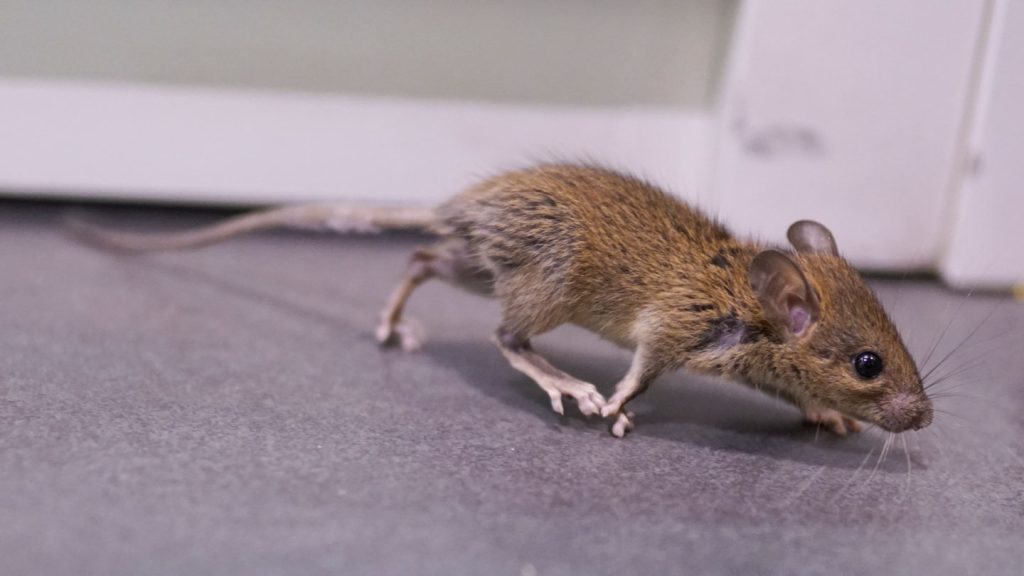
Deisseroth has spent his career developing those tools. He is one of the scientists who developed optogenetics — a technique that uses viruses to modify the genes of specific cells to respond to bursts of light (SN: 6/18/21; SN: 1/15/10). Scientists can use the flip of a light switch to activate or suppress the activity of those cells. In the new study, Deisseroth and his colleagues used a light attached to a tiny vest over a mouse’s genetically engineered heart to change the animal’s heart rate. When the light was off, a mouse’s heart pumped at about 600 beats per minute. But when the team turned on a light that flashed at 900 beats per minutes, the mouse’s heartbeat followed suit. “It’s a nice reasonable acceleration, [one a mouse] would encounter in a time of stress or fear,” Deisseroth explains.
When the mice felt their hearts racing, they showed anxiety-like behavior. In risky scenarios — like open areas where a little mouse might be someone’s lunch — the rodents slunk along the walls and lurked in darker corners. When pressing a lever for water that could sometimes be coupled with a mild shock, mice with normal heart rates still pressed without hesitation. But mice with racing hearts decided they’d rather go thirsty.
“Everybody was expecting that, but it’s the first time that it has been clearly demonstrated,” Beyeler says. The researchers also scanned the animals’ brains to find areas that might be processing the increased heart rate. One of the biggest signals, Deisseroth says, came from the posterior insula (SN: 4/25/16). “The insula was interesting because it’s highly connected with interoceptive circuitry,” he explains. “When we saw that signal, [our] interest was definitely piqued.”
Using more optogenetics, the team reduced activity in the posterior insula, which decreased the mice’s anxiety-like behaviors. The animals’ hearts still raced, but they behaved more normally, spending some time in open areas of mazes and pressing levers for water without fear. A lot of people are very excited about the work, says Wen Chen, the branch chief of basic medicine research for complementary and integrative health at the National Center for Complementary and Integrative Health in Bethesda, Md. “No matter what kind of meetings I go into, in the last two days, everybody brought up this paper,” says Chen, who wasn’t involved in the research.
The next step, Deisseroth says, is to look at other parts of the body that might affect anxiety. “We can feel it in our gut sometimes, or we can feel it in our neck or shoulders,” he says. Using optogenetics to tense a mouse’s muscles, or give them tummy butterflies, might reveal other pathways that produce fearful or anxiety-like behaviors.
Understanding the link between heart and head could eventually factor into how doctors treat panic and anxiety, Beyeler says. But the path between the lab and the clinic, she notes, is much more convoluted than that of the heart to the head.
An experimental treatment for endometriosis, a painful gynecological disease that affects some 190 million people worldwide, may one day offer new hope for easing symptoms.
Monthly antibody injections reversed telltale signs of endometriosis in monkeys, researchers report February 22 in Science Translational Medicine. The antibody targets IL-8, a molecule that whips up inflammation inside the scattered, sometimes bleeding lesions that mark the disease. After neutralizing IL-8, those hallmark lesions shrink, the team found.
The new treatment is “pretty potent,” says Philippa Saunders, a reproductive scientist at the University of Edinburgh who was not involved with work. The study’s authors haven’t reported a cure, she points out, but their antibody does seem to have an impact. “I think it’s really very promising,” she says.
Many scientists think endometriosis occurs when bits of the uterine lining — the endometrium — slough off during menstruation. Instead of exiting via the vagina, they voyage in the other direction: up through the fallopian tubes. Those bits of tissue then trespass through the body, sprouting lesions where they land. They’ll glom onto the ovaries, fallopian tubes, bladder and other spots outside of the uterus and take on a life of their own, Saunders says. The lesions can grow nerve cells, form tough nubs of tissue and even bleed during menstrual cycles. They can also kick off chronic bouts of pelvic pain. If you have endometriosis, you can experience “pain when you urinate, pain when you defecate, pain when you have sex, pain when you move around,” Saunders says. People with the disease can also struggle with infertility and depression, she adds. “It’s really nasty.” Once diagnosed, patients face a dearth of treatment options — there’s no cure, only therapies to alleviate symptoms. Surgery to remove lesions can help, but symptoms often come back.
The disease affects at least 10 percent of girls, women and transgender men in their reproductive years, Saunders says. And people typically suffer for years — about eight on average — before a diagnosis. “Doctors consider menstrual pelvic pain a very common thing,” says Ayako Nishimoto-Kakiuchi, a pharmacologist at Chugai Pharmaceutical Co. Ltd. in Tokyo. Endometriosis “is underestimated in the clinic,” she says. “I strongly believe that this disease has been understudied.”
Hormonal drugs that stop ovulation and menstruation can also offer relief, says Serdar Bulun, a reproductive endocrinologist at Northwestern University Feinberg School of Medicine in Chicago not involved with the new study. But those drugs come with side effects and aren’t ideal for people trying to become pregnant. “I see these patients day in and day out,” he says. “I see how much they suffer, and I feel like we are not doing enough.”
Nishimoto-Kakiuchi’s team engineered an antibody that grabs onto the inflammatory factor IL-8, a protein that scientists have previously fingered as one potential culprit in the disease. The antibody acts like a garbage collector, Nishimoto-Kakiuchi says. It grabs IL-8, delivers it to the cell’s waste disposal machinery, and then heads out to snare more IL-8.
The team tested the antibody in cynomolgus monkeys that were surgically modified to have the disease. (Endometriosis rarely shows up spontaneously in these monkeys, the scientists discovered previously after screening more than 600 females.) The team treated 11 monkeys with the antibody injection once a month for six months. In these animals, lesions shriveled and the adhesive tissue that glues them to the body thinned out, too. Before this study, Nishimoto-Kakiuchi says, the team didn’t think such signs of endometriosis were reversible. Her company has now started a Phase I clinical trial to test the safety of therapy in humans. The treatment is one of several endometriosis therapies scientists are testing (SN: 7/19/19) . Other trials will test new hormonal drugs, robot-assisted surgery and behavioral interventions.
Doctors need new options to help people with the disease, Saunders says. “There’s a huge unmet clinical need.”