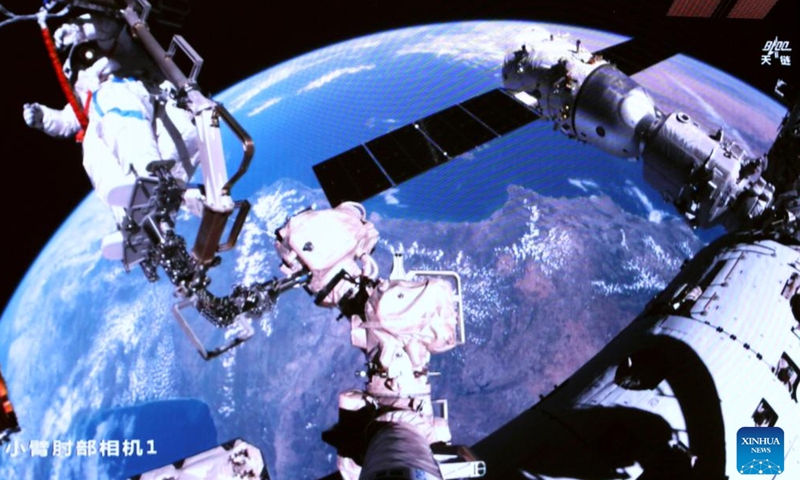
The Shenzhou-21 crew aboard China's orbiting space station completed their mission's third series of extravehicular activities on Friday, according to the China Manned Space Agency.
The taikonaut trio -- Zhang Lu, Wu Fei and Zhang Hongzhang -- worked for roughly 5.5 hours and completed their tasks at 1:36 a.m. (Beijing Time), assisted by the space station's robotic arm and a team on Earth.
To date, Zhang Lu has conducted a total of 7 extravehicular activities, setting a new record for the most spacewalks by a Chinese taikonaut.
China will step up efforts to better protect the rights and interests of workers in new forms of employment, according to a set of guidelines made public on Sunday.
These guidelines, issued by the general offices of the Communist Party of China Central Committee and the State Council, urge internet platforms and express delivery firms to set reasonable wages for workers in new forms of employment based on work tasks and labor intensity, and to ensure full and timely payment.
Efforts should be made to strengthen the governance of algorithms on internet platforms, the guidelines say, urging relevant companies to earnestly fulfill their social responsibilities, toughen regulation of algorithms and improve transparency. Workers in new forms of employment must have the right to be informed about, participate in, and choose algorithm-related rules, the guidelines note.
The guidelines also underscore the need to strengthen oversight of relevant sectors, improve information disclosure for practitioners, and guide workers in new forms of employment to develop reasonable expectations regarding income and benefits.
Comprehensive measures should be introduced to curb rat race competition and strictly prevent infringements on the legitimate rights and interests of such workers, the guidelines add.
New forms of employment refer to jobs that have emerged with the rise of the internet and the digital economy, including roles like food delivery couriers, ride-hailing drivers and online marketers, who rely on internet platforms for their work.
China currently has 84 million people engaged in such work, who play an important role in serving and ensuring people's livelihood, and in helping to keep the economy running smoothly.
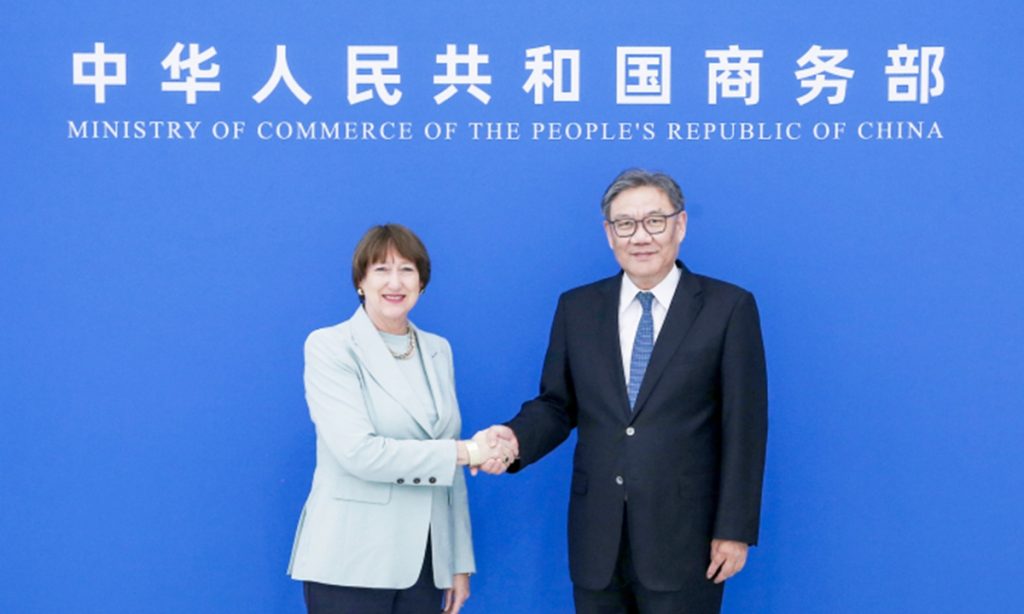
China's Minister of Commerce Wang Wentao met with Hildegard Mueller, president of the German Association of the Automotive Industry (VDA), on Monday, to discuss China-Germany automotive cooperation, the stability of global automotive supply chains, and EU's trade restrictions on China, according to a Tuesday statement from China's Ministry of Commerce.
This year marks the start of China's 15th Five-Year Plan (2026-30), China will continue to expand high-level opening-up, drive high-quality development through new quality productive forces, and encourage industrial innovation through fair competition, Wang said. The minister welcomed German automakers to deepen their presence in China, leverage complementary advantages with Chinese partners, and jointly advance the global automotive industry toward higher-end, intelligent, and green development.
Earlier this year, China and the EU achieved a "soft landing" in the electric vehicle case through a price undertaking arrangement. Wang stated his hopes the EU would abide by its commitment to non-discrimination, accelerate negotiations with Chinese automakers, and ensure the early implementation of the price undertaking.
Both sides should manage frictions through dialogue and consultation and jointly safeguard the stability and smooth functioning of global automotive industrial and supply chains, the minister said.
Wang also noted that China has expressed strong over EU's recent trade-restrictive measures, warning that such protectionist steps could endanger Chinese companies and undermine their confidence in investing in Europe.
He expressed hopes that the association would play an active role in urging the EU to respect fair competition, abide by WTO rules, and revise inappropriate provisions, so as to foster a fair, just and non-discriminatory business environment for China-EU cooperation.
Mueller said China's 15th Five-Year Plan provides clear signals and important guidance for foreign investment in the country. German automakers will continue to expand investment and R&D in China, accelerate localization, and better realize the strategy of "in China, for global markets."
VDA supports free trade and believes the price undertaking arrangement reached between the EU and China has laid a solid foundation for resolving tariff issues, said Mueller. The association will continue to call on the EU to keep the automotive market open, welcome Chinese automakers and parts suppliers to invest in Germany, and deepen the integration of German-Chinese and EU-China automotive industrial and supply chains.
Apple said Monday that CEO Tim Cook will become executive chairman of the company's board of directors, while John Ternus, Apple's senior vice president of hardware engineering, will become the company's next CEO effective Sept. 1, 2026.
The company said the leadership transition was unanimously approved by its board of directors and followed a long-term succession planning process. Cook will remain CEO through the summer and work closely with Ternus to ensure a smooth handover, according to Apple.
In a statement released by the company, Cook said it had been "the greatest privilege" of his life to be Apple's CEO, and described Ternus as "without question the right person to lead Apple into the future." Ternus said he was "profoundly grateful" for the opportunity to carry Apple's mission forward.
Cook joined Apple in 1998 and became CEO in 2011. Apple said that under his leadership, the company's market capitalization rose from about 350 billion U.S. dollars to 4 trillion dollars, while annual revenue increased from 108 billion dollars in fiscal 2011 to more than 416 billion dollars in fiscal 2025.
Ternus joined Apple's product design team in 2001, became vice president of hardware engineering in 2013, and joined the executive team in 2021 as senior vice president of hardware engineering, according to the company.
Recently, quite a few foreign vloggers traveling or residing in China have documented and shared their authentic daily experiences here in this country. Whether it is walking alone late at night, leaving laptops unattended on high-speed trains, or being reminded by strangers about unlocked car doors—routines that our Chinese people take for granted would be so "unbelievable" to overseas visitors.
The first-hand, objective accounts have given rise to a widely recognized cross-cultural concept: "Chinese way of security."
Why does Chinese way of security repeatedly "go viral"? Through foreign content creators' lenses, the whole world gets to know China's sound public security, the positive interplay between high-quality development and the country's high-level security.
The Chinese way of security lies in widespread, tangible, everyday peace of mind.
Spanish vloggers marvel at being able to stroll freely in parks as late as 11 pm, with vending machines and shared power banks still intact even in remote areas. US visitors are impressed by the absence of street chaos and conflicts, making daily travel extraordinarily safe. Unlike many other countries where people must stay vigilant against risks at all times, China's stable, orderly society leaves them a deep and lasting impression. The Chinese way of security also reflects remarkable achievements in building a safe and peaceful China. Since the 18th National Congress of the Communist Party of China, this country has steadily advanced peace-building initiatives, fighting organized crimes, cracked down on telecom and online frauds in accordance with laws, and tightened regulation on drunk driving, which have won public acclaim. Robust infrastructure, comprehensive public services and efficient social security prevention and control system have helped form a strong safety net.
Safety has become a shining calling card of China. The country ranks among the world's safest countries with one of the lowest crime rates, and public satisfaction with security has hovered above 98 percent for many consecutive years.
The Chinese way of security stems from mutual trust and kindness among the people. Strangers would call in at midnight to warn about unlocked vehicles, and neighbors would return misplaced food packages — small acts that have deeply moved foreign vloggers.
In China, social order is upheld not only by laws and regulations, but also by inherent morality, integrity and friendly social norms. Chinese way of security embodies interpersonal trust and mutual care between strangers. This warm social atmosphere keeps traditional Chinese virtues vibrant in the new era, representing a form of "soft power" rooted in human warmth.
This safety derives from efficient governance and a people-centered governance philosophy, which generally follows one core principle: benefiting the people is the greatest measure of governance. Governance serves the people, relies on the people, and is evaluated by the people, continuously enhancing people's sense of gain, happiness and security. Behind Chinese way of security lies in powerful economic, social and cultural values. As one foreign vlogger puts it — when people feel fully safe, they no longer waste energy worrying about risks or suffer from mental stress. Relaxed and totally free, they can focus on creation, working hard and pursuing a better life.
Security underpins development, and development supports security. Sound public order and harmonious interpersonal relations greatly reduce social operation and transaction costs. They shape high-quality living environments and optimize the business climate.
A society free from constant worries about theft, or damaged public facilities, attracts talent and fosters continuous innovation. Amid ongoing global uncertainties, a peaceful, prosperous, vibrant and well-governed China stands as an "oasis of certainty" in a volatile world.
Chinese Premier Li Qiang has signed a State Council decree enacting new regulations aimed at safeguarding the country's industrial and supply chains. The rules were released on Tuesday and took effect immediately.
The regulations, laid out in 18 articles, are designed to curb risks, strengthen resilience, and protect both economic stability and national security, according to an official government statement. They come as global supply networks face mounting strain from geopolitical tensions and shifting trade dynamics.
A central feature of the new framework is a mechanism to respond to perceived external threats. The rules establish a security review system and authorize government agencies to investigate risks linked to foreign governments, organizations, or individuals - and to take countermeasures when China's industrial or supply chain security is deemed at stake.
Chinese experts described the regulations as China's first dedicated administrative law on industrial and supply chain security, enriching the country's toolkit in safeguarding its economy. They also said the regulations clearly established the principle of "reciprocal countermeasures" to precisely respond to unilateral bullying.
These regulations are also a direct response to the US and certain Western countries' over-generalization of so-called national security, including chip bans, technological blockades, and attempts at decoupling and supply chain disruption, Zhang Xiaorong, director of the Beijing-based Cutting-Edge Technology Research Institute, told the Global Times on Tuesday. The regulations also establish a security investigation and countermeasures mechanism through legislation, granting reciprocal countermeasure authorities such as restricting imports and exports, imposing additional special fees, and adding entities to countermeasure lists. This fundamentally reverses China's passive position and sends a clear signal that bullying in any sector will not be tolerated, said Zhang.
In addition, the regulations clarified two major scenarios for launching security investigations. First, when foreign countries, regions, or international organizations violate international law and basic norms of international relations by imposing discriminatory prohibitions, restrictions, or similar measures against China.
Second, when foreign organizations or individuals violate normal market transaction principles, interrupt normal transactions with Chinese citizens or entities, adopt discriminatory measures, or engage in other acts that cause or threaten substantial harm to China's industrial and supply chain security.
The regulations have revealed how China could react to such behaviors.
Relevant departments of the State Council may, in accordance with established procedures, take corresponding countermeasures, including but not limited to prohibiting or restricting the import and export of relevant goods and technologies, or international trade in services, and imposing special fees. Departments may also prohibit or restrict foreign organizations and individuals from engaging in import and export activities related to China, or from investing in China.
The regulations also established a closed-loop system of "supply chain data sharing, risk early-warning, risk prevention and emergency management." Relevant departments will also establish a list of key areas and conduct dynamic adjustments, so as to maintain the stable and continuous operation of the production and circulation of raw materials, technologies, equipment, and products in key areas.
Clear legal bottom line
The Bloomberg immediately took heed of the development and noted in its report on Tuesday that the new rules give government agencies the authority to start security probes against foreign nations and international organizations if they "adopt discriminatory bans" and other similar measures against China, or if they carry out actions that harm the security of the country's supply chains.
"Part of the intent is clearly to provide another legal basis for officials to respond to foreign sanctions, export controls or other restrictions on China," Christopher Beddor, deputy China research director at Gavekal Dragonomics, was quoted as saying in the report. "It's part of a broader build-out of laws and regulations that has been underway for years."
The regulations tell foreign countries, enterprises what they cannot do - such as malicious supply cutoffs or discrimination against Chinese companies - which actually helps stabilize market expectations and global supply chain cooperation, Zhang said.
"The regulations serve as a clear warning to certain countries, regions, international organizations, entities, and individuals: Do not attempt to adopt discriminatory measures against China and endanger the security of China's industrial and supply chains in key sectors. Otherwise, China has the right to include the relevant organizations and individuals on its sanction lists or unreliable entity lists," Shi Xiaoli, director of the WTO Law Research Center at the China University of Political Science and Law, told the Global Times on Tuesday.
Shi also pointed out that in terms of extraterritorial application, China has now integrated various tools from its existing policy toolkit. The strength of countermeasures, as well as the breadth and diversity of measures, are unprecedented.
"Previously, China mainly relied on scattered laws such as the Anti-Foreign Sanctions Law and the Export Control Law. The new regulations will act as a package that include previous laws, regulations and measures to safeguard national security in industrial and supply chains," said Zhang.
Zhang also said the term "discriminatory prohibitions and restrictions" fully covers targeted suppression actions such as the US' chip embargo, providing a clear legal basis for China to lawfully implement countermeasures.
"The current industrial and supply chain environment is highly complex, and countries are taking various measures to protect their own chains. For China, a major manufacturing country with a vast market and population, protecting industrial and supply chain security is extremely important," Zhou Mi, a senior research fellow at the Chinese Academy of International Trade and Economic Cooperation, told the Global Times on Tuesday.
Experts also stressed that the new regulations will serve as the security cornerstone for high-level opening-up and international cooperation, as "development and security" will be better balanced.
The Article 2 of the regulations explicitly stated that work shall coordinate development and security, advance high-level opening-up, and promote the stable and smooth functioning of global industrial and supply chains.
"China's reform and opening-up policy will remain unchanged. The country will continue to further expand opening-up and proactively align with high international standards," said Shi.
In fact, China's scientific and technological innovation remains committed to openness and cooperation, a foreign ministry spokesperson said on Thursday.
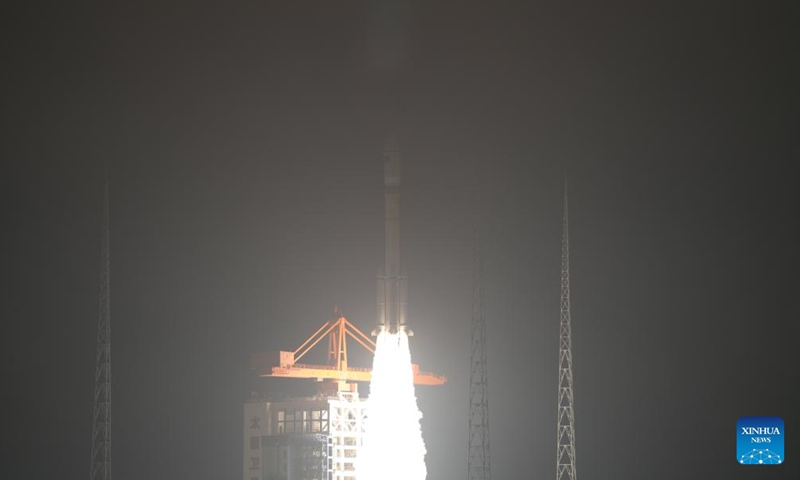
China sent a new satellite group into space from the Taiyuan Satellite Launch Center in north China's Shanxi Province on Thursday.
The satellite group, the 21st group of low-orbit internet satellites, was launched at 3:38 a.m. (Beijing time) aboard a modified Long March-6 carrier rocket and has entered its preset orbit.
This launch marked the 637th flight mission of the Long March carrier rocket series.
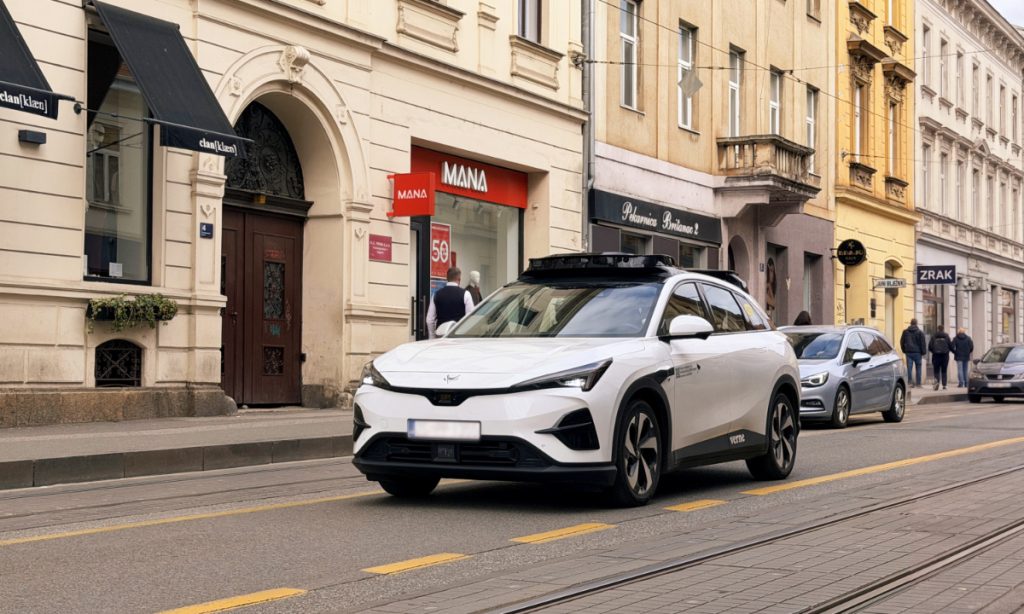
Chinese autonomous-driving leader Pony.ai on Wednesday (local time) launched commercial robotaxi services in Zagreb, Croatia, in partnership with local mobility firm Verne and global ride-hailing platform Uber, becoming Europe's first fully commercial robotaxi service open to the public, the Global Times learned from the company on Thursday.
The launch comes as Europe emerges as a new key market for autonomous driving, with Chinese and European giants advancing competing yet complementary strategies to capture the region's fast-growing market.
The service officially began operations in the Croatian capital on Wednesday (local time). Customers can now book rides through Verne's app, with integration into the Uber app planned for a later stage, Pony.ai said in a statement sent to the Global Times on Thursday.
Pony.ai's expansion into Europe comes as Chinese autonomous-driving companies are making splashes across the continent, which has emerged as the next key market for autonomous driving following years of intensive testing and development in the US and China.
On March 19, Chinese autonomous-driving technology company WeRide announced a national-level strategic partnership with ELEVATE Slovakia, officially launching Slovakia's first autonomous-driving project. With the project, Slovakia becomes WeRide's fourth European market after France, Belgium and Switzerland, the Securities Daily reported.
Chinese autonomous-driving firm Momenta last year announced plans to test Level 4 autonomous vehicles in Germany in 2026, aiming to deliver safe, scalable, and efficient robotaxi services in Europe and beyond, Momenta said in a release on its official website in September 2025.
In December, Apollo Go, the autonomous-driving ride-hailing platform under Baidu, announced plans to launch autonomous-driving testing and ride services in London in 2026. This will support London in building a more digital and green future transportation system, the Xinhua News Agency reported.
Some European giants have also announced timelines for the autonomous-driving sector. Volkswagen Commercial Vehicles' Hanover plant is ramping up pre-series production of the fully autonomous ID. Buzz AD, which is intended for use as a robotaxi or roboshuttle.
Before the end of this year, the first 500 vehicles for projects in Europe and the US are scheduled to be manufactured. Series production of the ID. Buzz AD is set to begin in 2027, Volkswagen said in a release on its website in March.
As Europe ramps up its push into autonomous driving, Chinese and European players are largely operating in a complementary way, Zhang Xiang, a visiting professor in the engineering department of Huanghe Science and Technology University, told the Global Times on Thursday.
Zhang explained that the two sides hold distinct core strengths that underpin this complementary relationship. Chinese companies boast mature autonomous-driving technology, robust iteration capabilities, and extensive hands-on experience operating in complex traffic scenarios, while European companies hold an edge in advanced vehicle manufacturing technologies.
Even as local carmakers including Volkswagen develop their own robotaxi services, they are still in a catch-up position in core autonomous-driving technology, with a notable gap between their capabilities and those of leaders in China and the US, Zhang noted. For Chinese firms looking to operate in compliance with local regulations in the European market, local partnerships - particularly with established automakers - are essential to meet the region's strict regulations, data compliance rules and operational standards, Zhang added.
By 2035, about 120,000 robotaxis will be on the streets of European cities, according to an analysis by Boston Consulting Group.
"We expect that the US and China will dominate initial growth, due to supportive regulations, infrastructure investments, and market conditions. In our base scenario, we estimate that the US robotaxi fleet will grow to about 350,000 vehicles by 2035, while China will have about 850,000 vehicles. Under a more optimistic scenario in which adoption is high, these numbers can go up to about 3 million vehicles globally," read the analysis.
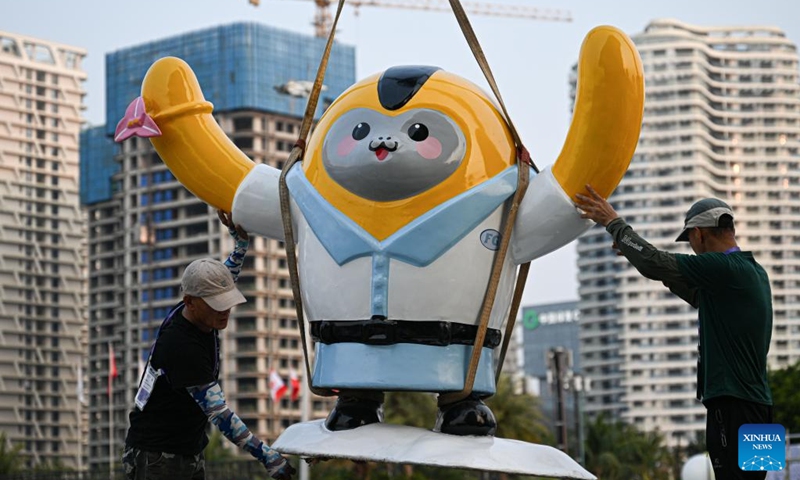
Workers hoist a mascot of the sixth China International Consumer Products Expo (CICPE) at the Hainan International Convention and Exhibition Center, the main venue for the upcoming sixth CICPE, in Haikou, south China's Hainan Province, April 10, 2026. Scheduled to take place in south China's Hainan Province from April 13 to 18, this expo will see the participation of more than 3,400 brands from over 60 countries and regions. Photo: Xinhua
Chinese Foreign Minister Wang Yi on Friday paid tribute to the graves of the martyrs of the Chinese People's Volunteers located in Kangdong County.
Wang, also a member of the Political Bureau of the Communist Party of China Central Committee, is currently visiting the Democratic People's Republic of Korea.