China's Ministry of Water Resources on Sunday arranged flood prevention work as a fresh round of heavy rain is expected to affect southern parts of the country.
From June 28 to July 3, heavy rainfall is forecast in most areas south of the Yangtze River, eastern and southern parts of southwest China, northwestern parts of south China, and southern Hubei in central China, according to the ministry.
Parts of southern Anhui, northern Jiangxi, northern Hunan, southern Hubei, southern Guizhou and northwestern Guangxi are expected to see heavy downpours.
Affected by the rainfall, several rivers in the Yangtze River basin, the Pearl River basin, areas around Taihu Lake, Zhejiang and Fujian in east China are expected to experience notable rises in water levels.
The ministry urged local water resources departments and river basin authorities to closely monitor flood risks in key areas, strengthen forecasting and early warning, and step up prevention against floods in medium and small rivers as well as mountain torrents.
It also called for proper operation of water projects, stepping up patrols of reservoirs and river embankments, and adopting safety measures for projects under construction during the flood season.
Chinese official media has publicly shown the launch of the Chinese People's Liberation Army (PLA) Rocket Force's DF-17 hypersonic missile for the first time, accompanied by the first official disclosure of what a military commentator said could be an upgraded variant of the DF-26 intermediate-range ballistic missile.
According to China Central Television (CCTV) News, the Rocket Force troops highlighted the latest missile systems' higher levels of automation, greater mobility, improved strike precision and enhanced ability to operate in all weather conditions, independent of fixed infrastructure and with stronger defense penetration capabilities.
Footage aired by CCTV showed Rocket Force units taking part in a joint training exercise in the northwestern Gobi Desert alongside Army and Air Force elements. The drill featured multiple waves of simulated strikes under complex battlefield conditions, including strong electromagnetic interference and precision-attack threats.
According to the report, missile units remained on combat patrol throughout the exercise and were able to switch rapidly between operational modes in response to changing orders. The exercise underscored the Rocket Force's growing focus on realistic, multi-domain combat scenarios and cross-service integration.
The latest generation of missile systems has also streamlined command chains and significantly shortened the time needed to generate combat power, the report said. The upgrades allow launch units to operate with fewer constraints related to geography, fixed positions and weather conditions, facilitating a shift from pre-designated launch sites to more flexible and unpredictable firing patterns.
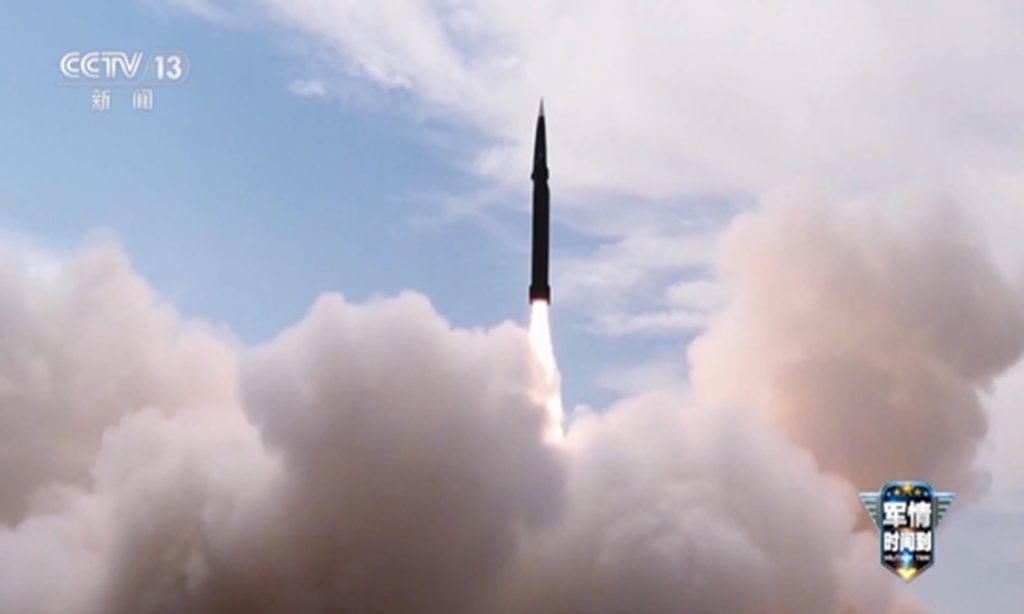
The CCTV News footage showed the launch scene of what seems to be a DF-17 hypersonic missile, characterized by its waverider aerodynamic design, which was previously displayed at military parades in Beijing on October 1, 2019 and September 3, 2025. A separate report by the military channel of CCTV showed a transporter erector launcher similar to that of the DF-17 erecting a missile with what seems to have a bicone aerodynamic design not seen before.
Military commentator Du Wenlong told CCTV that the footage marked the first time the launch status of the DF-17 had been publicly shown and reflected the Rocket Force's high standards for combat readiness.
"First, the exercise took place under field conditions. The fact that launch vehicles maneuvered across complex terrain indicates that field operations have become the basic mode of combat, rather than conducting military operations in fixed, pre-selected areas," Du said.
"Second, the scenario was complex. The launch drill was not conducted under ideal conditions but involved various forms of interferences. The ability to carry out different combat missions, launch missiles on schedule and achieve effective strikes under such conditions is an important benchmark for building combat capability," he said.
"The exercise also featured multiple missile types, demonstrating that we have different missiles to respond to different targets and operational scenarios," Du added.
CCTV News said China's missile arsenal has undergone a major transformation over the past six decades, evolving from limited capabilities into a comprehensive force with both nuclear and conventional strike options.
The "Dongfeng" family of missiles now forms a diversified operational system with complementary ranges and missions, according to the report. In recent years, a number of domestically developed systems, including the DF-17, DF-26, DF-31 and DF-61, have been deployed and regularly incorporated into training exercises.
The footage also showed another missile resembling the DF-26 intermediate-range ballistic missile unveiled during previous military parades. Du said the missile could be the latest upgraded variant of the DF-26, adding that its appearance suggested the system was being integrated into a broader operational framework. Like the DF-17, the missile appeared to feature small control fins near its warhead.
According to Du, the fins serve multiple functions, including decelerating the missile and enabling course adjustments. The differential movement of the control surfaces can alter the missile's aerodynamic characteristics, allowing it to make significant lateral and vertical maneuvers. Such capabilities would be particularly effective against complex, mobile and emerging targets, he said.
Warheads equipped with control fins typically possess terminal maneuvering capabilities, significantly enhancing their ability to penetrate air and missile defense systems, Du added.
A Malaysian woman has apologized after a video went viral showing her making derogatory remarks about Chinese people during a trip to China, according to media reports and some online posts.
In a video circulating online, a group of Malaysian tourists including the woman were seen mocking locals, including calling them "dirty" and "smelly," prompting widespread backlash online.
In a statement posted on her TikTok account (@ekyn.wong), Nur Asyiqin Mohd Dalil acknowledged her mistake and expressed regret over the incident, taking full responsibility for her offensive remarks, Malaysian news outlet New Straits Times reported on Monday.
The controversy began after several videos posted by @ekyn.wong surfaced on social media, showing a group of Malaysian tourists making derogatory remarks about people they encountered during a trip to China, according to footage circulating online.
In the now-deleted clips, which were later reposted on Threads and other platforms, Nur Asyiqin Mohd Dalil was seen queuing with other tourists to board a bus in China. A woman in the group was seen covering her nose, while another tourist was heard saying in Malay: "It smells so bad! Did none of you shower?" according to Malaysian social news company SAYS.
The tourists also made comments about an e-hailing driver in a separate video, alleging that he had not showered, Singapore-based digital media company Mothership reported on Sunday.
"I think he really smells bad. We already showered, you know. Chinese people smell bad. Lazy to shower," according to the video.
Those clips sparked outrage online.
They quickly drew criticism from Malaysians online, with many describing the behavior as disrespectful and embarrassing, and some users also expressed concern that such actions could negatively affect Malaysians living, studying, or working abroad, SAYS reported.
The latest apology comes days after Asyiqin posted a statement from her lawyers on her TikTok account, which said she had taken legal action against those who made defamatory statements.
According to the statement, which is still up on her TikTok account, Asyiqin, her family, and people close to her had received criticism, insults, threats, and harassment following the circulation of the videos, per SAYS.
The statement warned that legal action would continue against anyone who published defamatory statements, made baseless allegations, or spread personal information about her and her family, according to the Malaysian media report.
In her latest apology, Asyiqin said that "I understand and take full responsibility for my actions, which may have offended certain parties," New Straits Times reported.
"I respect the views, criticism and feelings of everyone involved. I never intended to offend, embarrass or create any conflict. It was a spontaneous and unplanned reaction," she said, per the Malaysian media report.
The topic of a Malaysian woman apologizing for a video that mocked locals in China attracted extensive attention on Chinese social media on Monday.
A Weibo user Lingshi Xiantan, who has over 440,000 followers, said that it has nothing to do with nationality - using extreme rhetoric to stir up ethnic divisions always attracts attention and generates online traffic.
Another Weibo user, Zhao Pu, who has over 1.75 million followers, criticized the Malaysian tourist's actions as "so uncivilized!" He noted that "we welcome friends from all over the world to visit China, but tourists who behave in such disrespectful and discriminatory ways are neither appreciated nor welcome."
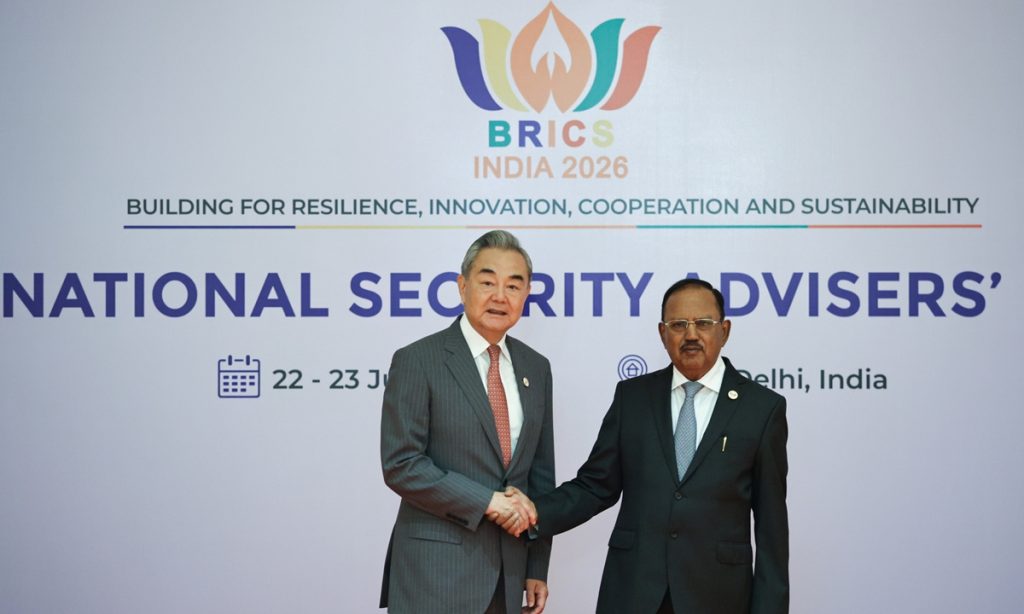
With Chinese Foreign Minister Wang Yi holding talks with India's National Security Advisor Ajit Doval on Monday and exchanging views on bilateral ties plus international and regional issues, the two major Asian powers have conducted a new round of high-level exchanges amid recent warming bilateral relations.
This latest high-level meeting took place on the sidelines of the 16th Meeting of BRICS National Security Advisors and High Representatives on National Security held in New Delhi from Monday to Tuesday, as India holds the 2026 rotating chair of the bloc.
Analysts said the latest high-level meeting will help sustain the thawing momentum in China-India ties, though further progress demands more concrete pragmatic moves. Amid a complex international landscape, Beijing and New Delhi have extensive room for coordination within multilateral mechanisms, and jointly act as a backbone for peace and stability across Asia.
During the meeting with Doval, Wang, also a member of the Political Bureau of the Communist Party of China Central Committee and director of the Office of the Central Commission for Foreign Affairs, said India is an important neighbor of China, and bilateral relations have returned to the track of recovery and improvement, per a release from Xinhua News Agency.
He noted that the leaders of the two countries agreed that China and India are partners instead of rivals, thus forming the most important strategic consensus between the two sides, providing an important impetus and strategic guarantee for the healthy and stable development of China-India relations, Xinhua reported.
Wang also underlined the need to advance the restoration of dialogue mechanisms and promote exchanges in various fields, such as trade, finance, law enforcement and media.
In terms of the border issues, Wang said that the border region has remained generally peaceful, which are hard-won achievements that deserve to be cherished all the more.
Doval, on his part, said India is willing to continue to view its relations with China from a strategic perspective, and work together to implement the consensus reached by the leaders of the two countries, view and accelerate the development process of bilateral relations with a forward-looking attitude, properly handle differences, and work towards a win-win situation, according to Xinhua.
Doval also reiterated that India, as one of the first countries to recognize the People's Republic of China, remains consistent in its position regarding the Taiwan question.
In a post on X, Randhir Jaiswal, the spokesperson of the India's Ministry of External Affairs, called the senior officials' talks as "constructive and forward-looking."
Indian media Wion described the meeting as "part of a pragmatic thaw" between the two sides that started in 2024, with both sides noting progress toward the "gradual normalization" of ties.
"China-India ties have registered steady improvement over the past two years, with overall situation largely under control," said Hu Zhiyong, a professor from Zhejiang International Studies University and also research fellow at the Institute of International Relations at the Shanghai Academy of Social Sciences.
Hu noted that China and India have extensive room for cooperation both in bilateral and multilateral spheres. Their capacity to deepen relations hinges chiefly on how India strategically perceives China.
According to Hu, progress in bilateral ties demands concerted efforts from both sides, with India in particular expected to roll out more tangible, practical moves.
Aside from bilateral issues, officials of China and India, two weighty regional powers and key stalwarts of the Global South, further emphasized the vital role of multilateral cooperation in global affairs at the meeting.
According to Chinese Foreign Ministry, Wang Yi noted that as the two economies with the largest populations, China and India should not only view bilateral relations from a long-term perspective, but also promote cooperation between the two countries from a global perspective.
He noted that currently, the Global South, including China and India, is seeing collective development, adding that China supports India in fulfilling its responsibilities as the rotating chair of the BRICS, and is willing to join hands with India in promoting the development and growth of the BRICS mechanism.
He added that both sides should take concrete actions to promote their respective development and revitalization through cooperation, and accelerate the modernization process of the Global South.
Doval expressed Indian side's willingness to support each other's core concerns with China, jointly safeguard multilateralism, and protect the legitimate rights and interests of developing countries, according to Xinhua.
Lin Minwang, Deputy Director of the Center for South Asian Studies at Fudan University, told the Global Times on Tuesday that advancing global multipolarity and upholding the legitimate rights and interests of developing countries have long been a shared stance of China and India. This common aspiration underpinned the establishment of the BRICS mechanism in the first place.
"Sustained progress in China-India ties serves the core shared interests of the two nations and aligns with the wider global trend of evolving international dynamics and multipolar development," Hu said. "Beijing and New Delhi ought to stand together as a pivotal force sustaining peace and stability throughout Asia."
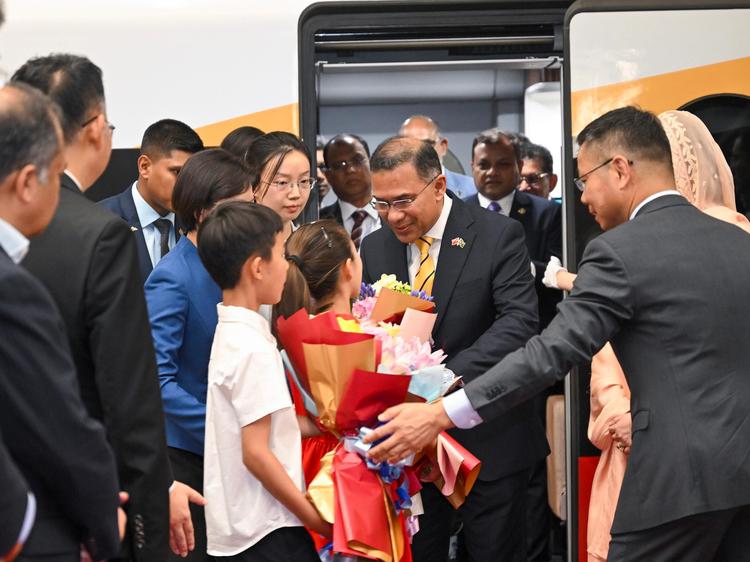
Bangladeshi Prime Minister Tarique Rahman arrived in Beijing by high-speed train on Wednesday. He is paying an official visit to China from June 24 to 26.
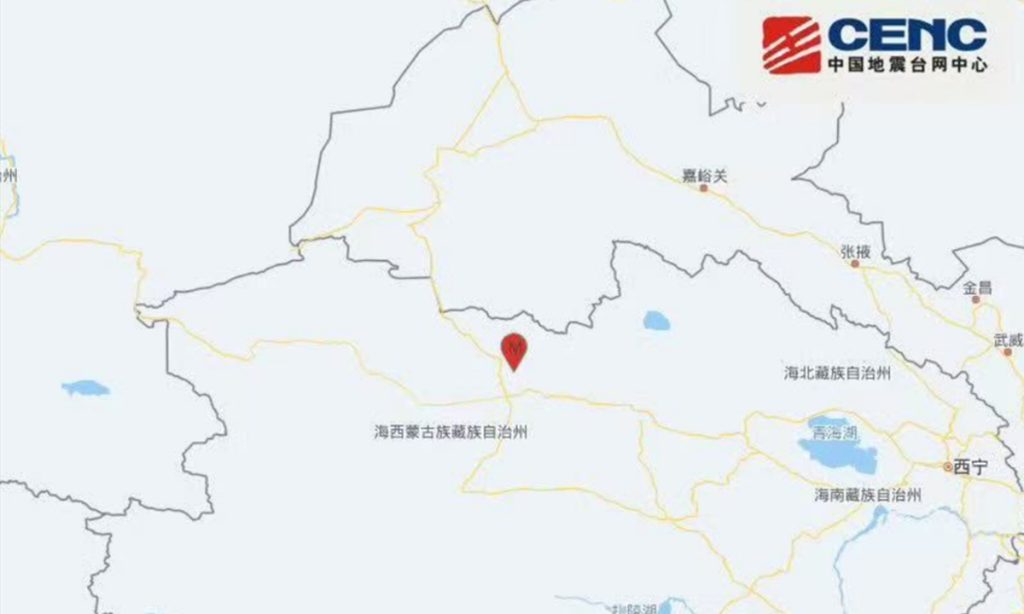
After a 6.3-magnitude earthquake struck Haixi Prefecture in Northwest China's Qinghai Province at 5:06 pm on Tuesday, seven additional tremors were recorded within the following 40 minutes, according to the China Earthquake Networks Center (CENC). Local authorities have dispatched seismic response personnel to the site to carry out emergency operations.
The CENC said that the first earthquake struck at a depth of 10 kilometers, and the epicenter was monitored at 37.80 degrees north latitude and 95.56 degrees east longitude.
As of 6:40 pm on Tuesday, the magnitude-6.3 earthquake has left one dead and four injured, the Xinhua News Agency reported.
All operating staff at coal mine enterprises near the epicenter have been fully evacuated. Inspections are underway to tally further casualties and property damage.
The Ministry of Emergency Management has mobilized rescue forces to the quake-hit area to conduct all-out searches for trapped people. The ministry has also allocated relief supplies to deliver assistance and resettlement support for affected people, and stepped up seismic monitoring, tracking and assessment on Tuesday, the China Central Television (CCTV) reported.
The State Council's earthquake relief headquarters and the Ministry of Emergency Management jointly activated a Level IV earthquake disaster emergency response, and dispatched a work group to guide on-site response operations, per CCTV News.
The office of the national commission for disaster prevention, reduction and relief and the Ministry of Emergency Management, together with the National Food and Strategic Reserves Administration, have allocated 10,000 central disaster relief supplies including tents, folding beds, quilts, blankets, household emergency kits and emergency lighting lamps, to Qinghai, per Xinhua.
A total of 78 vehicles, 320 rescuers and 10 search-and-rescue dogs have been dispatched from the national comprehensive fire and rescue service to carry out on-site rescue operations, CCTV News reported.
The epicenter of the earthquake lies 567 kilometers away from Xining, capital of Qinghai Province, the China News Agency reported.
A total of eight consecutive earthquakes rattled the Haixi Prefecture by 5:45 pm on Tuesday, the China News Agency reported, citing data released by the CENC.
In addition to the initial 6.3-magnitude main shock, the region experienced seven subsequent quakes, the smallest registering a magnitude of 3.0 and the strongest reaching 4.9, all at a focal depth of 10 kilometers, according to CENC.
The Qinghai provincial earthquake administration has dispatched an on-site emergency response task force consisting of 10 staff members aboard two vehicles to the quake-hit zone to carry out comprehensive seismic emergency response operations, according to the China News Agency.
China, as a permanent member of the UN Security Council and the world's largest developing country, has consistently played an active role in global governance, Chinese Foreign Minister Wang Yi said on Wednesday.
Wang, also a member of the Political Bureau of the Communist Party of China Central Committee, made the remarks at a press conference on a white paper titled "More Just and Equitable Global Governance: China's Principles, Proposals and Actions."
China champions the building of a community with a shared future for humanity and takes the lead in practicing true multilateralism, Wang said.
It has consistently been a builder of world peace, a contributor to global development, a defender of the international order, and a provider of public goods, while making continued efforts to improve and reform global governance, he added.
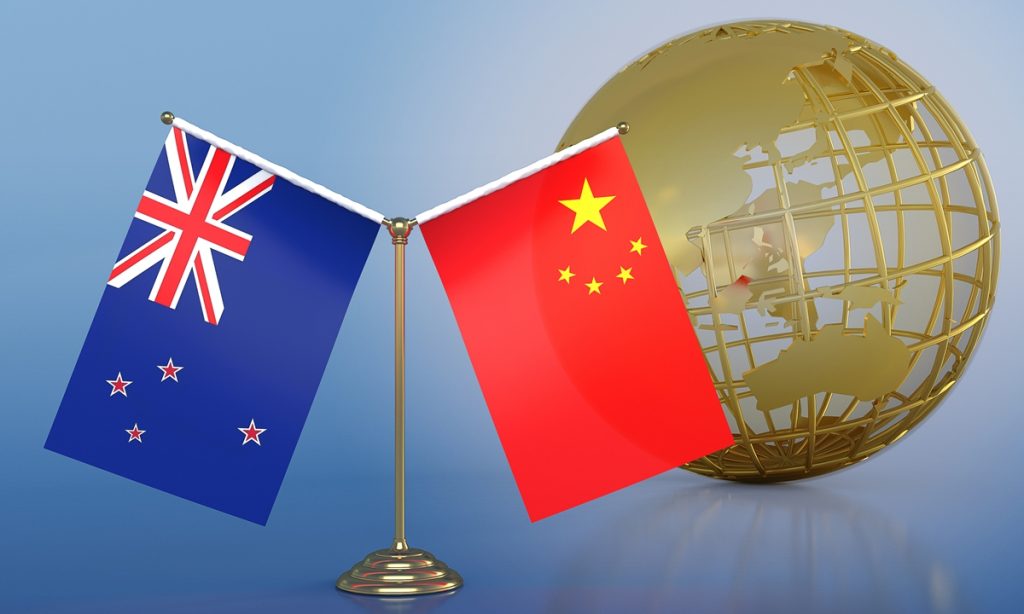
For the first time in a decade, New Zealanders are more likely to see China as a friend than the US, while viewing Washington as more of a threat, according to the latest report released by a New Zealand foundation on Wednesday.
Analysts noted that such findings go beyond temporary shifts and instead reveal an enduring trend. The survey results echo a prevailing desire of Asia-Pacific countries to pursue stability and growth, where China occupies a pivotal position. In comparison, Washington's disruptive moves against the international order have caused widespread anxiety, including among its long-standing allies.
Launched by the Asia New Zealand Foundation, the annual Perceptions of Asia and Asian Peoples (2026) survey found that New Zealanders' sentiment towards China has warmed since the last survey, with friend perceptions increasing from 38 percent to 43 percent. Meanwhile, sentiment towards the US has cooled significantly, with friend perceptions falling from 61 percent to 39 percent, according to the RNZ.
In addition, 35 percent of respondents saw the US as a threat. By comparison, about 23 percent saw China as a threat, Reuters reported.
The survey also found that 81 percent of New Zealanders see developing ties with Asia as important. The foundation's Chief Executive Suzannah Jessep said that "There is a growing recognition that prosperity, resilience and security will depend on the depth and quality of our relationships across Asia," per Reuters.
The annual survey, now in its 29th year, polled 2,300 people in January and February.
Chen Hong, director of the Asia-Pacific Studies Center at East China Normal University, told the Global Times on Wednesday that robust economic, trade and people-to-people exchanges have enabled New Zealand society to gain a more objective understanding of the real China, despite smearing and hype by some Western media and politicians, adding that, "compared with other Western countries, New Zealand pursues a more pragmatic and independent foreign policy, which has exerted a positive influence on its public perceptions of China."
According to the Chinese Foreign Ministry, China is New Zealand's largest goods trading partner, largest export market and largest source of imports. China is also the largest source of international students in New Zealand.
Effective July 1, 2024, China implemented a temporary visa exemption for New Zealand, with its validity extended to the end of 2026.
"In a more challenging world, New Zealanders are looking for friends," a summary of the New Zealand report said, according to the RNZ.
About a month before the New Zealand foundation released the poll, surveys conducted by an Australian organization reflected a similar trend.
According to a poll released on May 7 by The Australia Institute, a public policy think tank based in Canberra, 59 percent of Australians believe the country's interests are better served by a more independent foreign policy rather than a closer alliance with the US. Only 13 percent of Australians believe the US is a "very reliable" security ally.
Dr Emma Shortis, Director of The Australia Institute's International & Security Affairs Program, said the poll represents "a seismic shift" in the way Australians think about the US.
From waging wars to slapping tariffs, the US' actions worldwide have made even its long-standing allies in Europe and the Asia-Pacific come to see that it undermines, rather than upholds, the international order, said Chen.
According to the expert, the evolving attitudes toward China and the US in New Zealand and Australia are very likely to reflect not a temporary policy shift, but an enduring trend.
Amid a world of turmoil and profound changes, pursuing stability and development has become the shared aspiration of all Asia-Pacific countries, Chen said. "As a solid defender of regional peace and stability and a key driver of the regional economy, China plays an indispensable role in the region. For this reason, China has earned wide recognition among people in the Asia-Pacific despite slander from parts of the West," Chen said.
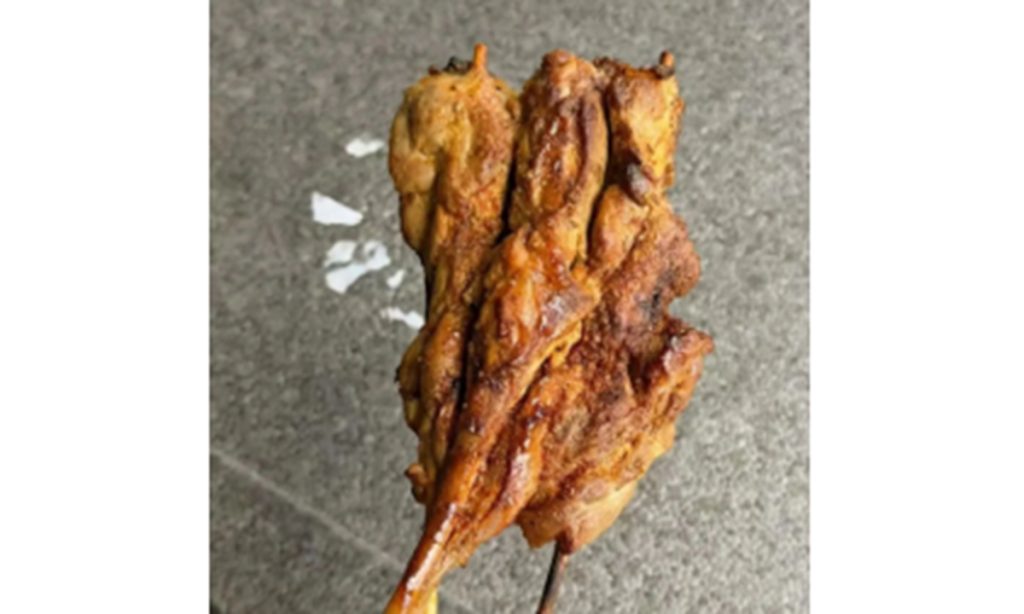
Chen Xiufeng, 56, a Beijing street food vendor known as "Goose Leg Auntie," has come under scrutiny after admitting that the roasted legs she sold for years were actually duck, not goose. The revelation has sparked widespread online discussion and led to a regulatory investigation.
The Market Supervision Administration of Beijing's Haidian District released a statement on Thursday, saying it is further investigating allegations that the vendor may have misled consumers and will handle the case in accordance with the law, according to the district authority's official WeChat account.
Authorities launched an immediate investigation and questioned those involved after reports of the "Goose Leg Auntie selling duck legs" incident drew widespread public attention on Wednesday, the statement said.
The controversy erupted after a screenshot of an announcement circulated online from a group-buying chat operated by Chen. In Chen's announcement, she acknowledged that the roasted legs she sold were made from duck rather than goose.
According to the announcement, a consumer in Beijing's Guomao central business area discovered and reported that the products sold by Chen were actually duck legs. Chen said she was cooperating with the relevant authorities as a result of the complaint.
The revelation quickly became a trending topic on Chinese social media plaforms. One netizen said that "there is nothing wrong with the food quality, so there is no need to make a fuss about it." However, other view shows that "If it is likely to mislead consumers, then it amounts to deception, whether intentional or not."
As the controversy grew, several consumers claimed that they had purchased roasted legs with a greenish discoloration, causing the hashtag "zombie duck legs" to climb to the top of China's trending topics list on Sina Weibo.
The Yangcheng Evening News reported that videos of students from elite universities such as Peking University and Tsinghua University lining up to buy Chen's roasted legs went viral in late 2023, helping transform her into an internet celebrity.
Since 2024, some consumers have reported receiving duck legs with green-colored patches. According to media reports, customers who raised questions in group chats were told the coloration came from scallion juice or vegetable-based marinades.
One consumer surnamed Xu told reporters that she joined a delivery group serving the Guomao area about a week ago through a friend's recommendation. When she collected her order, a delivery worker informed her that the product was a "goose-flavored duck leg," per Red Star News. "I still mind it a little," Xu said. "It feels like a form of deception."
"If there are any corresponding penalties, I will accept them. At the same time, I would also like to apologize to the students. In the future, I still hope to be known as 'Goose Leg Auntie,' but I will make sure to clearly explain the ingredients and source materials to everyone," Chen told the reporter, according to gmw.cn.
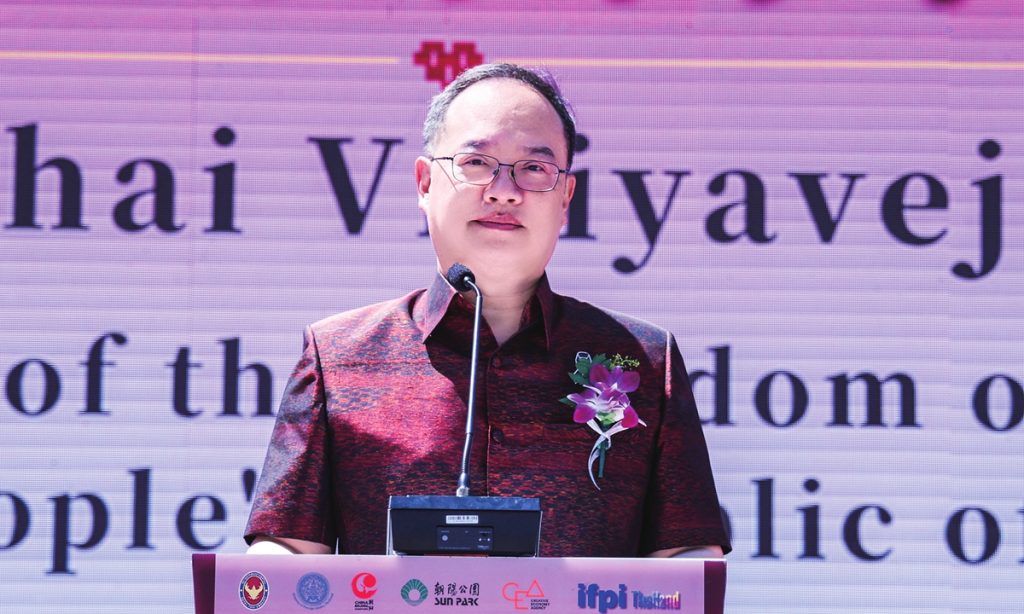
With a circle of booths featuring handcrafts, Thai-flavor cuisines, beverages, and a main stage presenting Thai dancing and fashion shows, 2026 Thai Festival returned to Chaoyang Park in Beijing on May 30. Thai Ambassador to China Chatchai Viriyavejakul inaugurated "Thai-Chinese friendship bell pavilion" after the opening ceremony for the festival. One of the highlights of this year's festival is the introduction of "Chud Thai," or the Thai National Costume.
In his opening remarks, Ambassador Viriyavejakul said this year's Thai Festival is special as the Royal Thai Embassy in China presented the theme "Creative Life & Creative Heartbeat," reflecting the energy and creativity of modern Thailand.
"I am proud to share that 'Chud Thai' is officially being considered for inscription on UNESCO's Representative List of the Intangible Cultural Heritage of Humanity in 2026," said Viriyavejakul.
This nomination reflects not only Thailand's rich cultural identity, showcasing the craftsmanship, traditional wisdom, and shared heritage woven into every garment, but also "stands as a tribute to Her Majesty Queen Sirikit The Queen Mother for her lifelong dedication to preserving and promoting Thai textiles on the international stage," he said.
After the opening ceremony, Ambassador Viriyavejakul and other delegates inaugurated the "Thai-Chinese friendship bell pavilion."
Originally constructed in 2005, the bell pavilion was renovated in 2025 to commemorate the 50th anniversary of the establishment of diplomatic relations between Thailand and China. It symbolizes enduring friendship, mutual trust, and close relations between our two countries, Viriyavejakul noted.
Throughout the two-day festival, visitors enjoyed a variety of lively performances and entertainment, experiencing a memorable "Little Thailand," including Thai instrumental performances, Muay Thai performance, durian peeling demonstration and Thai speech competition.
A visitor to the festival surnamed Zhao told the Global Times that he and his family really enjoyed the Thai cuisine and durian-peeling competition during the event, "We are planning to go from this year's 'little Thailand' to the real Thailand next year," Zhao said.