Once billed as “the most beautiful woman in the world,” actress Hedy Lamarr is often remembered for Golden Age Hollywood hits like Samson and Delilah. But Lamarr was gifted with more than just a face for film; she had a mind for science.
A new documentary, Bombshell: The Hedy Lamarr Story, spotlights Lamarr’s lesser-known legacy as an inventor. The film explores how the pretty veneer that Lamarr shrewdly used to advance her acting career ultimately trapped her in a life she found emotionally isolating and intellectually unfulfilling. Lamarr, born in Vienna in 1914, first earned notoriety for a nude scene in a 1933 Czech-Austrian film. Determined to rise above that cinematic scarlet letter, Lamarr fled her unhappy first marriage and sailed to New York in 1937. En route, she charmed film mogul Louis B. Mayer into signing her. Stateside, she became a Hollywood icon by day and an inventor by night. Lamarr’s interest in gadgetry began in childhood, though she never pursued an engineering education. Her most influential brainchild was a method of covert radio communication called frequency hopping, which involves sending a message over many different frequencies, jumping between channels in an order known only to the sender and receiver. So if an adversary tried to jam the signal on a certain channel, it would be intercepted for only a moment.
During World War II, Lamarr partnered with composer George Antheil to design a frequency-hopping device for steering antisubmarine torpedoes. The pair got a patent, but the U.S. Navy didn’t take the invention seriously. “The Navy basically told her, ‘You know, you’d be helping the war a lot more, little lady, if you got out and sold war bonds rather than sat around trying to invent,’ ” biographer Richard Rhodes says in the film. Ultimately, the film suggests, Lamarr’s bombshell image and the sexism of the day stifled her inventing ambitions. Yet, frequency hopping paved the way for some of today’s wireless technologies.
Throughout Bombshell, animated sketches illustrate Lamarr’s inventions, but the film doesn’t dig deep into the science. The primary focus is the tension between Lamarr’s love of invention and her Hollywood image. With commentary from family and historians, as well as old interviews with Lamarr, Bombshell paints a sympathetic portrait of a woman troubled by her superficial reputation and yearning for recognition of her scientific intellect.
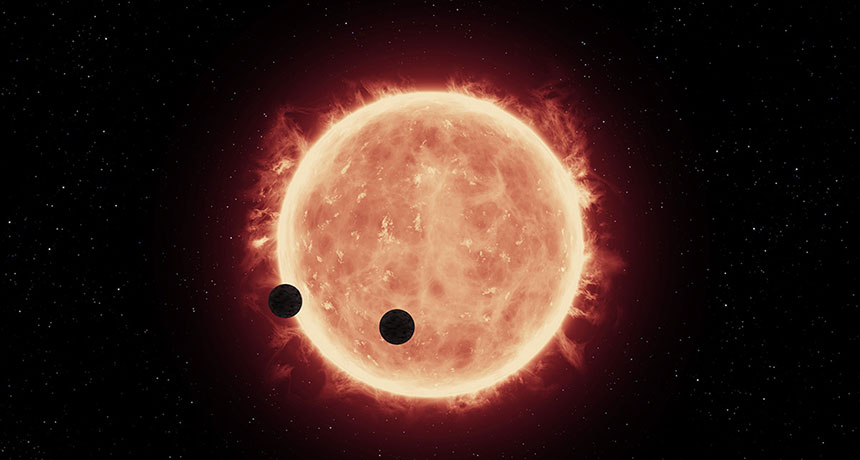
It’s still too early to pack your bags for TRAPPIST-1. But two new studies probe the likely compositions of the seven Earth-sized worlds orbiting the cool, dim star, and some are looking better and better as places to live (SN: 3/18/17, p. 6).
New mass measurements suggest that the septet probably have rocky surfaces and possibly thin atmospheres, researchers report February 5 in Astronomy & Astrophysics. For at least three of the planets, those atmospheres don’t appear to be too hot for life, many of these same researchers conclude February 5 in Nature Astronomy. TRAPPIST-1 is about 40 light-years from Earth, and four of its planets lie within or near the habitable zone, the range where temperatures can sustain liquid water. That makes these worlds tempting targets in the search for extraterrestrial life (SN: 12/23/17, p. 25)
One clue to potential habitability is a planet’s mass — something not precisely nailed down in previous measurements of the TRAPPIST-1 worlds. Mass helps determine a planet’s density, which in turn provides clues to its makeup. High density could indicate that a planet doesn’t have an atmosphere. Low density could indicate that a planet is shrouded in a puffy, hydrogen-rich atmosphere that would cause a runaway greenhouse effect.
Using a new computer technique that accounts for the planets’ gravitational tugs on each other, astronomer Simon Grimm of the University of Bern in Switzerland and his colleagues calculated the seven planets’ masses with five to eight times better precision than before. Those measurements suggest that the innermost planet probably has a thick, viscous atmosphere like Venus, Grimm says. The other six, which may be covered in ice or oceans, may have more life-friendly atmospheres. The fourth planet from the star has the same density as Earth and receives the same amount of radiation from its star as Earth, Grimm’s team reports in Astronomy & Astrophysics.
“This is really the cool thing: We have one planet which is very, very similar to the Earth,” Grimm says. “That’s really nice.” Having an atmosphere could suggest habitability, but not if it’s too hot. So using the Hubble Space Telescope, MIT astronomer Julien de Wit and his colleagues, including some members from Grimm’s team, observed the four middle planets as they passed in front of the star. The team was looking for a signature in near-infrared wavelengths of light filtering through planets’ atmospheres. That would have indicated that the atmospheres were full of heat-trapping hydrogen.
In four different observations, Hubble saw no sign of hydrogen-rich atmospheres around three of the worlds, de Wit and colleagues report in Nature Astronomy. “We ruled out one of the scenarios in which it would have been uninhabitable,” de Wit says.
The new observations don’t necessarily mean the planets have atmospheres, much less ones that are good for life, says planetary scientist Stephen Kane of the University of California, Riverside. It’s still possible that the star’s radiation blew the planets’ atmospheres away earlier in their histories. “That’s something which is still on the table,” he says. “This is a really important piece of that puzzle, but there are many, many pieces.”
Finishing the puzzle may have to wait for the James Webb Space Telescope, scheduled to launch in 2019, which will be powerful enough to figure out all the components of the planets’ atmospheres — if they exist.
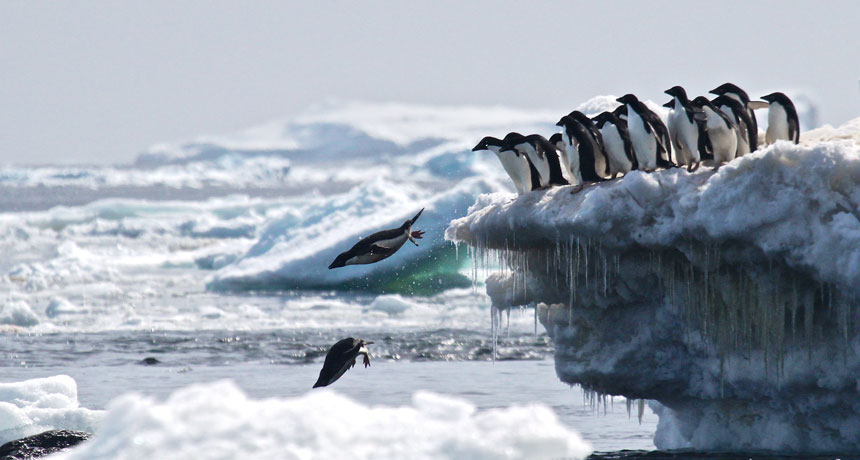
On an expedition to an icy island chain off the Antarctic Peninsula’s northern tip, researchers discovered a massive supercolony of more than 1.5 million Adélie penguins, according to a study published March 2 in Scientific Reports.
Scientists had known of an Adélie penguin colony (Pygoscelis adeliae) in these Danger Islands, but satellite images revealed more guano on the rocky islands than could be explained by the colony’s expected numbers.
Even though the tiny island chain is only about 10 kilometers across, researchers hadn’t realized the extent of the penguin population, says study coauthor Heather Lynch, an ecologist at Stony Brook University in New York. “In the Antarctic, distances are so vast, something major could be just around the corner and you wouldn’t know.” The researchers did a preliminary head count, took drone images and collected mud cores during a 2015 expedition. The team then spent about a year using a computer algorithm to analyze the images to more fully count 751,527 penguin nests, Lynch says. For every nesting bird, the scientists assumed there was a partner penguin out at sea. Next, the team hopes to analyze the guano content in the collected layers of mud to discover how long the penguins have been nesting in the Danger Islands. The discovery is good news for fans of the flightless bird. Elsewhere in Antarctica where the climate is more volatile, penguin colonies are in decline. “I hope this provides impetus for a marine protected area in the Danger Islands with expanded borders from what has been proposed,” Lynch says.
Archaeopteryx was a flapper, not just a glider. The shape of the ancient bird’s wing bones suggests it was capable of short bursts of active, flapping flight, similar to how modern birds like pheasants and quails fly to escape predators, a new study finds.
One of the earliest birds, Archaeopteryx lived about 150 million years ago during the Jurassic Period, spanning the evolutionary gap between modern birds and feathered dinosaurs. Fossils of the primitive fowl have been instrumental in the recognition that birds are dinosaurs (SN Online: 7/31/14). But researchers have long wrangled over how well these ancient dino-birds could fly. Archaeopteryx doesn’t have several features considered essential to flight in modern birds, such as a keeled breastbone to which several important flight muscles attach; a ball-and-socket arrangement that allows the wing to flap fully up over the back and down again; and a muscle pulley system that links chest and shoulder muscles, allowing the birds to swiftly alternate between powerful downstrokes and upstrokes. Previous researchers also have suggested that Archaeopteryx’s plumage was too delicate and might have snapped with vigorous flapping (SN: 6/5/10, p. 12). Based on these observations, the primitive bird was thought to merely glide from branch to branch, rather than flapping its wings to fly.
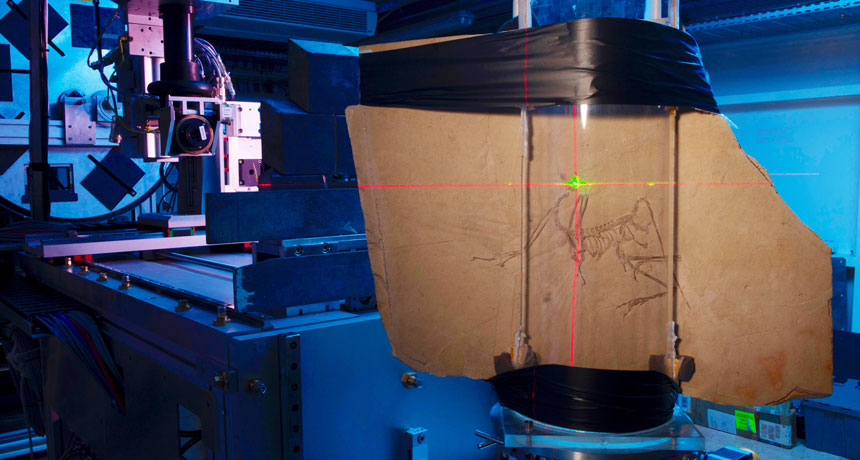
Paleontologist Dennis Voeten and colleagues decided to look for other features that might indicate the dino-birds flapped their wings while flying. The researchers used X-ray microtomography to examine two different wing bones — the humerus, or upper arm bone, and a lower arm bone called the ulna — in three Archaeopteryx fossils.
The team compared the thickness of the bones’ walls and their resistance to torsion — a twisting force that birds’ wings withstand during flapping flight — with similar bones from several dinosaurs, flying reptiles called pterosaurs and modern birds. Archaeopteryx had wing bone structures most similar to pheasants and quails, birds that are capable of small bursts of active flapping flight, the researchers report March 13 in Nature Communications.
In examining the shape of the wing bones, the study takes a novel approach to the question of whether Archaeopteryx could fly, says ornithologist Gerald Mayr of the Senckenberg Research Institute Frankfurt, who was not involved in the research. But the study doesn’t answer whether Archaeopteryx could launch itself from the ground into the air. “Their results convincingly show that it could do active flight” once it was already airborne, Mayr says. “What they do not explain is how it would have been possible to produce strong flapping flight to take off from the ground.” Other early birds might have used a combination of wing and leg strength to launch into the air, but this hasn’t been shown for Archaeopteryx (SN: 11/26/16, p. 9).
To understand whether and how Achaeopteryx actually flew, researchers would need to reconstruct the animal’s full range of motion — a challenging prospect given that muscles don’t fossilize, says Voeten, of Palacký University Olomouc in the Czech Republic.
The primitive birds, without flight adaptations such as the muscle pulley system, wouldn’t have been capable of the full range of flapping motion birds today use. Instead, other parts of its anatomy indicate Archaeopteryx may have thrown its wings upward and forward, similar to a swimmer’s butterfly stroke, Voeten says. “Dedicated studies would need to show if it would work that way.”
For decades, the name “virus” meant small and simple. Not anymore. Meet the giants.
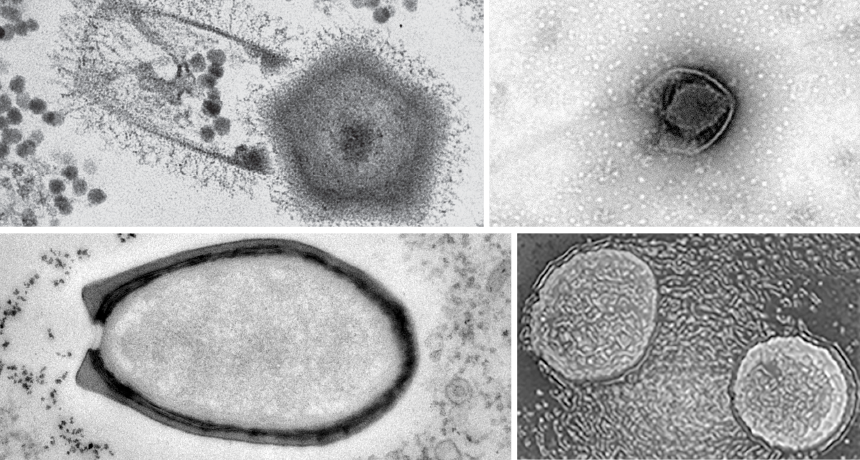
Today, scientists are finding ever bigger viruses that pack impressive amounts of genetic material. The era of the giant virus began in 2003 with the discovery of the first Mimivirus (SN: 5/23/09, p. 9). The viral titan is about 750 nanometers across with a genetic pantry boasting around 1.2 million base pairs of DNA, the information-toting bits often represented with A, T, C and G. Influenza A, for example, is roughly 100 nanometers across with only about 13,500 base pairs of genetic material.
In 2009, another giant virus called Marseillevirus was identified. It is different enough from mimiviruses to earn its own family. Since 2013, mega-sized viruses falling into another eight potential virus families have been found, showcasing a long-unexplored viral diversity, researchers reported last year in Annual Review of Virology and in January in Frontiers in Microbiology.
Giant viruses mostly come in two shapes: polyhedral capsules and egglike ovals. But one, Mollivirus, skews more spherical. Pacmanvirus was named for the broken appearance of its outer shell. Both represent potential families. Two newly discovered members of the mimivirus family, both called tupanviruses and both with tails, have the most complete set of genes related to assembling proteins yet seen in viruses (SN Online: 2/27/18). Once unheard of, giant viruses may be common in water and soils worldwide. Only time — and more discoveries — will tell. Virus length and genome size for a representative from each of two recognized giant virus families (mimivirus and marseillevirus families) and eight potential families are shown. Circles are scaled to genome size and shaded by size range, with influenza A and E. coli bacterium included for comparison. Years indicate when the first viruses were described.
Graphic: C. Chang; Sources: P. Colson, B. La Scola and D. Raoult/Annual Review of Virology 2017; J. Andreani et al/Frontiers in Microbiology 2018
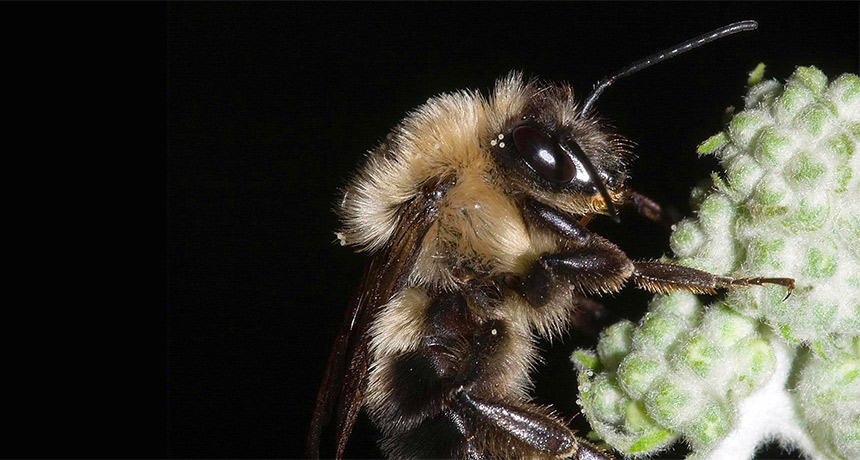
When the 2017 Great American Eclipse hit totality and the sky went dark, bees noticed.
Microphones in flower patches at 11 sites in the path of the eclipse picked up the buzzing sounds of bees flying among blooms before and after totality. But those sounds were noticeably absent during the full solar blackout, a new study finds.
Dimming light and some summer cooling during the onset of the eclipse didn’t appear to make a difference to the bees. But the deeper darkness of totality did, researchers report October 10 in the Annals of the Entomological Society of America. At the time of totality, the change in buzzing was abrupt, says study coauthor and ecologist Candace Galen of the University of Missouri in Columbia. The recordings come from citizen scientists, mostly school classes, setting out small microphones at two spots in Oregon, one in Idaho and eight in Missouri. Often when bees went silent at the peak of the eclipse, Galen says, “you can hear the people in the background going ‘ooo,’ ‘ahh’ or clapping.” There’s no entirely reliable way (yet) of telling what kinds of bees were doing the buzzing, based only on their sounds, Galen says. She estimates that the Missouri sites had a lot of bumblebees, while the western sites had more of the tinier, temperature-fussy Megachile bees. More western samples, with the fussier bees, might have let researchers see an effect on the insects of temperatures dropping by at least 10 degrees Celsius during the eclipse. The temperature plunge in the Missouri summer just “made things feel a little more comfortable,” Galen says.
This study of buzz recordings gives the first formal data published on bees during a solar eclipse, as far as Galen knows. “Insects are remarkably neglected,” she says. “Everybody wants to know what their dog and cat are doing during the eclipse, but they don’t think about the flea.”
Vinita Surukan knew the mosquitoes were trouble. They attacked her in swarms, biting through her clothes as she worked to collect rubber tree sap near her village in Sabah, the northern state of Malaysia. The 30-year-old woman described the situation as nearly unbearable. But she needed the job.
There were few alternatives in her village surrounded by fragments of forest reserves and larger swaths of farms, oil palm plantations and rubber tree estates. So she endured until a week of high fever and vomiting forced her to stop. The night of July 23, Surukan was trying to sleep off her fever when the clinic she visited earlier in the day called with results: Her blood was teeming with malaria parasites, about a million in each drop. Her family rushed her to the town hospital where she received intravenous antimalarial drugs before being transferred to a city hospital equipped to treat severe malaria. The drugs cleared most of the parasites, and the lucky woman was smiling by morning.
Malaria has terrorized humans for millennia, its fevers carved into our earliest writing on ancient Sumerian clay tablets from Mesopotamia. In 2016, four species of human malaria parasites, which are spread by mosquito from person to person, infected more than 210 million people worldwide, killing almost 450,000. The deadliest species, Plasmodium falciparum, causes most of the infections.
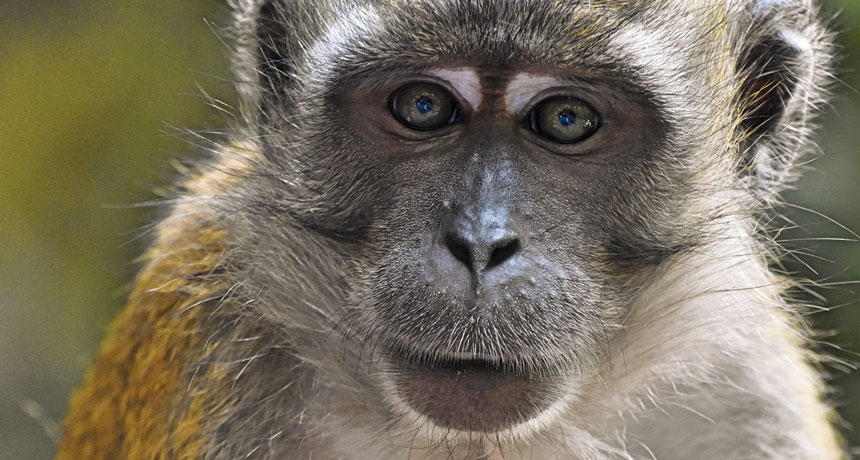
But Surukan’s malaria was different. Hers was not a human malaria parasite. She had P. knowlesi, which infects several monkey species. The same parasite had recently infected two other people in Surukan’s village — a man who hunts in the forest and a teenager. Surukan suspects that her parasites came from the monkeys that live in the forest bordering the rubber tree estate where she worked. Some villagers quit working there after hearing of Surukan’s illness.
Monkey malaria, discovered in the early 1900s, became a public health concern only in the last 15 years. Before that, scientists thought it was extremely rare for monkey malaria parasites, of which there are at least 30 species, to infect humans. Yet since 2008, Malaysia has reported more than 15,000 cases of P. knowlesi infection and about 50 deaths. Infections in 2017 alone hit 3,600. People infected with monkey malaria are found across Southeast Asia near forests with wild monkeys. In 2017, another species of monkey malaria parasite, P. cynomolgi, was found in five Malaysians and 13 Cambodians. And by 2018, at least 19 travelers to the region, mostly Europeans, had brought monkey malaria back to their home countries.
The rise of monkey malaria in Malaysia is closely tied to rapid deforestation, says Kimberly Fornace, an epidemiologist at the London School of Hygiene and Tropical Medicine. After testing blood samples of nearly 2,000 people from areas in Sabah with various levels of deforestation, she found that people staying or working near cut forests were more likely than people living away from forests to have P. knowlesi infections, she and colleagues reported in June in PLOS Neglected Tropical Diseases. Stepping over felled trees, humans move closer to the monkeys and the parasite-carrying mosquitoes that thrive in cleared forests. It’s out there There’s no feasible way to treat wild monkeys for an infection that they show no signs of. “That’s the problem with P. knowlesi,” says Singapore-based infectious disease specialist Fe Espino, a director of the Asia Pacific Malaria Elimination Network.
In 2015, the World Health Organization set a goal for 2030: to stop malaria transmission in at least 35 of the 91 malaria-endemic countries. WHO targets the four human malaria parasites: P. falciparum, P. vivax, P. malariae and P. ovale. Monkey malaria is excluded from the campaign because the agency regards it as an animal disease that has not been shown to transmit among humans.
But as countries reduce human malaria, they will eventually have to deal with monkey malaria, Espino says, echoing an opinion widely shared by monkey malaria scientists.
“Something nasty” could emerge from the pool of malaria parasites in monkeys, says malariologist Richard Culleton of Nagasaki University in Japan. Culleton studies the genetics of human and monkey malaria. Malaria parasites can mutate quickly — possibly into new types that can more easily infect humans (SN: 9/6/14, p. 9). To Culleton, the monkey malaria reservoir “is like a black box. Things come flying out of it occasionally and you don’t know what’s coming next.” Malaysia is very close to reaching the WHO target of human malaria elimination. In 2017, only 85 people there were infected with human malaria. But that success feels hollow as monkey malaria gains a foothold. And while monkey malaria has swelled into a public health threat only in Malaysia, the same could happen in other parts of Southeast Asia and beyond. Even in southeastern Brazil, where human malaria was eliminated 50 years ago, the P. simium malaria parasite that resides in howler monkeys caused outbreaks in humans in 2015 and 2016.
From tool to threat In the late 1800s, scientists discovered the Plasmodium parasite and its Anopheles mosquito carriers. Humans retaliated by draining marshes to stop mosquito breeding and spraying insecticides over whole communities. Governments and militaries pursued antimalarial drugs as the disease claimed countless soldiers during the two World Wars.
Scientists soon found malaria parasites in birds, rodents, apes and monkeys. To the researchers, the parasites found in monkeys were a tool for testing antimalarial drugs, not a threat. An accident, however, showed otherwise. In 1960, biologist Don Eyles had been studying the monkey malaria P. cynomolgi at a National Institutes of Health lab in Memphis, Tenn., when he fell ill with malarial fevers. He had been infected with the parasites found in his research monkeys. His team quickly confirmed that the malaria parasites in his monkeys could be carried by mosquitoes to humans. Suddenly, monkey malaria was not just a tool; it was an animal disease that could naturally infect humans. The news shook WHO, McWilson Warren said in a 2005 interview recorded by the Office of NIH History. Warren, a parasitologist, had been Eyles’ colleague. Five years before Eyles became infected, WHO had launched the Global Malaria Eradication Programme. Banking on insecticides and antimalarial drugs, the agency had aimed to end all malaria transmissions outside of Africa. A monkey malaria that easily infects humans would sink the program because there would be no way to treat all the monkeys.
A team of American scientists, including Eyles and Warren, traveled to Malaysia — then the Federation of Malaya — where the P. cynomolgi parasites that infected Eyles came from. Funded by NIH, the scientists worked with colleagues from the Institute of Medical Research in Kuala Lumpur, established in 1900 by the British to study tropical diseases.
From 1961 to 1965, the researchers discovered five new species of monkey malaria parasites and about two dozen mosquito species that carry the parasites. But the researchers did not find any human infections. Then, in 1965, an American surveyor became infected with P. knowlesi after spending several nights camping on a hill about 160 kilometers inland from Kuala Lumpur.
Warren surveyed the forested area where the infected American had camped. The hill sat beside a meandering river. Monkeys and gibbons, a type of ape, lived on the hill and in adjacent forests. The closest house was about two kilometers away. Warren sampled the blood of four monkeys and more than 1,100 villagers around the hill; he collected mosquitoes too.
He found P. knowlesi parasites in the monkeys, but none among the villagers. Only one mosquito species, A. maculatus, appeared capable of transmitting malaria between monkeys and humans, but Warren deemed its numbers too low to matter. He concluded that monkey malaria stayed in the forests and rarely ever spilled into humans.
With those results, NIH ended the monkey malaria project, Warren said, and the Institute of Medical Research in Kuala Lumpur returned to its primary focus: human malaria, dengue and other mosquito-borne diseases. Monkey malaria was struck off the list of public health concerns.
Wake-up call P. knowlesi landed back in the spotlight in 2004, with a report in the Lancet by malariologist Balbir Singh and his team. The group had found 120 people infected over two years in southern Malaysian Borneo. The patients were mostly indigenous people who lived near forests. Clinicians initially had checked the patients’ blood samples under microscopes — the standard test — and diagnosed the parasites as human malaria. But when Singh, of Universiti Malaysia Sarawak, applied molecular tools that identify parasite species by their DNA, he revealed that all the samples were P. knowlesi. Monkey malaria was breaking out of the diminishing forests.
By 2018, P. knowlesi had infected humans in all Southeast Asian countries except for East Timor. Singapore, declared malaria free in 1982, reported that six soldiers were infected with P. knowlesi from wild monkeys in a forest reserve. The parasite also turned up in almost 380 out of 3,700 visitors to health clinics in North Sumatra, Indonesia, an area that is close to being deemed free of human malaria. Many scientists now recognize P. knowlesi as the fifth malaria parasite species that can naturally infect humans. It is also the only one to multiply in the blood every 24 hours, and it can kill if treatment is delayed. People pick up P. knowlesi parasites from long-tailed macaques, pig-tailed macaques and Mitred leaf monkeys. These monkeys range across Southeast Asia. So far, malaria parasites have been found in monkeys near or in forests, but rarely in monkeys in towns or cities.
Scientists propose several reasons for the recent rise in monkey malaria infections, but two stand out: improvement in malaria detection and forest loss.
Malaysia, for instance, finds more monkey malaria cases than other Southeast Asian countries because it added molecular diagnostic tools in 2009. Other countries use only microscopy for detection, says Rose Nani Mudin, who heads the vectorborne disease sector at Malaysia’s Ministry of Health. Since 2008, annual monkey malaria cases in Malaysia have climbed tenfold, even as human malaria cases have plummeted. “Maybe there is a genuine increase in [monkey malaria] cases. But with strengthening of surveillance, of course you would detect more cases,” she says.
Data collected by Malaysia’s malaria surveillance system have also revealed strong links between infection risk and deforestation. Fornace, the epidemiologist, examined the underlying drivers of monkey malaria in Surukan’s home state of Sabah. Fornace mapped monkey malaria cases in 405 villages, based on patient records from 2008 to 2012. Satellite data showed changes in forested areas around those villages. The villages most likely to report monkey malaria infections were those that had cut more than 8 percent of their surrounding forests within the last five years, she and colleagues reported in 2016 in Emerging Infectious Diseases. Fornace’s team went into the field for a follow-up study, published in June in PLOS Neglected Tropical Diseases. The team collected blood samples from almost 2,000 people in two areas in Sabah and checked for current and past malaria infection. People who farmed or worked in plantations near forests had at least a 63 percent higher risk of P. knowlesi infection, and — like in the 2016 study — forests and cleared areas escalated risk of infection.
“It feels almost like P. knowlesi follows deforestation,” Fornace says. Several years after a forest is cut back, nearby communities “get a peak of P. knowlesi.”
Today, the hill where the American surveyor camped in 1965 is a small island in a sea of oil palm estates. From 2000 to 2012, Malaysia cleared a total amount of forest equaling 14.4 percent of its land area, more than any other country, according to a study published in 2013 in Science. A study in 2013 in PLOS ONE used satellite images to show that in 2009, only one-fifth of Malaysian Borneo was intact forest. Almost one-fourth of all forest there had been logged, regrown and logged many times over.
Since 2008, oil palm acreage in Malaysian Borneo has increased from 2.08 million hectares to 3.1 million, according to the Malaysian Palm Oil Board. In Malaysia, the four states hit hardest by deforestation — Sabah, Sarawak, Kelantan and Pahang — report 95 percent of the country’s P. knowlesi cases. Fornace thinks deforestation and the ecological changes that come with it are the main drivers of monkey malaria’s rise in Malaysia. She has seen long-tailed macaques spend more time in farms and near houses after their home forests were being logged. Macaques thrive near human communities where food is abundant and predators stay out. Parasite-carrying mosquitoes breed in puddles made by farming and logging vehicles.
Where monkeys go, mosquitoes follow. Indra Vythilingam, a parasitologist at University of Malaya in Kuala Lumpur, studied human malaria in indigenous communities in the early 1990s. Back then, she rarely found A. cracens, the mosquito species that carries monkey malaria in Peninsular Malaysia. But in 2007, that species made up over 60 percent of mosquitoes collected at forest edges and in orchards, she reported in 2012 in Malaria Journal. “It’s so much easier to find them” now, she says.
As Fornace points out, “P. knowlesi is a really good example of how a disease can emerge and change” as land use changes. She recommends that when big projects are evaluated for their impact on the economy and the environment, human health should be considered as well.
What to expect While P. knowlesi cases are climbing in Malaysia, scientists have found no evidence that P. knowlesi transmits directly from human to mosquito to human (though many suspect it happens, albeit inefficiently). Following a review by experts in 2017, WHO continues to exclude P. knowlesi from its malaria elimination efforts. Rabindra Abeyasinghe, a tropical medicine specialist who coordinates WHO malaria control in the western Pacific region, says the agency will reconsider P. knowlesi as human malaria if there is new evidence to show that the parasite transmits within human communities.
In Malaysia last year, only one person died from human malaria, but P. knowlesi killed 11. “We don’t want that to happen, which is why [P. knowlesi] is our priority even though it is not in the elimination program,” says Rose Nani Mudin from the country’s Ministry of Health.
Unable to do much with the monkeys in the trees, Malaysian health officers focus on the people most likely to be infected with P. knowlesi. Programs raise awareness of monkey malaria and aim to reduce mosquitoes around houses. New mosquito-control methods are needed, however, because conventional methods like insecticide-treated bed nets do not work for monkey malaria mosquitoes that bite outdoors around dusk.
Fighting malaria is like playing chess against an opponent that counters every good move we make, says Culleton in Japan. Malaria parasites can mutate quickly and “go away and hide in places and come out again.” Against malaria, he says, “we can never let our guard down.”
This article appears in the November 10, 2018 Science News with the headline, “The Next Malaria Menace: Deforestation brings monkeys and humans close enough to share an age-old disease.”
Editor’s note: This story was updated on November 6, 2018 to correct the WHO’s position on monkey malaria. The agency excludes monkey malaria parasites from its malaria eradication goals, not because those particular parasites rarely infect humans, but because the parasites have not been shown to transmit among humans.
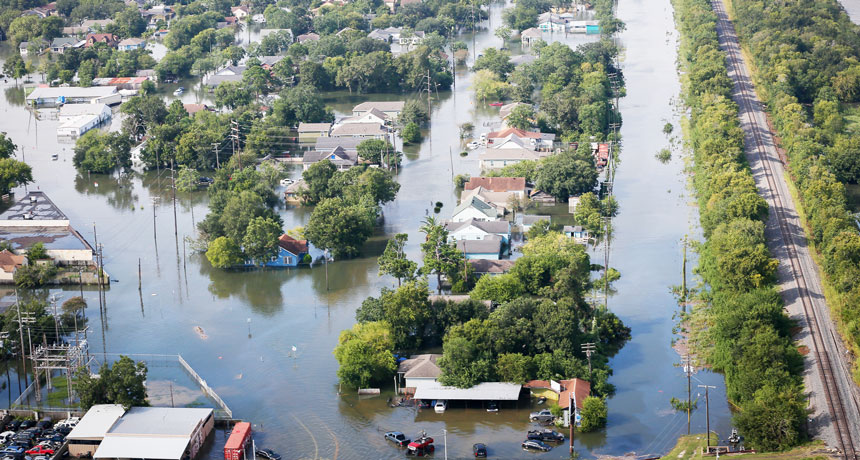
The United States is poised to take a powerful economic hit from climate change over the next century. Heat waves, wildfires, extreme weather events and rising sea levels could cost the country hundreds of billions of dollars in lost labor, reduced crop yields, health problems and crumbling infrastructure.
A report authored by hundreds of U.S. climate scientists from 13 federal agencies presents a stark picture of the country’s fate due to climate change. The Fourth National Climate Assessment, released November 23, predicts the U.S. economy will shrink by as much as 10 percent by the end of the century if global warming continues apace. A separate report released November 27 by the United Nations Environment Programme reveals that in 2017, global emissions of carbon dioxide — a major driver of warming — rose for the first time in three years. That suggests that the nations that promised to curb emissions as part of the historic 2015 Paris agreement are falling short (SN: 1/9/16, p. 6).
It’s unclear what effect, if any, the reports will have on the U.S. government’s strategy on dealing with climate change and its consequences. President Donald Trump has previously announced he would withdraw the United States from the Paris agreement (SN Online: 6/1/17). And on November 26, Trump told reporters that he had read “some of” his scientists’ report. “It’s fine,” he said. But when it comes to the dire predictions of economic losses, he added, “I don’t believe it.”
The National Climate Assessments are mandated by Congress and produced every four years, focusing on the risks of climate change specifically to the United States. What’s different about the new report compared with previous editions is its precision about the risks to different parts of the U.S. economy, putting a price tag on the potential losses in agriculture, trade and energy generation.
To put a dollar value on bad air quality or worsening heat waves, for instance, scientists try to assess the measurable impacts of those issues — for example, the number of days of work or school missed, or the number of doctors’ visits triggered (SN Online: 10/14/18). The more-than-1,600-page report includes detailed examinations of the effects of climate change on the country’s different regions. People living in the northeastern United States, for example, will be among the hardest hit by deaths due to poor air quality and temperature extremes by the end of the century. Labor losses in the southeastern United States are the highest of all regions, as are projected damages to roads and bridges, the report found.
Meanwhile, the Midwest will see the highest increase in premature deaths from increased amounts of ozone. And the Southwest, which includes California in these analyses, will suffer from extreme heat, drought and an increase in future cases of the mosquito-borne West Nile virus.
The report estimates that cumulatively the country will spend $23 billion responding to wildfires by the end of the century, even if greenhouse gas emissions are modestly reduced. The Southwest will bear the brunt of that impact, spending $13 billion dollars.
The report also details the many ways in which climate change is already hurting the country economically. For example, three storms that made landfall during the 2017 Atlantic hurricane season — Harvey, Irma and Maria — together cost the United States at least $265 billion, according to the National Oceanic and Atmospheric Administration.
By continuing on its current trajectory of greenhouse gas emissions, the “business-as-usual” scenario, the United States will see the greatest losses, the assessments concludes. However, the report also considers climate impacts in an alternate future, in which the world has taken modest actions to curb greenhouse emissions, including using more carbon-neutral fuels and the growth of technological innovations to remove carbon dioxide from the atmosphere (SN Online: 10/20/18).
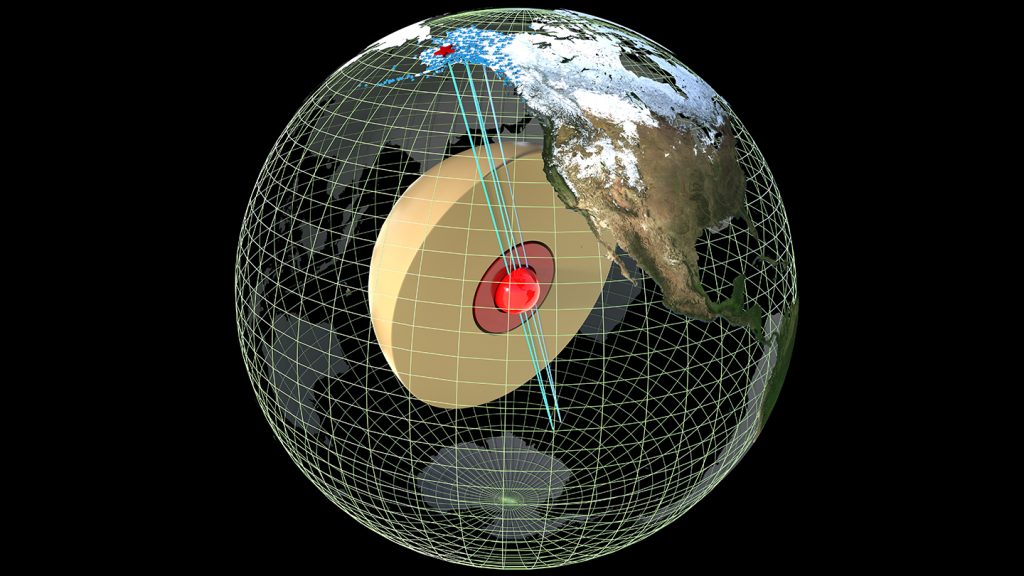
Earth’s heart may have a secret chamber. The planet’s inner core isn’t just a solid ball of nickel and iron, researchers say, but contains two layers of its own: a distinct central region nestled within an outer shell.
Scientists say they have confirmed the existence of this innermost inner core using a type of previously undescribed seismic wave that not only travels through Earth’s core but also bounces back and forth through the interior, collecting invaluable data about the core’s structure along the way. Focusing on earthquakes of magnitude 6 or larger that struck in the last decade, the researchers combined data on these quakes that were collected at seismic stations around the world. Combining these signals made it possible to detect even very faint reflections of the seismic waves. Of the 200 or so quakes analyzed, 16 events spawned seismic waves that detectably bounced through the inner core multiple times.
The origin, structure and fate of Earth’s core is of intense interest because the core generates the planet’s magnetic field, which shields the Earth from charged particles ejected by the sun and helps keep the planet’s denizens safe from too much radiation.
“Understanding how the magnetic field evolves is extremely important for the life on Earth’s surface,” says Hrvoje Tkalčić, a seismologist at the Australian National University in Canberra.
The entire core, about 6,600 kilometers across, consists of two main parts: a liquid outer core and a solid inner core (SN: 1/23/23). As iron-rich fluid circulates in the outer core, some of the material cools and crystallizes, sinking to form a solid center. That interplay generates Earth’s magnetic field.
When this swirling dance first began isn’t certain, but some studies suggest it was as recent as 565 million years ago, just a fraction of Earth’s 4.6-billion-year-long life span (SN: 1/28/19). That dance has faltered from time to time, its stuttering steps preserved in tiny magnetic grains in rocks. These data suggest the planet’s magnetic poles have flip-flopped many times over the years, temporarily weakening the magnetic field (SN: 2/18/21). As more and more crystals cool, the dance will eventually slow and stop, shutting off the planet’s magnetic field millions or billions of years from now.
Different types and structures of minerals, as well as different amounts of liquid in the subsurface, can change the speed of seismic waves traveling through Earth, offering clues to the makeup of the interior. In 2002, researchers noted that seismic waves traveling through the innermost part of Earth move slightly slower in one direction relative to the planet’s poles than in other directions. That suggests there’s some oddity there — a difference in crystal structure, perhaps. That hidden heart, the team suggested, might be a kind of fossil: a long-preserved remnant of the core’s early formation.
Since that observation, Tkalčić and others have pored over seismic data, finding independent lines of evidence that help support the idea of an innermost inner core. The reverberating seismic waves, described February 21 in Nature Communications, also show a slowdown, and are the strongest evidence yet that this hidden heart exists. Using that seismic data, Tkalčić and seismologist Thanh-Son Phạm, also of the Australian National University, estimate that this inner heart is roughly 600 kilometers across, or about half the diameter of the full inner core. And the pair was able to assess the direction of the slowest waves at about 50 degrees relative to the Earth’s rotation axis, providing more insight into the region.
The exact source of the wave slowdown isn’t clear, Tkalčić says. The phenomenon might be related to the structure of the iron crystals, which may be packed together differently farther into the center. Or it could be from a different crystal alignment caused by some long-ago global event that changed how inner core crystals solidified out of the outer core.
The inner core holds many other mysteries too. Lighter elements present in small amounts in the core — hydrogen, carbon, oxygen — may flow around the solid iron in a liquidlike “superionic” state, further complicating the seismic picture (SN: 2/9/22).
By identifying and reporting seismic waves that bounced back and forth through the planet’s interior multiple times, the researchers have made an invaluable contribution that will help researchers study the core in new ways, says seismologist Paul Richards of Columbia University’s Lamont-Doherty Earth Observatory in Palisades, N.Y.
Still, the team’s interpretation of the inner core’s structure from those waves “is probably more iffy,” says Richards, who wasn’t involved in the work.
One reason for this uncertainty is that as the waves bounce back and forth, they can become weaker and more difficult to see in the data, he says. “Many further observations will help decide” what these new data can reveal about the heart of the planet.
Future therapy patients may spend a lot more time exploring virtual environments than sitting on sofas.
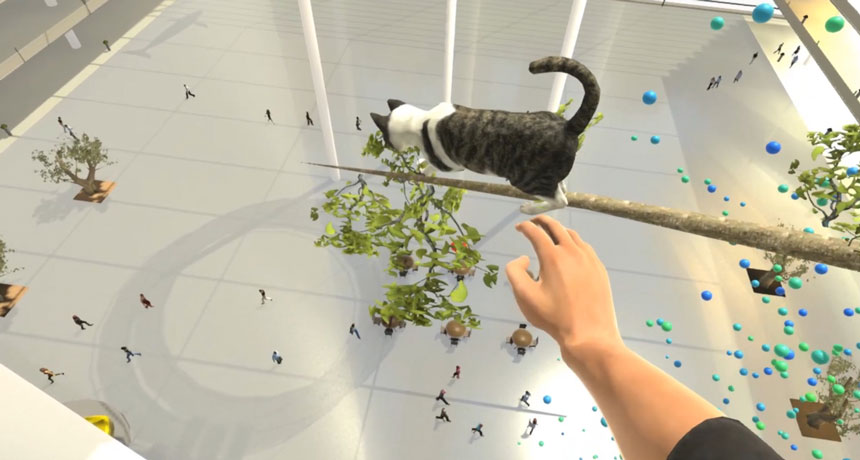
In a clinical trial of a new virtual reality treatment for fear of heights, participants reported being much less afraid after using the program for just two weeks. Unlike other VR therapies, which required that a real-life therapist guide patients through treatment, the new system uses an animated avatar to coach patients through ascending a virtual high-rise. This kind of fully automated counseling system, described online July 11 in the Lancet Psychiatry, may make psychological treatments for phobias and other disorders far more accessible. This is “a huge step forward” for therapeutic VR, says Jennifer Hames, a clinical psychologist at the University of Notre Dame in Indiana, who wasn’t involved in the work. By bringing expert therapy out of the counselor’s office and into primary care clinics — or even people’s homes — the new system could help those who aren’t comfortable or don’t have the means to speak with a therapist face-to-face, she says. Users immerse themselves in this virtual reality program using a VR headset, handheld controllers and headphones. An animated counselor guides the user through a virtual 10-story office complex, where upper floors overlook a ground-level atrium. On every floor, the user performs tasks designed to test their fear responses and help them learn that they’re safer than they might think. The tasks start out relatively easy — like standing close to a drop-off where a safety barrier gradually lowers — and progress to more difficult challenges — like riding a moving platform out into the open space over the atrium. By working through these activities, “the person builds up memories that being around heights is safe, and this counteracts the old fear beliefs,” says Daniel Freeman, a clinical psychologist at the University of Oxford.
To test their program’s effectiveness, Freeman and colleagues recruited 100 adult volunteers who were moderately to severely afraid of heights. The researchers randomly assigned 49 people to undergo VR treatment, which involved using the program for about six 30-minute sessions over two weeks, while the other 51 participants received no treatment.
Participants filled out a questionnaire that rated their fear of heights from 16 to 80 (with 80 being most severe), before treatment, immediately afterward, and two weeks later. People who underwent VR treatment dropped about 25 points on average on the questionnaire’s scale, while patients who received no treatment remained stable. Participants who used the VR program found they “could go to places that they wouldn’t have imagined possible,” Freeman says, like steep mountains, rope bridges or simply escalators in shopping malls.
“When I’ve always got anxious about an edge, I could feel the adrenaline in my legs, that fight/flight thing; that’s not happening as much now,” one participant said. “I’m still getting a bit of a reaction to it, both in VR and outside as well, but it’s much more brief, and I can then feel my thighs soften up as I’m not bracing up against that edge.”
While the clinical trial results provide strong evidence that the new VR program mitigates fear better than no treatment at all, researchers still need to investigate how VR therapy stacks up against sessions with a therapist, Hames says. And since Freeman’s team only tracked treatment effects up to a couple of weeks after their experiment, it remains to be seen how long the effects of this therapy last — although previous research on therapist-led VR treatment have shown lasting impacts for at least a year.
While fully automated VR therapy may be good news for people who fear heights, it’s not clear how well this type of system could address more complex mental health issues, says Mark Hayward, a clinical psychologist at the University of Sussex in England whose commentary on the study appears in the same issue of the Lancet Psychiatry. Virtual environments may be well suited for helping people who fear everyday situations, like those who suffer from common phobias, social anxiety or paranoia, Hayward says. But when it comes to helping people with more severe symptoms, like psychosis, VR probably won’t stand in for trained therapists any time soon.
“We can’t get carried away and say we can automate all [mental health] treatment,” says Albert Rizzo, a clinical virtual reality developer at the University of Southern California in Playa Vista not involved in the work. But the new standalone system for curbing fear of heights is “an excellent first effort.”