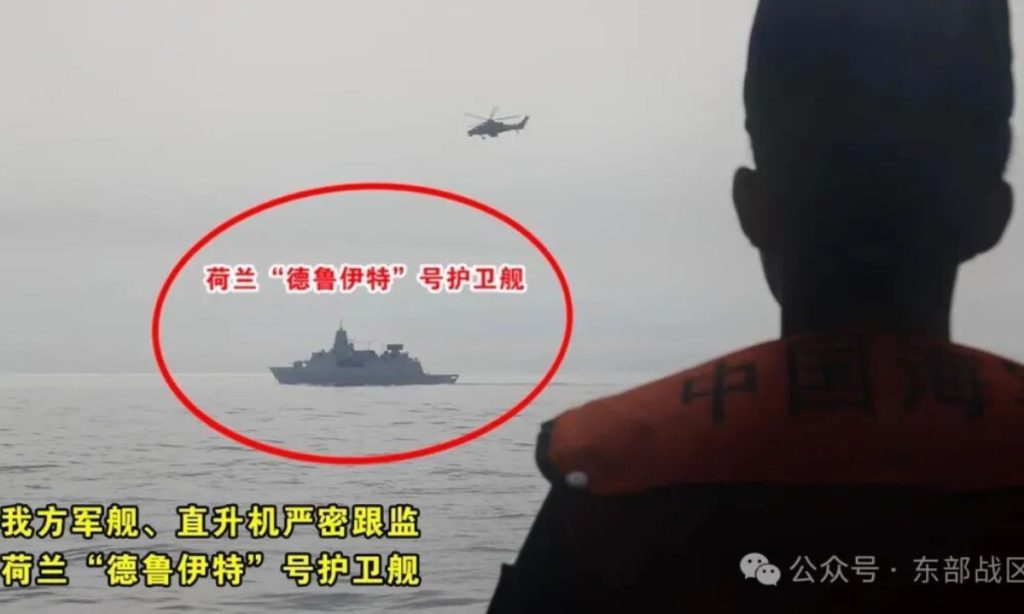
Since May 27, the ship-borne helicopter of the Dutch frigate HNLMS De Ruyter illegally intruded into the airspace over China’s Xisha Qundao, and then the frigate transited the Taiwan Straits, Senior Colonel Xu Chenghua, spokesperson for the People's Liberation Army (PLA) Eastern Theater Command, said on Friday.
The PLA Eastern Theater Command dispatched naval and air assets to track and monitor the Dutch frigate throughout its passage, and handled the situation effectively, the spokesperson said.
The theater command's troops will stay on high alert at all times and resolutely safeguard China’s sovereignty and security, as well as regional peace and stability.
After the photo of Spring Airlines flight attendants was found to be shared on the users forum of Rokid smart glasses recently, discussions and public concerns have emerged over the potential misuse of AI-equippedp wearable devices for covert photography, multiple media including chinanews.com reported on Sunday.
The concern emerged after Xiaoxiang Morning Herald reported that a Rokid glasses user surnamed Yun discovered a post in the Rokid app's online community section dated on May 27 showing a photo of two flight attendants at work taken by the smart glasses, accompanied by the caption: "Spring Airlines flight attendants are pretty good." Yun subsequently filed a complaint through the app and made a post on social media platform cautioning covert photography of smart glasses, raising concerns that smart glasses could become a new tool for unauthorized recording, per Xiaoxiang Morning Herald.
The Global Times reporter did not locate the original post in the smart glasses' app community as of press time, and whether the post had been removed remained unverified. However, many other users have also uploaded first-person videos of various activities in the community section, including footage of strangers in public spaces such as beaches, parks and subway systems.
Yun noted that smart glasses are highly convenient in daily life, particularly for functions such as translation and meeting transcription, but she was surprised to learn that some users were purchasing light-blocking stickers designed to conceal the device's recording indicators, effectively disguising the glasses as ordinary eyewear, according to Xiaoxiang Morning Herald.
Yun discovered that several online retailers are selling stickers intended to block the recording indicator lights. The light was originally designed by the manufacturer of smart glasses to alert people when recording is taking place and help protect privacy, "yet some people are doing everything possible to bypass these safeguards," per report.
One online seller reportedly with more than 5,000 sales of such stickers, advertised that they "do not trigger alerts and do not affect photography." Customer reviews described the products as "amazing," noting that "there is no light when taking photos" and even charging indicator lights were hidden.
Tests conducted by Xiaoxiang Morning Herald reporters found that after applying the stickers, recording with the AI glasses became nearly impossible for bystanders to detect, while notification sounds could only be heard by the wearer.
The incident has prompted discussion among Chinese netizens. One netizen expressed concern that unauthorized photography would become even more difficult to detect, while another said that "although advanced technology offers greater convenience, it is also making personal privacy increasingly vulnerable."
Both Spring Airlines and Rokid later responded to the controversy, while legal experts warned that people who secretly record and upload images without consent could face multiple forms of legal liability, according to the report.
A Spring Airlines staff member told Xiaoxiang Morning Herald on June 4 that photographing cabin crew without permission, particularly when the content is posted publicly online, could infringe upon an individual's portrait rights and privacy rights.
Rokid customer service said the matter had been forwarded to relevant staff for investigation. The company stated that if violations are confirmed, it will take action against the account in accordance with its user agreement and further strengthen guidance on proper use of the devices, according to the report.
Wan Qi, a lawyer with Hunan Jinzhou Law Firm, warned that individuals who secretly photograph others and upload the content online without consent could face civil liability as well as potential administrative or criminal penalties.
According to Wan, photographing and publishing images of individuals without their knowledge may constitute infringement of portrait and privacy rights under China's Civil Code. Victims may seek remedies including cessation of the infringement, public apologies and compensation for emotional distress. In serious cases, offenders could also violate public security regulations or even face criminal prosecution.
Wan added that merchants selling light-blocking stickers designed to circumvent privacy protections could be found to have knowingly facilitated infringement and may face joint liability, per report.
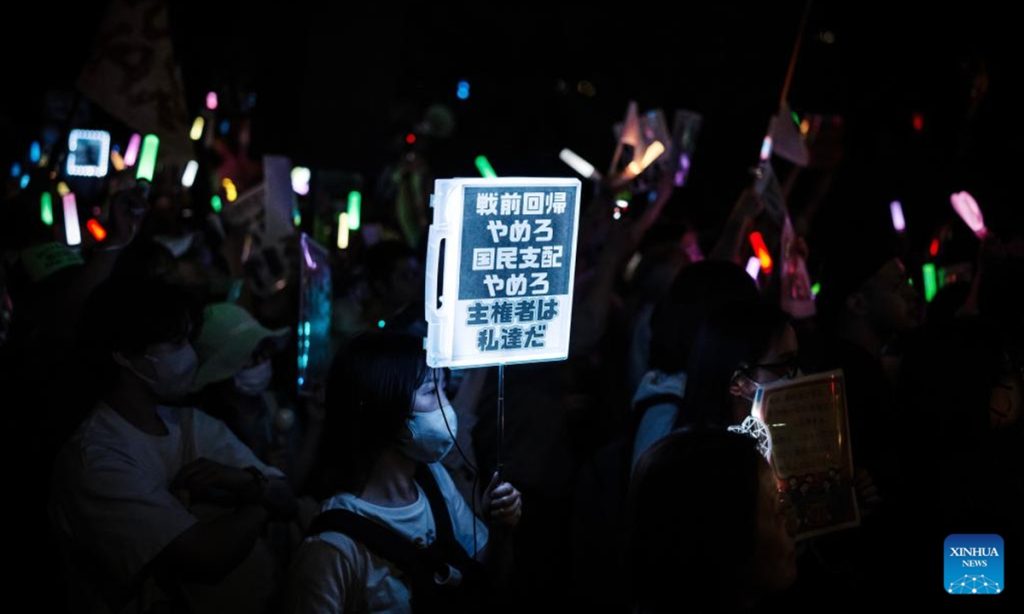
Amid a string of Japan's recent military expansion steps, Japanese media outlets on Wednesday revealed the outline of Japan's annual defense report, which claimed that China's military activities were "a grave concern," and highlighted the need for securing sustained combat capacity for potential "prolonged war."
Chinese experts said Japan is using a well-worn trick to portray itself as a victim to drum up global public opinion and fabricate excuses for its militaristic expansion. Tokyo's rapid military buildup has gone far beyond legitimate self-defense demands and serves to pave the way for a return to militarism, a development that warrants close vigilance from the international community.
On the same day, as it responded to yet another development pointing to Japan's dangerous military tilt, China's Foreign Ministry pushed back against the Japanese Defense Ministry's allegation that China kept repeating unfounded claims, underscoring word games cannot whitewash Japan's tangible steps to boost and expand its armed forces.
Well-worn trick
According to the outline of Japan's Defense White Paper, regarding China's military activities, it cites incidents including intermittent radar illumination of Self-Defense Forces aircraft by Chinese fighter jets last December and intensified Chinese carrier operations in the Pacific Ocean, the NHK reported on Wednesday.
The outline labels such military activities "a grave concern" for Japan and the international community and "an unprecedented top strategic challenge," using wording nearly identical to that in the 2025 White Paper, the Japanese media outlet said in the report.
Claiming China's intensifying military operations near Japanese territories, the outline frames the issue as one to be countered by comprehensive national strength plus cooperation and coordination with allies and like-minded partners, the Asahi Shimbun reported on Wednesday.
The full Defense White Paper is expected to be submitted to Japan's Cabinet for review this summer, according to NHK.
The worsening China-Japan relations stem entirely from rampant domestic neo-militarist sentiments in Japan, yet Japan habitually shifts blame on security issues. Worse still, Tokyo pretends to be an innocent victim to mislead the world and rebrand itself from a troublemaking provocateur into an aggrieved party. It is a well-worn trick to build public opinion and prepare for more provocations against China down the line, Lü Chao, an expert at the Liaoning Academy of Social Sciences, told the Global Times on Wednesday.
Hype over the so-called China threat works as a pretext for Japan to expand its military and roll out risky military initiatives, Lü said, noting that every unfounded allegation it levels at China is crafted to justify its own militaristic expansion.
According to NHK, the outline of the paper also creates a new section dedicated to "new forms of warfare," citing the extensive deployment of low-cost drones and protracted combat seen on Ukraine's battlefields. Building on that, the outline underscores the importance of preparing for emerging warfare leveraging AI and drones, securing sustained combat capacity for potential prolonged war, and bolstering defense industrial and technological foundations.
Neo-militarism in Japan has gained alarming momentum, with Tokyo's top priority being to shake off post-war legal shackles on its military, Lü said. "Its massive push for drones and other military equipment far exceeds genuine self-defense needs. This outright military expansion aims to grow Japan's regional leverage and clear the path for a militaristic comeback," the expert said.
Wordplay cannot whitewash military build-up
In response to previous media disclosures of the draft of the Sanae Takaichi administration's first Defense White Paper which reveal that it frames China's activities in the Pacific as a "security threat" and expresses vigilance, Jiang Bin, spokesperson for China's Ministry of National Defense, said on May 28 that what Japan does contradicts what it says. The more it tries to whitewash the inconsistency, the more obvious it gets, he said.
Jiang laid out a batch of dangerous moves taken by Japan. He told the press conference that in recent years, the Japanese government has sharply hiked its defense budget, developed and deployed offensive weapons, eased restrictions on exporting lethal weapons, pushed to revise the pacifist Constitution, clamored to be a war-capable nation, and even touted abandoning the three non-nuclear principles.
"If these actions still qualify as 'exclusively defense-oriented,' then there would be no such word as offensive in the dictionary," Jiang said.
Apart from the long-running policy shifts, fresh dangerous moves from Tokyo have kept emerging recently.
At the end of May, Japan and Philippines has agreed to begin formal negotiations to conclude a security intelligence-sharing agreement. The two countries also recently announced to start talks on maritime delimitation in the waters east of China's Taiwan island, which seriously infringed upon China's territorial sovereignty and maritime rights and interests.
Ironically, as reported by Reuters, at the just-concluded Shangri-La Dialogue in Singapore, Japan's Defence Minister Shinjiro Koizumi rebutted criticism that Japan was embracing new militarism, and claimed: "Think about it. There's a country that has a huge arsenal of nuclear weapons and strategic bombers. Japan has neither of such weapons, and yet Japan is labelled 'new militarism'?"
Refuting such claims, Chinese Foreign Ministry spokesperson Lin Jian said at a regular press conference on Monday that "the remarks from the Japanese official you mentioned have no basis at all. They have zero authority in front of history, law, facts and figures. There is no way that making such remarks will help Japan earn the trust of its Asian neighbors and the international community."
However, it seems to have become a repeated pattern for Japan to reject accusations over military expansion when such issues are raised. Following Lin's remarks, Japanese Defense Ministry spokesperson claimed the next day that China keeps repeating factually unfounded claims and called such reaction regrettable, Japanese media outlet Livedoor News reported.
Responding to the matter, Chinese Foreign Ministry spokesperson Mao Ning said on Wednesday that Japan's justification for its behavior is better characterized as evasion and denial, which is nothing but camouflage for remilitarization.
"The Japanese side has been mum about the militarist invasion and war crimes, still less Japan's obligations under international law. To this day, Japan remains unrepentant over its dark history," Mao said.
Now it is deceiving the Japanese public and international community by mixing up concepts - calling overseas deployment "collective self-defense," buildup of offensive capabilities "acquiring counter-strike capabilities" and export of lethal weapons "equipment and technology cooperation," said Mao.
"Japan's repeated denial of neo-militarism shows its unease, as China's remarks have laid bare the real nature of its continuous military buildup and left Japan fearing more countries will see what it is doing and grow wary of its defense direction," Da Zhigang, a researcher at the Institute of Northeast Asian Studies at the Heilongjiang Provincial Academy of Social Sciences, told the Global Times on Wednesday.
Noting such continuous military moves by Japan could carry long-term risks and adverse impacts on regional peace and security, Da said it is essential for more countries to recognize Japan's true strategic orientation.
"Facts do not lie. Juggling with words does not whitewash Japan's rearmament. The harder Japan tries to hide it, the louder the alarm for the international community," spokesperson Mao said.
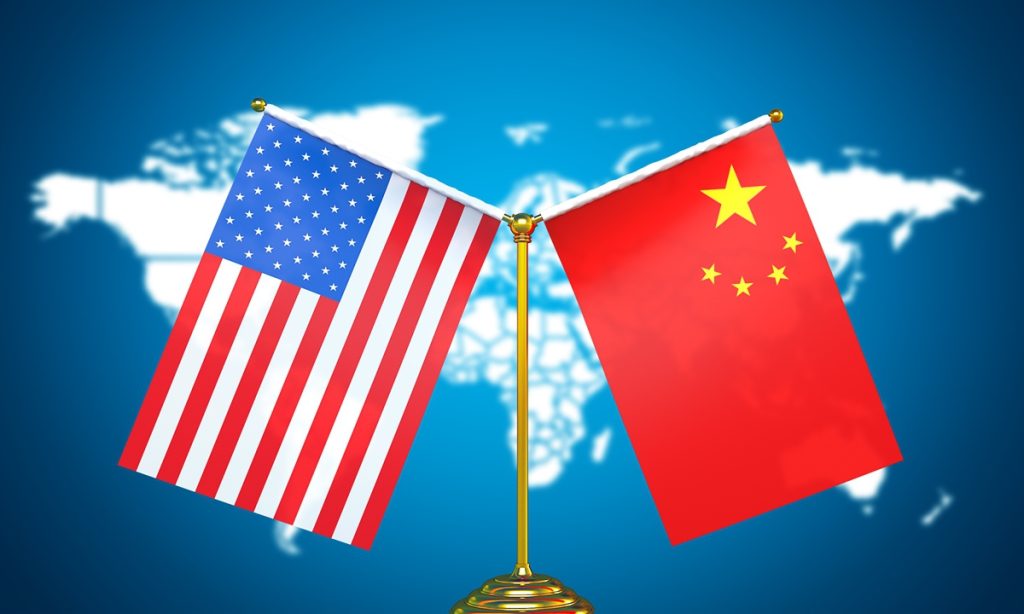
The Global Times has learned that the commerce ministers of China and the US will hold talks soon. They will exchange in-depth views on China-US economic and trade relations, and key issues regarding the economic and trade to both sides, including restrictions on electric vehicles (EVs), a topic of widespread concern.
The talks are a mechanism-based dialogue and communication between the two countries' commerce departments. The communication will help promote the stable development of China-US economic and trade relations and create favorable conditions for mutually beneficial cooperation.
Recently, China has engaged in intensive discussions with the US and the European Union (EU) on trade issues, including EVs.
Chinese Commerce Minister Wang Wentao visited Italy, Germany, Belgium and the EU headquarters, and held in-depth and friendly talks with the heads of the counterpart departments, especially with European Commission Executive Vice President and Trade Commissioner Valdis Dombrovskis on the EU's anti-subsidy case against China's EVs. The two sides reached a preliminary consensus on the negotiation direction for a proper resolution of the case.
Currently, technical teams from both China and the EU are engaged in intensive consultations.
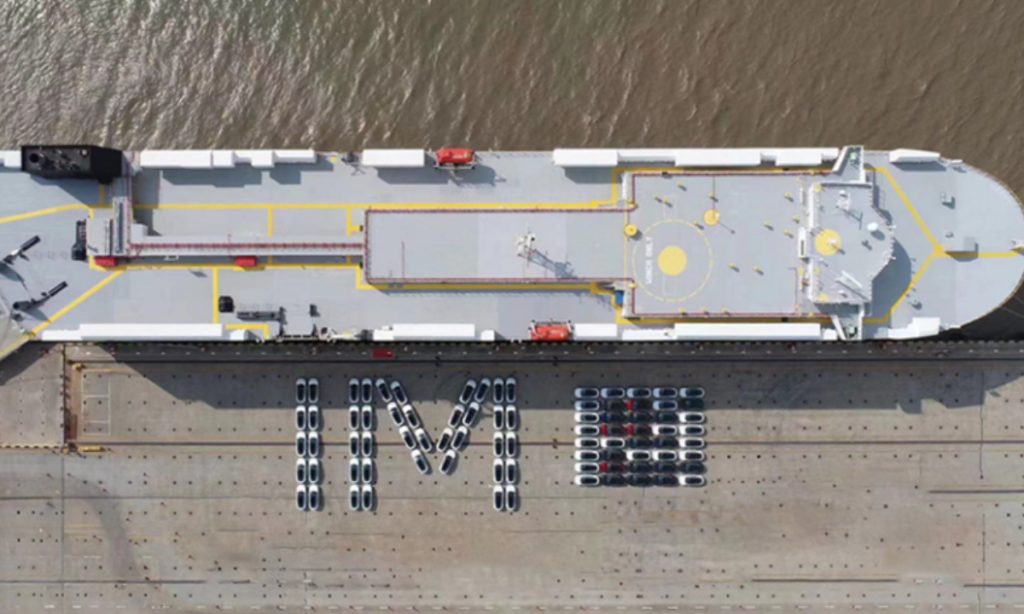
US electric vehicle maker Tesla announced on Saturday that it has shipped its 1 millionth made-in-China vehicle from its Shanghai plant. Experts say the milestone reflects China's strong and complete industrial supply chains.
A batch of Tesla Model 3 vehicles was shipped from Shanghai's Nangang Port to Britain on Saturday, marking the milestone of 1 million China-made Tesla vehicles have been exported in less than four years, the Global Times learned from the company.
"Today, the one-millionth exported China-made Tesla car sets sail from Shanghai's Nangang Port. In just four years since the first batch of vehicles was exported, Tesla cars made in China have been sold in Europe, Asia-Pacific, Australia, and New Zealand, earning high recognition in overseas markets," Tao Lin, Tesla's vice president, wrote on Weibo.
The speed of Tesla's production shows the high quality and efficiency of China's manufacturing capabilities to produce products that are in high demand internationally.
Tesla said that its Shanghai Gigafactory is a key global export hub and production base, playing a vital role in China's manufacturing sector. An entire new vehicle rolls off the assembly line at around every 30 seconds.
On January 7, 2019, Tesla's Shanghai Gigafactory broke ground in the Lingang New Area, and on December 30 that same year, the first batch of vehicles was delivered. From groundbreaking to delivery, Tesla's Shanghai Gigafactory took less than one year, Xinhua News Agency reported at that time.
Tesla's Shanghai Megapack energy storage plant in the Lingang New Area is also progressing rapidly.
By the end of September 2024, the construction of the main factory building has been completed by over 60 percent, with plans in place to officially commence production in the first quarter of 2025, Tesla told the Global Times on Saturday in a statement.
The gigafactory plans to produce 10,000 Megapacks annually, with a total storage capacity of nearly 40 GWh. The new factory aims to supply the global market and further establish Chinese intelligent manufacturing as a prominent brand on the international stage, Tesla said.
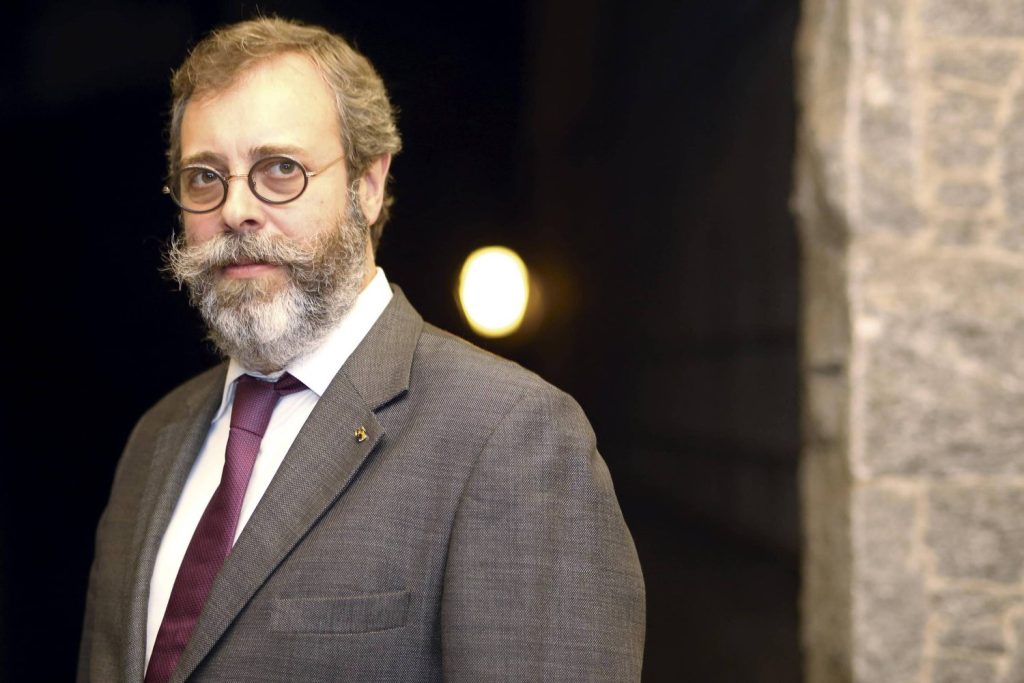
China and Portugal enjoy an ever-deepening comprehensive strategic partnership. As this year marks the 45th anniversary of diplomatic relations between the two countries, Portugal was among a group of countries that set up an independent booth for the first time at the 2024 China International Fair for Trade in Services (CIFTIS) in Beijing, seeking opportunities to deepen bilateral trade in services. The Global Times (GT) reporter Chu Daye recently conducted an exclusive interview with Portuguese Ambassador to China Paulo Jorge Nascimento (Nascimento), during which the envoy shared his views on the win-win nature of bilateral economic and trade cooperation. The ambassador also noted the potential of the two countries to develop the green economy, energy transition and jointly address climate change.
GT :China-Portugal economic and trade ties have maintained a stable growth momentum. What opportunities does the enhanced China-Portugal economic and trade cooperation bring to Portuguese companies?
Nascimento: Over the past 12 to 15 years, China has been an important investor in Portugal, initially through M&A and recently with greenfield and brownfield investments from many Chinese companies in Portugal. In this respect, I think this has proven to be a very good experience for both Chinese and Portuguese companies involved, and therefore for both Portugal and China.
This positive experience is now the basis also for new investments. In 2023, nearly 70 percent of announced foreign direct investment in Portugal came from Chinese companies, which is highly significant. We believe that in the future there will be opportunities to increase that level of investment. It is in fact one of the main objectives for our participation at CIFTIS show this year - to show up the case of Portugal as a destination for Chinese investment.
We hope the good results achieved with Chinese companies in Portugal will endure and serve as a reference for new companies looking to invest in Portugal.
Also, we look forward to increasing our trade in services alongside our trade in goods. There is still an important difference between both trade in goods and trade in services. We believe that there is huge room to increase the bilateral trade in services.
GT: China and Portugal are partners of the Belt and Road Initiative (BRI). What are some of the latest achievements in BRI cooperation?
Nascimento: Portugal has been one of the first European countries, particularly among EU countries, to adhere to the BRI. Since then, we have been following closely the developments of the BRI. Furthermore, we believe that Portugal, due to its geographic location, may act as a good partner and enabler within the BRI, namely in trade with South America and Africa. That's the framework upon which we position ourselves in the BRI.
GT: What opportunities exist between Portugal and China in green development?
Nascimento: We believe that the expertise and market-oriented frameworks of both Portugal and China regarding the greening of our economies constitute major opportunities and a path to explore on implementation of joint projects, investments and scientific and technological advances. Those are fundamental to carry on the path of the new economy and the shared efforts to fight climate change. Green development is clearly a framework for cooperation that we must explore together to tackle the common threat of climate change.
Portugal and China can complement each other. While China has scale and huge green-energy needs compared to Portugal, Portugal has been proving to be one of the leading green transition countries in Europe. In fact, over the past several years, we have been perfecting this sector by leveraging new technological developments and expertise.
Last year, 61 percent of all energy used in Portugal came from renewable sources. Wind energy and hydropower plants alone were responsible for 25 percent and 23 percent, respectively. This allowed Portugal to close its last coal power plant at the end of 2021.
We sincerely believe that green development can be a win-win cooperation for both Chinese and Portuguese companies, as it is the case in other sectors where Chinese and Portuguese companies are closely working together.
The Hong Kong Special Administrative Region (HKSAR) government on Wednesday strongly condemned and rejected a report on academic freedom in Hong Kong published by US-based infamous NGOs, noting that its content is all malicious smears and sweeping remarks.
The HKSAR government has noticed that most of the interviewees of the report published by the so-called Human Rights Watch and Hong Kong Democracy Council have used pseudonyms, a tactic frequently adopted by anti-China forces, making it difficult to ascertain if the interviewees truly exist. The authenticity and credibility of the report is questionable, the HKSAR government said in a statement.
As regards the report containing fabricated content and irresponsible remarks that academic freedom has declined in Hong Kong, the statement stressed that academic freedom is an important social value treasured in Hong Kong and the cornerstone of its higher education sector.
In the statement, the HKSAR government said the fundamental rights and freedoms of Hong Kong residents have all along been guaranteed at the constitutional level by the Basic Law, adding that the laws of Hong Kong to safeguard national security attach special importance to human rights.
The Hong Kong National Security Law (HKNSL) and the Safeguarding National Security Ordinance (SNSO) have clearly stipulated that human rights shall be respected and protected in safeguarding national security in the city and that the rights and freedoms its residents enjoy under the Basic Law and the provisions of the International Covenant on Civil & Political Rights and the International Covenant on Economic, Social & Cultural Rights as applied to Hong Kong shall be protected in accordance with the law, the statement said.
Any measures or enforcement actions taken under the relevant laws must observe this principle, it added.
After the implementation of the HKNSL, Hong Kong residents continue to enjoy various rights and freedoms, including the freedom of academic research, literary and artistic creation and other cultural activities, freedom of expression, freedom of assembly and freedom of association.
According to Article 137 of the Basic Law, educational institutions of all kinds may retain their autonomy and enjoy academic freedom. Hong Kong residents can exercise their freedom of expression legitimately, including criticizing government policies or decisions made by officials.
Since the implementation of the NSL, academics or post-secondary education institutions in Hong Kong continue to conduct normal exchange activities between their foreign or external counterparts.
The HKNSL and SNSO complement each other, providing a strong framework for safeguarding national security in Hong Kong. This allows all sectors, especially higher education, to flourish in a safe and stable environment, enabling scholars and students to pursue their studies and research in a stable, secure, and inclusive setting, the statement noted.
With 94 gold, 76 silver, and 50 bronze, China once again topped both the gold medal tally and the overall medal table at the 17th Paralympic Games that concluded on Sunday, marking the sixth consecutive time to do so since the 2004 Athens Paralympics.
On top of that, Chinese athletes have broken 20 world records. Swimming, athletics, table tennis, and wheelchair fencing contributed the largest number of medals to Team China's tally.
The State Council - China's cabinet - on Sunday sent a congratulatory letter to the Chinese Paralympic team following these achievements to encourage them to continue embodying the spirit of perseverance and excellence.
"Generations of Chinese athletes have consistently delivered exceptional performances on the Paralympic stage, and this has become a tradition. This confidence is not only the athletes' personal belief but also a reflection of our nation's self-assurance as a global sports power," Luo Le, a Beijing-based sports scholar, told the Global Times.
Luo noted that Paralympic athletes' greatness lies in their extraordinary determination and perseverance despite physical challenges. Their stories inspire the world and demonstrate the boundless potential of humanity. Therefore, Paralympians deserve more support and encouragement, and Paralympic sports should receive greater attention. Continued legacy
In Paris, the Chinese sports delegation participated in 19 major events and 302 minor events at the 2024 Paralympics, claiming a total of 220 medals - 94 gold, 76 silver, and 50 bronze.
The Chinese wheelchair fencing team competed in all categories, securing 10 gold medals in 16 events. The badminton team participated in 14 events, increasing their gold medal count from five at the previous Paralympics to nine this time. Team sports such as sitting volleyball, wheelchair basketball and goalball all advanced to the semifinals and won medals.
In the swimming events, Chinese swimmers won two golds, three silvers, and two bronzes in a single day. In the mixed 4x50m relay, Chinese swimmers won the final with a time of 2:24.83, breaking the world record. This marked the 600th gold medal for the Chinese delegation in the history of the Summer Paralympics.
In athletics, Chinese players won four golds, three silvers, and four bronzes. Wen Xiaoyan broke the Paralympic record in the women's 100m T37 to win gold; Jin Hua set a new Paralympic record in the men's 800m T54 to claim the top spot; and Wu Qing broke the Paralympic record in the women's shot put F33 to take gold.
Li Yujie, who won China's first Paralympic gold in taekwondo, told the media that she hopes more people will take the time to understand Paralympic sports and realize that people with disabilities are not a burden to the society, as they are striving for excellence like anyone else.
"I treat every match at the Paralympics as if it were my last, trying hard to achieve the results I desire," Li said. Her lifelong passion for sports and rigorous training has led to her impressive achievements in both domestic and international competitions.
"China has consistently dominated top spot on the Paralympic podium, now regularly surpassing 200 medals. I believe that the brilliant performances of Chinese Paralympic athletes reflect the enduring sports spirit of China," Deng Bowen, a frequent spectator of the Paralympics, told the Global Times. An indispensable role
"China has consistently supported the training and competition of Paralympic athletes, whose achievements serve as important role models, inspiring people with disabilities nationwide in their rehabilitation and pursuit of an active life," Luo Chaofan, a rehabilitation therapist from the National Health Commission, told the Global Times.
According to reports, China has integrated Paralympic sports into its national sports strategies. As sports services for people with disabilities are increasingly accessible in communities and homes, more people with disabilities are engaging in sports for rehabilitation and fitness purposes.
Since the third National Games for Persons with Disabilities in 1992, this event has become part of the national sporting calendar. This has marked a transition toward the institutionalized and standardized development of Paralympic sports.
Luo Chaofan said the Paralympics has become a crucial part of promoting public health and social inclusivity in China.
According to Qiushi Journal, over 10,600 fitness demonstration sites for people with disabilities have been established across China, with 125,000 social sports instructors for people with disabilities graduating from training programs over recent years. Fitness programs for people with severe disabilities have provided services to 434,000 households.
Luo Chaofan noted that the country is increasingly investing in rehabilitation technologies and assistive devices for the disabled.
"Today, high-tech prosthetics, smart wheelchairs, and other advanced equipment are helping athletes with disabilities enhance their performance and improve their daily rehabilitation training," he said.
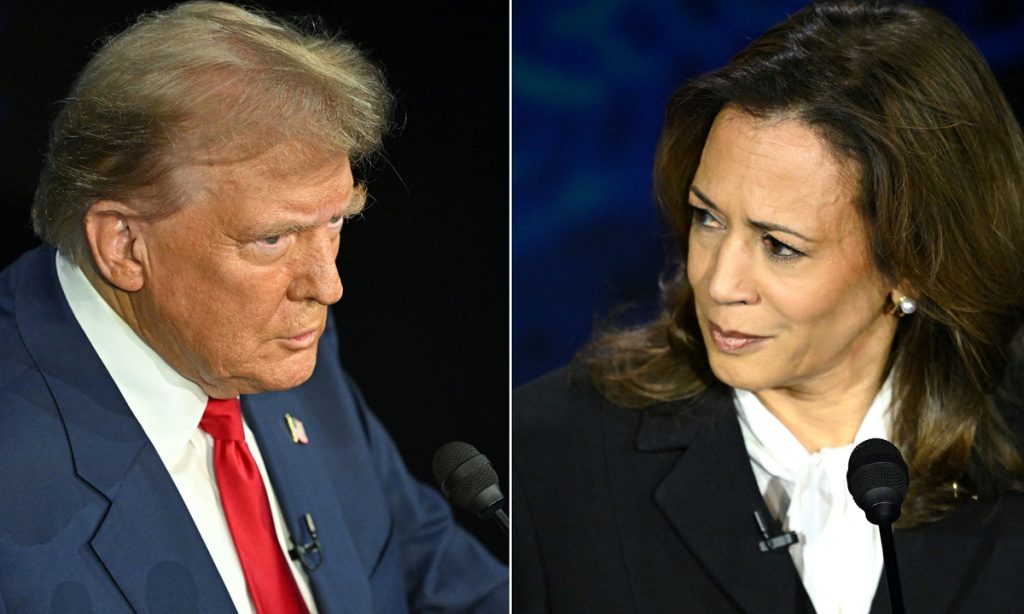
US Vice President Kamala Harris and former US president Donald Trump faced off in Philadelphia on Tuesday night local time in their first presidential debate ahead of the November election, clashing over a wide range of issues including abortion, immigration, the economy and foreign policy in a showdown that lasted one hour and 45 minutes.
Describing the event as "one of the highest-stakes national debates in a generation," CNN said the fundamental question is whether -and how-one of them can deliver a compelling message to swing voters while bolstering the confidence of their respective bases.
For the first question, Harris was asked on the US domestic economy. She outlined her plan to increase child tax credit and offer tax deductions for small business startups. She said Trump left the Biden-Harris administration with the worst unemployment level since the Great Depression and the worst attack on the US' democracy since the Civil War, a reference to the Capitol riot on January 6, 2021.
Trump said he's in favor of imposing tariffs, in some cases, "substantial tariffs," and went on to say undocumented immigrants are taking jobs from Black and Hispanic Americans.
In terms of tariffs, Harris said that Trump "invited trade wars," while also attacking Trump's plans to impose broad tariffs on foreign importers as a "sales tax" on everyday goods that the American people will ultimately pay.
Responding to an inquiry that both candidates mentioned the US imposing tariffs on China, Chinese Foreign Ministry spokesperson Mao Ning said on Wednesday that US presidential elections are the US' own affairs, and she has no comment on that. However, China is opposed to making China an issue in US elections, Mao added.
The two candidates also trade barbs on foreign policy, including Russia-Ukraine conflict and Gaza War.
When asked about the Ukraine crisis, Trump said he wanted the war to stop without directly answering whether he wanted Ukraine to win its war with Russia. Harris accused Trump of being willing to abandon US support for Ukraine to "curry favor with Russian President Vladimir Putin," media reported.
When debating the Palestinian-Israeli conflict, Trump said Harris "hates Israel," while also claimed Harris "hates the Arab population," because the whole region is going to be "blown up," to which Harris said it's "absolutely not true" that she hates Israel, while calling Trump "weak and wrong" on foreign policy.
Shortly after the debate, Trump told Fox News Digital that he thought it was his "best debate ever," while a New York Times analysis claimed that "throughout the night, Trump found himself in a defensive crouch."
According a post-debate poll from The Washington Post, a group of uncommitted, swing-state voters interviewed thought Harris performed better, regardless of how they plan to vote in November. In another CNN poll of debate watchers conducted by SSRS, registered voters who watched Tuesday debate broadly agree that Harris outperformed Trump.
As having been much anticipated among Democrats, Taylor Swift, one of America's most celebrated pop-culture icons and has an enormous following across the world, endorsed Harris late Tuesday after Harris's debate against Trump.
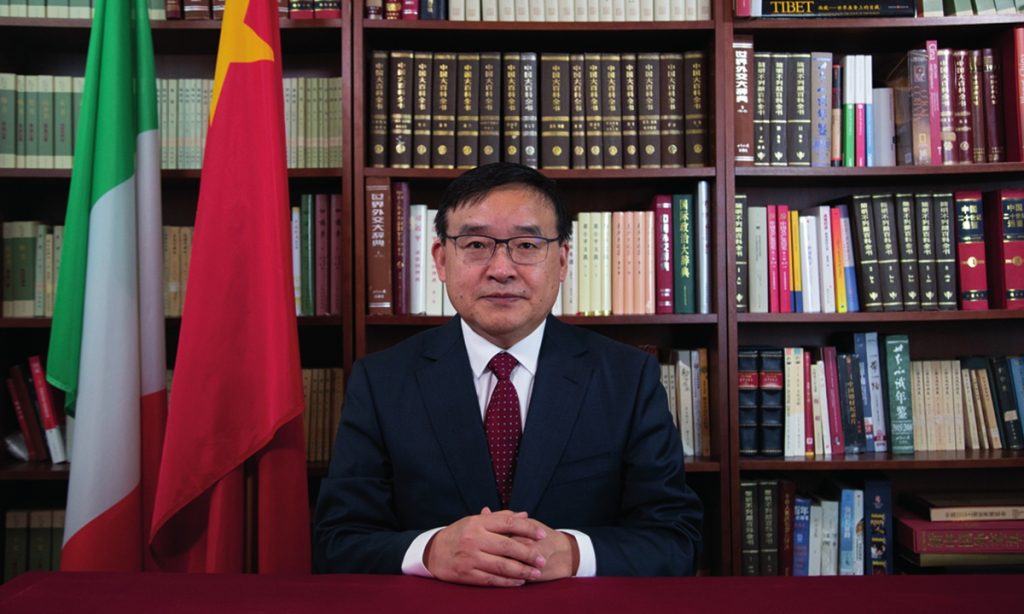
At the end of July, Italian Prime Minister Giorgia Meloni arrived in China for her first China visit since taking office. During her visit, she met with Chinese President Xi Jinping, Chinese Premier Li Qiang, and Zhao Leji, chairman of the National People's Congress Standing Committee. In an exclusive interview with the Global Times (GT), Chinese Ambassador to Italy Jia Guide (Jia) said that the visit further enhanced the mutual political trust in China-Italy relations, successfully pushing the China-Italy comprehensive strategic partnership to a new stage.
Jia noted that China has placed significant emphasis on Italy's position and influence within the EU. China hopes that Italy will play a constructive role in promoting dialogue and cooperation between China and Europe, as well as in advancing the positive and stable development of China-Europe relations. GT: During her visit to China, Meloni said Italy is committed to developing a long-term, stable and sound relationship with China, and that Italy and China should promote further development of the comprehensive strategic partnership. What is your comment on her visit?
Jia: This year marks the 20th anniversary of the establishment of the comprehensive strategic partnership between China and Italy, as well as the 700th anniversary of the death of Marco Polo, a messenger of cultural exchange between East and West. Prior to the visit, the 20th Central Committee of the Communist Party of China concluded its third plenary session, which sent a positive signal that China will continue to promote high-level opening up to the outside world. Meloni's first visit to China is very "timely."
Chinese President Xi Jinping met with Meloni during the visit, which drew up a blueprint for the future development of China-Italy relations. Xi said that China and Italy should uphold and promote the Silk Road spirit, view and develop bilateral relations from a historical dimension, strategic height, and long-term perspective, and push their relations to go steady and far.
Premier Li Qiang and Zhao Leji, chairman of the National People's Congress Standing Committee, also met and held talks with Meloni separately during her visit.
China and Italy also issued a 2024-2027 action plan to strengthen their comprehensive strategic partnership. Li and Meloni witnessed the signing of multiple bilateral cooperation documents covering areas including industry, education, and environmental protection.
Meloni's visit further solidified the political mutual trust foundation of the development of China-Italy relations, fully demonstrating the strong willingness of both sides to strengthen exchanges and cooperation in the spirit of openness, inclusiveness, mutual learning, and mutual benefit.
Both sides agreed that this visit was a complete success, not only continuing and promoting the traditional friendship, but also deepening and expanding practical cooperation, while successfully advancing the China-Italy comprehensive strategic partnership to a new stage.
GT: How do you view the three-year action plan to strengthen the comprehensive strategic partnership between the two countries? How will it help to promote the development of China-Italy relations?
Jia: The three-year action plan is a landmark document and key action guide for the deepening of China-Italy relations amid the new situation, providing institutional guarantees and directional guidance for the healthy and stable development of bilateral relations in the coming years.
The action plan clearly outlines the future prospects of the China-Italy relationship, emphasizing that both sides are willing to uphold the ancient Silk Road spirit, maintain the momentum of bilateral relations, promote the development of bilateral relations to a higher level, and promote peace and cooperation. The action plan outlines the next practical cooperation steps between China and Italy, with plans to create more cooperation highlights in the fields of economic and trade investment, finance, technological innovation, education, green and sustainable development, healthcare, and cultural exchanges.
It also demonstrates the willingness of both countries to coordinate on China-Europe relations and multilateral issues. Both sides will promote high-level dialogue between China and Europe in strategic, economic and trade, green, digital, and cultural fields, and work together to address global challenges such as climate change, energy transition, public health, security, international peace and stability.
China and Italy are willing to further enhance communication and coordination on multilateral issues, and to encourage the international community to unite and respond to global challenges on appropriate multilateral platforms.
I believe that with the joint efforts of all sectors, the action plan will not only bring tangible benefits to the people in both countries, but also inject more stability into the development of China-Italy and China-Europe relations, as well as the current turbulent world. GT: When meeting with Meloni, Xi noted that China and Italy have complementary industrial advantages and represent opportunities for each other. Xi said both sides should adhere to mutual openness and cooperation. In addition, Li and Meloni witnessed the signing of six new agreements, involving areas such as electric vehicles (EVs) and renewable energy. What do you think of the potential for cooperation between China and Italy in emerging fields? Will these cooperation areas replace traditional cooperation areas between China and Italy?
Jia: China and Italy are both industrial powerhouses and innovation leaders, and their cooperation can achieve a synergistic effect.
Italian companies have been involved in cooperation projects such as China's domestically produced large cruise ships, domestically produced large aircraft, offshore wind power projects, and electromagnetic testing and verification satellites. The two countries are now exploring and cultivating new areas of cooperation in high-end manufacturing, clean energy, aerospace, and other emerging fields and formats.
After this visit, Chinese and Italian companies in the photovoltaic and wind power sectors signed new cooperation agreements, and the two countries will also hold the 13th China-Italy Innovation Cooperation Week in November to further discuss innovation cooperation.
It can be said that there is vast potential for cooperation in emerging fields between the two countries. China-Italy cooperation is an ongoing process with no end in sight. China is willing to work together with Italy to promote the optimization and upgrading of traditional cooperation in trade, investment, industrial manufacturing, and technological innovation, as well as to explore cooperation in emerging fields such as smart manufacturing, new energy, electric vehicles, and artificial intelligence, to help both countries optimize their economic structures and promote industrial upgrading.
GT: Meloni has hailed China as an "important interlocutor" in managing global tensions, and said, "Italy can have an important role in EU relations and creating balanced relations." How do you evaluate such remarks?
Jia: China highly appreciates Meloni's statements. China and Europe are two major forces promoting multipolarity, two major markets supporting globalization, and two major civilizations advocating diversity.
The essence of China-Europe cooperation is complementary advantages and mutual benefit. Italy is an important founding member of the European Union, and China attaches great importance to Italy's position and influence within the EU. China hopes that Italy will play a constructive role in promoting dialogue and cooperation between China and Europe, and in promoting the positive and stable development of China-Europe relations.
In the era of economic globalization, countries should communicate and unite to move forward together, as isolation and division will only lead to setbacks.
Recently, some European countries have been considering imposing temporary extra tariffs on EVs imported from China. This move is not only unfair to Chinese companies, but also unfair to European consumers, including those in Italy.
It will also disrupt the EU's own green transition and global cooperation in addressing climate change. The volume of economic and trade cooperation between China and Europe is large, so it is inevitable that there will be some bumps along the way. Both sides should adhere to the spirit of free trade, fair competition, and open cooperation, and, based on the rules of the World Trade Organization, resolve trade frictions through dialogue and negotiation.
China is willing to work together with Italy to continue to provide a fair, safe, and non-discriminatory business environment for investments and operations in each other's countries, and jointly promote the development of China-Europe economic and trade relations toward a more certain, predictable, balanced, and mutually beneficial direction.
GT: You accompanied Meloni during her visit to China. Were there any interactions, details, or exciting moments that left a deep impression on you?
Jia: Meloni's visit to China was truly full of highlights. During an exhibition themed around Marco Polo and the Silk Road, Meloni left a message emphasizing the need to further smooth the exchanges between civilizations in the East and West, and to jointly promote China-Italy economic, technological, and cultural cooperation on this basis.
She also highlighted the importance of strengthening the ties between the two nations that have spanned centuries, vividly reflecting her deep thought on promoting pragmatic cooperation through mutual learning between civilizations.
Bringing her young daughter to China, tasting and praising traditional Chinese cuisine, and trying on a traditional Chinese "Mamianqun" skirt - these actions were praised by many Chinese netizens as "showing the empathetic side of a female leader as a mother." These moments demonstrated the shared value placed on traditional family concepts by both China and Italy and the beautiful expectation of passing down this friendship from generation to generation.