After a 6.3-magnitude earthquake struck Haixi Prefecture in Northwest China's Qinghai Province at 5:06 pm on Tuesday, seven additional tremors were recorded within the following 40 minutes, according to the China Earthquake Networks Center (CENC). Local authorities have dispatched seismic response personnel to the site to carry out emergency operations.
The CENC said that the first earthquake struck at a depth of 10 kilometers, and the epicenter was monitored at 37.80 degrees north latitude and 95.56 degrees east longitude.
As of 6:40 pm on Tuesday, the magnitude-6.3 earthquake has left one dead and four injured, the Xinhua News Agency reported.
All operating staff at coal mine enterprises near the epicenter have been fully evacuated. Inspections are underway to tally further casualties and property damage.
The Ministry of Emergency Management has mobilized rescue forces to the quake-hit area to conduct all-out searches for trapped people. The ministry has also allocated relief supplies to deliver assistance and resettlement support for affected people, and stepped up seismic monitoring, tracking and assessment on Tuesday, the China Central Television (CCTV) reported.
The State Council's earthquake relief headquarters and the Ministry of Emergency Management jointly activated a Level IV earthquake disaster emergency response, and dispatched a work group to guide on-site response operations, per CCTV News.
The office of the national commission for disaster prevention, reduction and relief and the Ministry of Emergency Management, together with the National Food and Strategic Reserves Administration, have allocated 10,000 central disaster relief supplies including tents, folding beds, quilts, blankets, household emergency kits and emergency lighting lamps, to Qinghai, per Xinhua.
A total of 78 vehicles, 320 rescuers and 10 search-and-rescue dogs have been dispatched from the national comprehensive fire and rescue service to carry out on-site rescue operations, CCTV News reported.
The epicenter of the earthquake lies 567 kilometers away from Xining, capital of Qinghai Province, the China News Agency reported.
A total of eight consecutive earthquakes rattled the Haixi Prefecture by 5:45 pm on Tuesday, the China News Agency reported, citing data released by the CENC.
In addition to the initial 6.3-magnitude main shock, the region experienced seven subsequent quakes, the smallest registering a magnitude of 3.0 and the strongest reaching 4.9, all at a focal depth of 10 kilometers, according to CENC.
The Qinghai provincial earthquake administration has dispatched an on-site emergency response task force consisting of 10 staff members aboard two vehicles to the quake-hit zone to carry out comprehensive seismic emergency response operations, according to the China News Agency.
China, as a permanent member of the UN Security Council and the world's largest developing country, has consistently played an active role in global governance, Chinese Foreign Minister Wang Yi said on Wednesday.
Wang, also a member of the Political Bureau of the Communist Party of China Central Committee, made the remarks at a press conference on a white paper titled "More Just and Equitable Global Governance: China's Principles, Proposals and Actions."
China champions the building of a community with a shared future for humanity and takes the lead in practicing true multilateralism, Wang said.
It has consistently been a builder of world peace, a contributor to global development, a defender of the international order, and a provider of public goods, while making continued efforts to improve and reform global governance, he added.
For the first time in a decade, New Zealanders are more likely to see China as a friend than the US, while viewing Washington as more of a threat, according to the latest report released by a New Zealand foundation on Wednesday.
Analysts noted that such findings go beyond temporary shifts and instead reveal an enduring trend. The survey results echo a prevailing desire of Asia-Pacific countries to pursue stability and growth, where China occupies a pivotal position. In comparison, Washington's disruptive moves against the international order have caused widespread anxiety, including among its long-standing allies.
Launched by the Asia New Zealand Foundation, the annual Perceptions of Asia and Asian Peoples (2026) survey found that New Zealanders' sentiment towards China has warmed since the last survey, with friend perceptions increasing from 38 percent to 43 percent. Meanwhile, sentiment towards the US has cooled significantly, with friend perceptions falling from 61 percent to 39 percent, according to the RNZ.
In addition, 35 percent of respondents saw the US as a threat. By comparison, about 23 percent saw China as a threat, Reuters reported.
The survey also found that 81 percent of New Zealanders see developing ties with Asia as important. The foundation's Chief Executive Suzannah Jessep said that "There is a growing recognition that prosperity, resilience and security will depend on the depth and quality of our relationships across Asia," per Reuters.
The annual survey, now in its 29th year, polled 2,300 people in January and February.
Chen Hong, director of the Asia-Pacific Studies Center at East China Normal University, told the Global Times on Wednesday that robust economic, trade and people-to-people exchanges have enabled New Zealand society to gain a more objective understanding of the real China, despite smearing and hype by some Western media and politicians, adding that, "compared with other Western countries, New Zealand pursues a more pragmatic and independent foreign policy, which has exerted a positive influence on its public perceptions of China."
According to the Chinese Foreign Ministry, China is New Zealand's largest goods trading partner, largest export market and largest source of imports. China is also the largest source of international students in New Zealand.
Effective July 1, 2024, China implemented a temporary visa exemption for New Zealand, with its validity extended to the end of 2026.
"In a more challenging world, New Zealanders are looking for friends," a summary of the New Zealand report said, according to the RNZ.
About a month before the New Zealand foundation released the poll, surveys conducted by an Australian organization reflected a similar trend.
According to a poll released on May 7 by The Australia Institute, a public policy think tank based in Canberra, 59 percent of Australians believe the country's interests are better served by a more independent foreign policy rather than a closer alliance with the US. Only 13 percent of Australians believe the US is a "very reliable" security ally.
Dr Emma Shortis, Director of The Australia Institute's International & Security Affairs Program, said the poll represents "a seismic shift" in the way Australians think about the US.
From waging wars to slapping tariffs, the US' actions worldwide have made even its long-standing allies in Europe and the Asia-Pacific come to see that it undermines, rather than upholds, the international order, said Chen.
According to the expert, the evolving attitudes toward China and the US in New Zealand and Australia are very likely to reflect not a temporary policy shift, but an enduring trend.
Amid a world of turmoil and profound changes, pursuing stability and development has become the shared aspiration of all Asia-Pacific countries, Chen said. "As a solid defender of regional peace and stability and a key driver of the regional economy, China plays an indispensable role in the region. For this reason, China has earned wide recognition among people in the Asia-Pacific despite slander from parts of the West," Chen said.
Chen Xiufeng, 56, a Beijing street food vendor known as "Goose Leg Auntie," has come under scrutiny after admitting that the roasted legs she sold for years were actually duck, not goose. The revelation has sparked widespread online discussion and led to a regulatory investigation.
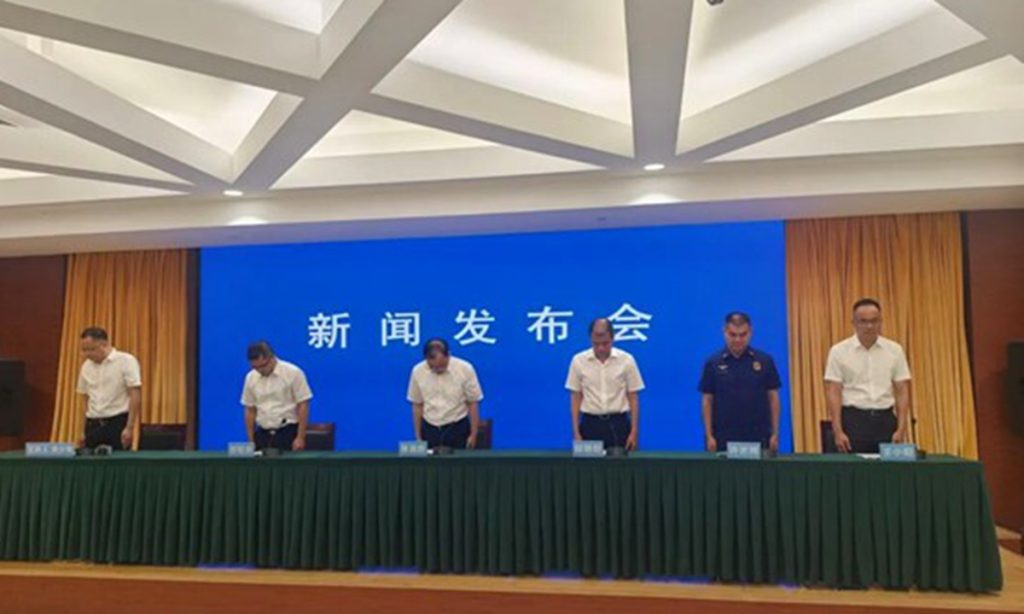
The Market Supervision Administration of Beijing's Haidian District released a statement on Thursday, saying it is further investigating allegations that the vendor may have misled consumers and will handle the case in accordance with the law, according to the district authority's official WeChat account.
Authorities launched an immediate investigation and questioned those involved after reports of the "Goose Leg Auntie selling duck legs" incident drew widespread public attention on Wednesday, the statement said.
The controversy erupted after a screenshot of an announcement circulated online from a group-buying chat operated by Chen. In Chen's announcement, she acknowledged that the roasted legs she sold were made from duck rather than goose.
According to the announcement, a consumer in Beijing's Guomao central business area discovered and reported that the products sold by Chen were actually duck legs. Chen said she was cooperating with the relevant authorities as a result of the complaint.
The revelation quickly became a trending topic on Chinese social media plaforms. One netizen said that "there is nothing wrong with the food quality, so there is no need to make a fuss about it." However, other view shows that "If it is likely to mislead consumers, then it amounts to deception, whether intentional or not."
As the controversy grew, several consumers claimed that they had purchased roasted legs with a greenish discoloration, causing the hashtag "zombie duck legs" to climb to the top of China's trending topics list on Sina Weibo.
The Yangcheng Evening News reported that videos of students from elite universities such as Peking University and Tsinghua University lining up to buy Chen's roasted legs went viral in late 2023, helping transform her into an internet celebrity.
Since 2024, some consumers have reported receiving duck legs with green-colored patches. According to media reports, customers who raised questions in group chats were told the coloration came from scallion juice or vegetable-based marinades.
One consumer surnamed Xu told reporters that she joined a delivery group serving the Guomao area about a week ago through a friend's recommendation. When she collected her order, a delivery worker informed her that the product was a "goose-flavored duck leg," per Red Star News. "I still mind it a little," Xu said. "It feels like a form of deception."
"If there are any corresponding penalties, I will accept them. At the same time, I would also like to apologize to the students. In the future, I still hope to be known as 'Goose Leg Auntie,' but I will make sure to clearly explain the ingredients and source materials to everyone," Chen told the reporter, according to gmw.cn.
With a circle of booths featuring handcrafts, Thai-flavor cuisines, beverages, and a main stage presenting Thai dancing and fashion shows, 2026 Thai Festival returned to Chaoyang Park in Beijing on May 30. Thai Ambassador to China Chatchai Viriyavejakul inaugurated "Thai-Chinese friendship bell pavilion" after the opening ceremony for the festival. One of the highlights of this year's festival is the introduction of "Chud Thai," or the Thai National Costume.
In his opening remarks, Ambassador Viriyavejakul said this year's Thai Festival is special as the Royal Thai Embassy in China presented the theme "Creative Life & Creative Heartbeat," reflecting the energy and creativity of modern Thailand.
"I am proud to share that 'Chud Thai' is officially being considered for inscription on UNESCO's Representative List of the Intangible Cultural Heritage of Humanity in 2026," said Viriyavejakul.
This nomination reflects not only Thailand's rich cultural identity, showcasing the craftsmanship, traditional wisdom, and shared heritage woven into every garment, but also "stands as a tribute to Her Majesty Queen Sirikit The Queen Mother for her lifelong dedication to preserving and promoting Thai textiles on the international stage," he said.
After the opening ceremony, Ambassador Viriyavejakul and other delegates inaugurated the "Thai-Chinese friendship bell pavilion."
Originally constructed in 2005, the bell pavilion was renovated in 2025 to commemorate the 50th anniversary of the establishment of diplomatic relations between Thailand and China. It symbolizes enduring friendship, mutual trust, and close relations between our two countries, Viriyavejakul noted.
Throughout the two-day festival, visitors enjoyed a variety of lively performances and entertainment, experiencing a memorable "Little Thailand," including Thai instrumental performances, Muay Thai performance, durian peeling demonstration and Thai speech competition.
A visitor to the festival surnamed Zhao told the Global Times that he and his family really enjoyed the Thai cuisine and durian-peeling competition during the event, "We are planning to go from this year's 'little Thailand' to the real Thailand next year," Zhao said.
Since May 27, the ship-borne helicopter of the Dutch frigate HNLMS De Ruyter illegally intruded into the airspace over China’s Xisha Qundao, and then the frigate transited the Taiwan Straits, Senior Colonel Xu Chenghua, spokesperson for the People's Liberation Army (PLA) Eastern Theater Command, said on Friday.
The PLA Eastern Theater Command dispatched naval and air assets to track and monitor the Dutch frigate throughout its passage, and handled the situation effectively, the spokesperson said.
The theater command's troops will stay on high alert at all times and resolutely safeguard China’s sovereignty and security, as well as regional peace and stability.
After the photo of Spring Airlines flight attendants was found to be shared on the users forum of Rokid smart glasses recently, discussions and public concerns have emerged over the potential misuse of AI-equippedp wearable devices for covert photography, multiple media including chinanews.com reported on Sunday.
The concern emerged after Xiaoxiang Morning Herald reported that a Rokid glasses user surnamed Yun discovered a post in the Rokid app's online community section dated on May 27 showing a photo of two flight attendants at work taken by the smart glasses, accompanied by the caption: "Spring Airlines flight attendants are pretty good." Yun subsequently filed a complaint through the app and made a post on social media platform cautioning covert photography of smart glasses, raising concerns that smart glasses could become a new tool for unauthorized recording, per Xiaoxiang Morning Herald.
The Global Times reporter did not locate the original post in the smart glasses' app community as of press time, and whether the post had been removed remained unverified. However, many other users have also uploaded first-person videos of various activities in the community section, including footage of strangers in public spaces such as beaches, parks and subway systems.
Yun noted that smart glasses are highly convenient in daily life, particularly for functions such as translation and meeting transcription, but she was surprised to learn that some users were purchasing light-blocking stickers designed to conceal the device's recording indicators, effectively disguising the glasses as ordinary eyewear, according to Xiaoxiang Morning Herald.
Yun discovered that several online retailers are selling stickers intended to block the recording indicator lights. The light was originally designed by the manufacturer of smart glasses to alert people when recording is taking place and help protect privacy, "yet some people are doing everything possible to bypass these safeguards," per report.
One online seller reportedly with more than 5,000 sales of such stickers, advertised that they "do not trigger alerts and do not affect photography." Customer reviews described the products as "amazing," noting that "there is no light when taking photos" and even charging indicator lights were hidden.
Tests conducted by Xiaoxiang Morning Herald reporters found that after applying the stickers, recording with the AI glasses became nearly impossible for bystanders to detect, while notification sounds could only be heard by the wearer.
The incident has prompted discussion among Chinese netizens. One netizen expressed concern that unauthorized photography would become even more difficult to detect, while another said that "although advanced technology offers greater convenience, it is also making personal privacy increasingly vulnerable."
Both Spring Airlines and Rokid later responded to the controversy, while legal experts warned that people who secretly record and upload images without consent could face multiple forms of legal liability, according to the report.
A Spring Airlines staff member told Xiaoxiang Morning Herald on June 4 that photographing cabin crew without permission, particularly when the content is posted publicly online, could infringe upon an individual's portrait rights and privacy rights.
Rokid customer service said the matter had been forwarded to relevant staff for investigation. The company stated that if violations are confirmed, it will take action against the account in accordance with its user agreement and further strengthen guidance on proper use of the devices, according to the report.
Wan Qi, a lawyer with Hunan Jinzhou Law Firm, warned that individuals who secretly photograph others and upload the content online without consent could face civil liability as well as potential administrative or criminal penalties.
According to Wan, photographing and publishing images of individuals without their knowledge may constitute infringement of portrait and privacy rights under China's Civil Code. Victims may seek remedies including cessation of the infringement, public apologies and compensation for emotional distress. In serious cases, offenders could also violate public security regulations or even face criminal prosecution.
Wan added that merchants selling light-blocking stickers designed to circumvent privacy protections could be found to have knowingly facilitated infringement and may face joint liability, per report.
Amid a string of Japan's recent military expansion steps, Japanese media outlets on Wednesday revealed the outline of Japan's annual defense report, which claimed that China's military activities were "a grave concern," and highlighted the need for securing sustained combat capacity for potential "prolonged war."
Chinese experts said Japan is using a well-worn trick to portray itself as a victim to drum up global public opinion and fabricate excuses for its militaristic expansion. Tokyo's rapid military buildup has gone far beyond legitimate self-defense demands and serves to pave the way for a return to militarism, a development that warrants close vigilance from the international community.
On the same day, as it responded to yet another development pointing to Japan's dangerous military tilt, China's Foreign Ministry pushed back against the Japanese Defense Ministry's allegation that China kept repeating unfounded claims, underscoring word games cannot whitewash Japan's tangible steps to boost and expand its armed forces.
Well-worn trick
According to the outline of Japan's Defense White Paper, regarding China's military activities, it cites incidents including intermittent radar illumination of Self-Defense Forces aircraft by Chinese fighter jets last December and intensified Chinese carrier operations in the Pacific Ocean, the NHK reported on Wednesday.
The outline labels such military activities "a grave concern" for Japan and the international community and "an unprecedented top strategic challenge," using wording nearly identical to that in the 2025 White Paper, the Japanese media outlet said in the report.
Claiming China's intensifying military operations near Japanese territories, the outline frames the issue as one to be countered by comprehensive national strength plus cooperation and coordination with allies and like-minded partners, the Asahi Shimbun reported on Wednesday.
The full Defense White Paper is expected to be submitted to Japan's Cabinet for review this summer, according to NHK.
The worsening China-Japan relations stem entirely from rampant domestic neo-militarist sentiments in Japan, yet Japan habitually shifts blame on security issues. Worse still, Tokyo pretends to be an innocent victim to mislead the world and rebrand itself from a troublemaking provocateur into an aggrieved party. It is a well-worn trick to build public opinion and prepare for more provocations against China down the line, Lü Chao, an expert at the Liaoning Academy of Social Sciences, told the Global Times on Wednesday.
Hype over the so-called China threat works as a pretext for Japan to expand its military and roll out risky military initiatives, Lü said, noting that every unfounded allegation it levels at China is crafted to justify its own militaristic expansion.
According to NHK, the outline of the paper also creates a new section dedicated to "new forms of warfare," citing the extensive deployment of low-cost drones and protracted combat seen on Ukraine's battlefields. Building on that, the outline underscores the importance of preparing for emerging warfare leveraging AI and drones, securing sustained combat capacity for potential prolonged war, and bolstering defense industrial and technological foundations.
Neo-militarism in Japan has gained alarming momentum, with Tokyo's top priority being to shake off post-war legal shackles on its military, Lü said. "Its massive push for drones and other military equipment far exceeds genuine self-defense needs. This outright military expansion aims to grow Japan's regional leverage and clear the path for a militaristic comeback," the expert said.
Wordplay cannot whitewash military build-up
In response to previous media disclosures of the draft of the Sanae Takaichi administration's first Defense White Paper which reveal that it frames China's activities in the Pacific as a "security threat" and expresses vigilance, Jiang Bin, spokesperson for China's Ministry of National Defense, said on May 28 that what Japan does contradicts what it says. The more it tries to whitewash the inconsistency, the more obvious it gets, he said.
Jiang laid out a batch of dangerous moves taken by Japan. He told the press conference that in recent years, the Japanese government has sharply hiked its defense budget, developed and deployed offensive weapons, eased restrictions on exporting lethal weapons, pushed to revise the pacifist Constitution, clamored to be a war-capable nation, and even touted abandoning the three non-nuclear principles.
"If these actions still qualify as 'exclusively defense-oriented,' then there would be no such word as offensive in the dictionary," Jiang said.
Apart from the long-running policy shifts, fresh dangerous moves from Tokyo have kept emerging recently.
At the end of May, Japan and Philippines has agreed to begin formal negotiations to conclude a security intelligence-sharing agreement. The two countries also recently announced to start talks on maritime delimitation in the waters east of China's Taiwan island, which seriously infringed upon China's territorial sovereignty and maritime rights and interests.
Ironically, as reported by Reuters, at the just-concluded Shangri-La Dialogue in Singapore, Japan's Defence Minister Shinjiro Koizumi rebutted criticism that Japan was embracing new militarism, and claimed: "Think about it. There's a country that has a huge arsenal of nuclear weapons and strategic bombers. Japan has neither of such weapons, and yet Japan is labelled 'new militarism'?"
Refuting such claims, Chinese Foreign Ministry spokesperson Lin Jian said at a regular press conference on Monday that "the remarks from the Japanese official you mentioned have no basis at all. They have zero authority in front of history, law, facts and figures. There is no way that making such remarks will help Japan earn the trust of its Asian neighbors and the international community."
However, it seems to have become a repeated pattern for Japan to reject accusations over military expansion when such issues are raised. Following Lin's remarks, Japanese Defense Ministry spokesperson claimed the next day that China keeps repeating factually unfounded claims and called such reaction regrettable, Japanese media outlet Livedoor News reported.
Responding to the matter, Chinese Foreign Ministry spokesperson Mao Ning said on Wednesday that Japan's justification for its behavior is better characterized as evasion and denial, which is nothing but camouflage for remilitarization.
"The Japanese side has been mum about the militarist invasion and war crimes, still less Japan's obligations under international law. To this day, Japan remains unrepentant over its dark history," Mao said.
Now it is deceiving the Japanese public and international community by mixing up concepts - calling overseas deployment "collective self-defense," buildup of offensive capabilities "acquiring counter-strike capabilities" and export of lethal weapons "equipment and technology cooperation," said Mao.
"Japan's repeated denial of neo-militarism shows its unease, as China's remarks have laid bare the real nature of its continuous military buildup and left Japan fearing more countries will see what it is doing and grow wary of its defense direction," Da Zhigang, a researcher at the Institute of Northeast Asian Studies at the Heilongjiang Provincial Academy of Social Sciences, told the Global Times on Wednesday.
Noting such continuous military moves by Japan could carry long-term risks and adverse impacts on regional peace and security, Da said it is essential for more countries to recognize Japan's true strategic orientation.
"Facts do not lie. Juggling with words does not whitewash Japan's rearmament. The harder Japan tries to hide it, the louder the alarm for the international community," spokesperson Mao said.
China's widely watched annual "two sessions" kicked off on Monday this year. The "two sessions" refers to the annual sessions of National People's Congress (NPC) and the National Committee of the Chinese People's Political Consultative Conference (CPPCC), which are known as the country's top legislature and national political advisory body respectively.
The two sessions is a grand occasion that gathers ideas and wisdom of people of all walks of life across the country. It is an important opportunity for the world to better understand China's whole-process people's democracy, in which the people engage in democratic elections, consultations, decision-making, management, and oversight according to the law. Such democracy is not only shown in the votes taking place at the Great Hall of the People in Beijing, but also embodied in a motion submitted by a NPC deputy coming from a remote area, or a consultative meeting held among some residents living in a city suburb. It can be felt in many details of Chinese people's daily lives.
During this year's two sessions, the Global Times is launching a series of stories to illustrate the whole-process people's democracy from some of such details. The third story is about the work diary of an NPC deputy from Northwest China's Xinjiang Uygur Autonomous Region. By following in her footsteps, we see how an NPC deputy truly brings the most grounded, warm, and vivid voices from the grassroots to the two sessions. Over 60 years ago, Rukeyamu Maitisaidi's great-grandfather rode a donkey, wishing to see Beijing. Now, Rukeyamu takes a flight from her hometown to Beijing, serving as a deputy to the 14th NPC at the two sessions.
Departing from Yutian county in the Hotan prefecture of Northwest China's Xinjiang Uygur Autonomous Region, it takes less than a day to reach Beijing nowadays.
Once a servicewoman on China's first aircraft carrier, Rukeyamu became an interpreter at the Kurban Tulum Memorial Hall in Yutian county after her military service.
In 2018, she was elected as a deputy to the 13th NPC, and since then, she has frequently visited fields and farmers' homes to communicate with the ordinary people to hear about their needs and wishes.
A week before the two sessions, the Global Times reporters followed Rukeyamu's steps, documenting a diary of how she performed her duties as an NPC deputy.
She expresses that although being a large responsibility, serving as an NPC deputy is an honor. She strives to act as a bridge between the people and the government, helping to convey their demands and address their difficulties, and also to share the happy stories of Xinjiang residents with the whole nation.
A solemn and sacred day
On the morning of March 5, Rukeyamu meticulously adjusts her hat for the last minute.
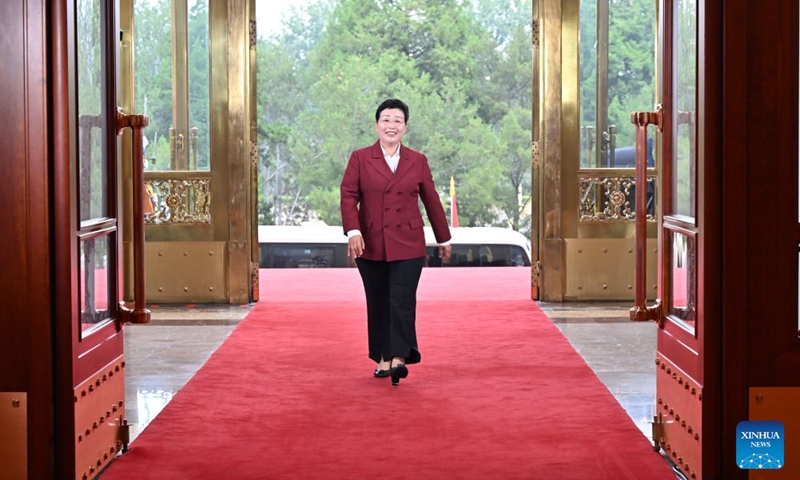
Dressed in a colorful Uygur long dress and a black coat, she walks into the Great Hall of the People at the heart of Beijing, hand in hand with other NPC deputies from Xinjiang region. They are ready to listen to the Government Work Report of the past year.
After the meeting, she wrote to the reporters, "The Premier mentioned in the report: 'Acting on the people-centered development philosophy, we will fulfill our responsibilities to meet people's basic needs and provide a cushion for those most in need and take more steps to deliver real benefits to the people to their satisfaction. We will make solid progress toward prosperity for all and promote social harmony and stability. By doing so, we will give our people a growing sense of fulfillment, happiness, and security.'"
"As a grass-roots NPC deputy," Rukeyamu told the Global Times, "I deeply resonate with the premier's words."
During the two sessions, the daily routine of NPC deputies is filled with frenetic work and responsibility.
"I will carefully listen to each deputy's report and sort out the beneficial policies to ensure that I can relay this information to the public at the earliest," Rukeyamu said. They adopt household visits or group meetings to ensure the spirit of the two sessions reach the people promptly.
Apart from regular meetings, NPC deputies also participate in discussions on motions and inter-provincial exchanges. "We are not only there to listen to others' speeches but also to prepare our own. It is part of our responsibility as NPC deputies," Rukeyamu emphasizes. She brings the hopes and needs of Hotan and Yutian residents to the two sessions, ensuring their voices are heard.
"In this process, our role as NPC deputies is crucial," she said. Through these actions, the deputies play an indispensable role in connecting the government with the people.
The Global Times learned that the Xinjiang delegation is composed of 60 deputies to the second session of the 14th NPC, representing 11 ethnic groups including Han, Uygur, Kazak, Hui, Tajik, Mongolian, Kirgiz , Xibe, Uzbek, Russian, and Tatar, from various sectors, embodying their region's broad representativeness.
To prepare for this session, the NPC deputies from Xinjiang engaged in intensive research on high-quality development, agricultural construction, rural revitalization, ecological protection, openness to the outside world, water resource utilization, and other important issues concerning economic and social development that the people care about before heading to Beijing.
As of March 4, the Xinjiang delegation had received six draft motions and 106 suggestions, mainly involving the formulation or amendment of laws such as the Employment Promotion Law and the Free Trade Pilot Zone Law. The suggestions mainly cover building a modern industrial system, strengthening green computing power construction, and forming a talent cultivation system, among other aspects.
Two sessions rush
On the eve of the two sessions, Rukeyamu Maitisaidi's workload became extraordinarily heavy. This was the final sprint before heading to Beijing.
With two days left before leaving Yutian, she was still discussing with local township-level representatives at 6 pm. This was the last of more than a dozen of discussions she had held over the past few days, covering residents from every township in Yutian.
The atmosphere in the meeting was fervent. Deputies raised issues they have noticed in their work, concerning livelihood, education, and healthcare, to which Rukeyamu thoughtfully responded.
Rukeyamu had discussions with other deputies in the Uygur language and took notes. Tonight, she would also discuss and study the opinions and feelings collected, refining the motions she would take to the two sessions.
When everything was concluded, everyone left the venue. But Rukeyamu's day was not over yet.
She immediately drove to Friendship village in Mugala town for household visits. Her father, Maitisaidi Aisa, a deputy to the people's congress of Yutian county, accompanied her.
Friendship village is located on the edge of Yutian county, with newly built houses lined up neatly, three-story buildings along the street, and single-story houses with courtyards elsewhere. On the straight village road, children snacking and singing walked home in pairs. As an NPC deputy, Rukeyamu's household visits were unannounced. She walked straight into a resident's yard at the village head, telling them her purpose immediately.
Only the mistress Aminamu Wupur was at home that day. She was sweeping the yard and warmly invited her guests inside when she saw Rukeyamu.
Aminamu lived in a resettlement house in the village. Yutian, situated on the edge of the Taklamakan Desert, is prone to sandstorms, yet industrious Aminamu kept her home spotless. Her son's wedding photo was displayed prominently at the household's entrance.
From 2011 to 2020, Xinjiang implemented the construction of more than 2.67 million rural resettlement houses, and over 10 million people of various ethnicity have moved into new homes equipped with utilities and designed to be earthquake-resistant.
Aminamu grasped Rukeyamu's hand, telling her that she was very happy with her life and cannot think of many good suggestions, but she hoped Rukeyamu can convey her happiness and gratitude to the national two sessions.
Next, Rukeyamu randomly selected a family in an apartment building to visit. The mistress of the house, Hairulinishahan Aizezi, 42 years old, happily told Rukeyamu that at the end of last year, she, her husband, and their three children moved into this three-bedroom apartment, while their elderly relatives live in another unit opposite their own.
"Most of the money was subsidized by the government; we only had to pay a small part," said Hairulinishahan. They previously lived in an earthen house in the village and never imagined they could live in such a beautiful, modern home.
What excited her even more was that over the past few years, through local training classes, she had learned carpentry and plastering skills and can now work outside as well. With the boom in construction development in Yutian, she has also had many job opportunities.
In today's Mugala town, women have long since shed the old tradition of staying at home to tend to their husbands and teach their children. They step out of their homes to learn skills and find work.
"As an ordinary resident in Yutian, I hope you can convey our greetings and voices to the national two sessions, letting the whole nation know about our happy and fulfilling lives," she told Rukeyamu.
Mission with significance
"My great-grandfather was a deputy to the 4th NPC, and after so many years, in 2018, I was also elected as a deputy to the 13th NPC. I was really excited," said Rukeyamu. "Becoming an NPC deputy is not only an honor but also a responsibility. I feel that my mission is even more significant, and my sense of duty has been strengthened."
Her great-grandfather Kurban Tulum is known as Uncle Kurban. In the 1950s, after the establishment of new China and receiving his own land, the grateful Kurban wanted to "ride a donkey to Beijing" to see Chairman Mao Zedong. His story became widely known across the country and influenced Rukeyamu's upbringing.
In 2012, Rukeyamu joined the navy and was assigned to the aircraft carrier Liaoning in 2013. Despite encountering many difficulties, such as seasickness and language barriers, it was these experiences that made her braver and stronger.
After her military service, she returned to her hometown in Yutian county, Xinjiang and worked at local publicity department. After the opening of the Kurban Tulum Memorial Hall, she took on the responsibility of telling the story of Uncle Kurban.
However, being an NPC deputy is an important identity she holds.
In understanding the opinions and suggestions of the people, Rukeyamu found that many, due to infrequent contact with the news, found it difficult to express themselves on some issues. Therefore, she realized the importance of face-to-face communication. "We first listen to their opinions and suggestions, and answer immediately if we can; if not, we will discuss with the relevant departments," she said.
Delegate Rukeyamu is well aware that the difficulties and demands of the public need to be resolved through the correct channels. "Some issues can be resolved by the township government, some need to be reported to the county, region, or city level. For those that cannot be resolved, we will bring up at the national two sessions."
For example, during her household visit, Rukeyamu found that the people complained about the high price of tap water. She raised this issue at the county two sessions and it was resolved quickly. "Because this is a work that the county government level can complete," Rukeyamu said.
She particularly mentioned the construction of Yutian Wanfang Airport, which given the large geographical scope of the Hotan region, locals hoped there would be room to build another airport in the region for the convenience of the public. "We reflected this wish at the national two sessions in 2018, and it was soon met with a response from the central government, and the airport was quickly built," she said.
On December 26, 2020, Yutian Wanfang Airport commenced operations. Now, people can take a plane and reach Urumqi, the capital city of Xinjiang, in one hour and 55 minutes.
Yutian county, located at the southern edge of the Taklamakan Desert, was once a national-level deeply impoverished county. It achieved poverty alleviation in 2020.
"With practical actions, I carry forward my family's oath of ethnic unity and the spirit of my great-grandfather 'to always follow the Party,'" Rukeyamu said.
Since 2017, her family has established a public welfare fund to reward and help students from families that have made outstanding contributions to maintaining social stability.
After the two sessions, Rukeyamu's work continues. "My wish is that the lives of Hotan residents get better day by day," she said.
Chinese people believe that letters are as valuable as gold. For thousands of years, letters, across mountains and oceans, have been delivering the writers' sentiments and conveying friendship and expectations.
Xi Jinping, general secretary of the Communist Party of China (CPC) Central Committee and Chinese president, has managed to find time to reply to some letters from different sectors of the society and different parts of the world despite his busy work schedule.
Through his letters, Xi has corresponded with international friends from all walks of life on numerous occasions, part of a series of excellent stories of China's international exchanges in the new era. The letters have also added vivid color to the diplomacy between China and other countries.
The Global Times traced and contacted some of the recipients of Xi's letters to hear the inspiring stories behind the letters and their communications with the Chinese president.
In this installment, Serbian steelworkers share with the Global Times their excitement at receiving Xi's reply letter before the Chinese president's visit to Serbia and the story of how close cooperation between the two countries revived the century-old Smederevo steel plant. At around 8 pm on April 30, 2024, when Serbians were ready to embrace the May Day holiday and the Orthodox Easter, Nenad Cvetanovic, head of operations at the hot mill at HBIS Smederevo steel plant, or Hesteel Serbia, got a phone call asking him to stay in the plant because the Chinese Ambassador to Serbia Li Ming would "come to share something with us."
"That was amazing," Cvetanovic and his colleagues thought when they got to know what the surprise was - Chinese President Xi Jinping had replied to their letter days before his second state visit to Serbia after eight years.
Cvetanovic first had the idea to write a letter to Xi in February 2024 when he read a media report saying that the Chinese president might be visiting Serbia again. The idea was widely embraced by his colleagues.
In the letter signed by workers from different departments at the steel plant, they expounded on the latest developments at the plant and its important role in the local economy and people's livelihoods, and they thanked Xi for his care and support for the joint venture located in Smederevo, a small city about 60 kilometers southeast of the Serbian capital Belgrade.
In his reply letter dated April 29, Xi recalled his visit to the plant in June 2016 when he deeply felt the workers' support for the mutually beneficial cooperation between China and Serbia, and their high expectations for a bright future for the steel plant, according to Xinhua News Agency.
It is a great pleasure to learn that the steel plant has turned losses into gains quickly after the investment of a Chinese-funded enterprise, with the jobs of more than 5,000 employees guaranteed, and thousands of families enjoying a peaceful and happy life, Xi said in the letter.
The development of the steel plant could not have been achieved without the dedication and hard work of the workers, who have been working diligently for the quick growth of the steel plant and have written a new chapter for the iron-clad friendship between China and Serbia.
I give you the "thumbs up," Xi said.
The reply letter shows that our efforts are recognized and appreciated and we feel honored and encouraged, Bojan Popovic, head of department of materials management and maintenance at the Hesteel Serbia, told the Global Times.
"It reinforced our belief that the strong bond between China and Serbia is built on the efforts of ordinary workers like us," Popovic said. "We are proud to be part of this partnership and to contribute to the growth and success of our steel plant, and thus, to the development and strengthening of our economic ties."
Rebirth of a plant
The steel plant, first established in 1913, has long been a pillar of former Yugoslavia's metal industry, but it encountered difficulties in the 1990s. The plant then entered two decades of struggle of survival and, in 2012, then owner US Steel Corporation sold the plant to the Serbian government, leaving it with more than 5,000 employees and massive liabilities.
The Global Times learned from senior workers of the steel plant that production was frequently halted at that time. The first thing they would do after waking up in the morning was to check whether smoke was rising from the plant's chimney or not. People did not dare to get married or have babies because they feared they would lose their jobs as the factory could close at any moment.
The light of hope arrived in April 2016 when China's Hesteel Group purchased the plant at a price of 46 million euros ($49.55 million), months after China and Serbia signed in November 2015 a memorandum of understanding within the framework of the China-proposed Belt and Road Initiative (BRI).
During President Xi's state visit to Serbia in June 2016, he made a trip to the steel plant and interacted with workers in the dining room, encouraging them to work hard to bring benefits to local residents.
The purchase and Xi's visit greatly boosted the morale of all the workers; smiles returned to their faces and they started to "plan for the future."
The Global Times learned that Chinese executives from Hesteel did a thorough investigation, finding out that the factory possessed quite good industrial bases and could produce some competitive products even with its then outdated equipment; but the implemented cost control was ineffective.
Therefore they enhanced the management of the steel plant, combining Chinese experience with local practices, streamlined the production process, increased workers' salaries, upgraded equipment and expanded recruitment, and made efforts to tackle the pollution problem.
Upholding the principle of localization of corporate culture, personnel, and benefits, the 13-member Chinese executive team and 5,000-strong Serbian managers and workers' body strived in solidarity to revive the plant and raise it to new heights.
Through unremitting efforts by and from both sides, the plant turned losses into profits in just a few months by year-end of 2016, made a record production volume of 1.77 million tons in 2018, marked a best-in-history revenue of 200 million euros in 2021, and the output value reached 1 billion euros in 2022, Song Sihai, executive director of Hesteel Serbia, told the Global Times.
Joint efforts for future
Plant worker Aleksandar Duncevic recalled all the changes brought about by the takeover and the joint efforts by the Chinese buyer and local Serbian staff, which gave Duncevic "a strong sense of certainty and security," and allowed him to "make plans for the future."
Felic Nenad, who was among the crowds to welcome Xi in 2016, described the China-Serbia cooperation as a "light at the end of the tunnel."
"Now we have new production lines, higher output, and cleaner air… It made a big difference for our city and our country," Nenad told the Global Times.
The Global Times learned that after an investment of 300 million euros to enhance energy efficiency and environmental protection in 2022, the company marked a new milestone in 2023 by dropping dust pollution to 34.8 mg/Nm3, the first time in the plant's history and way lower than EU standards.
Cvetanovic was obviously excited when talking about the plant's new gasholder, upgraded furnace, and finishing mill - industry terms that are concrete evidence of Hesteel Serbia's bright future.
Stefan Nesic, head of temper mills, cutting, packaging, and shipping in the cold rolling mill, started to work at Hesteel Serbia in late 2017. But through conversations with colleagues who were there during Xi's visit, he got the impression that "the visit was of great importance for the morale of the entire factory and has kept encouraging the Serbian workers to join hands for an even better future."
Nesic also told the Global Times that he appreciates the company's comprehensive support for employees from steady paychecks and an improved working environment, to future career development, including his own pursuit of doctoral studies in metallurgical engineering at Belgrade University.
"Our expectations for the future are very positive and optimistic, as the factory shows that it cares about process improvement, new investments, environmental protection, and the quality of its personnel," Nesic said, expressing his hope that Hesteel Serbia will be an increasingly competitive entity in the European and international steel markets.
In 2016, factory workers presented a round plate with the silhouette of the steel plant to President Xi as a gift, writing the first chapter of this time-weathered factory's new story featuring China-Serbia cooperation.
Now, the success of Hesteel Serbia is an embodiment of this "ironclad" friendship and continues to tell success stories of the BRI cooperation.
"Future" is a word that appeared frequently in conversations with Smederevo steelworkers, which is in sheer contrast with the uncertainty and insecurity of the past.
The future of the steel plant is being authored by every Serbian and Chinese personnel in pursuit of a better life; the future of China-Serbia relationship is to be determined by numerous Serbian and Chinese people who have made contribution to boost the warm bilateral exchanges and stronger ties in trade, economic cooperation, culture, and beyond.